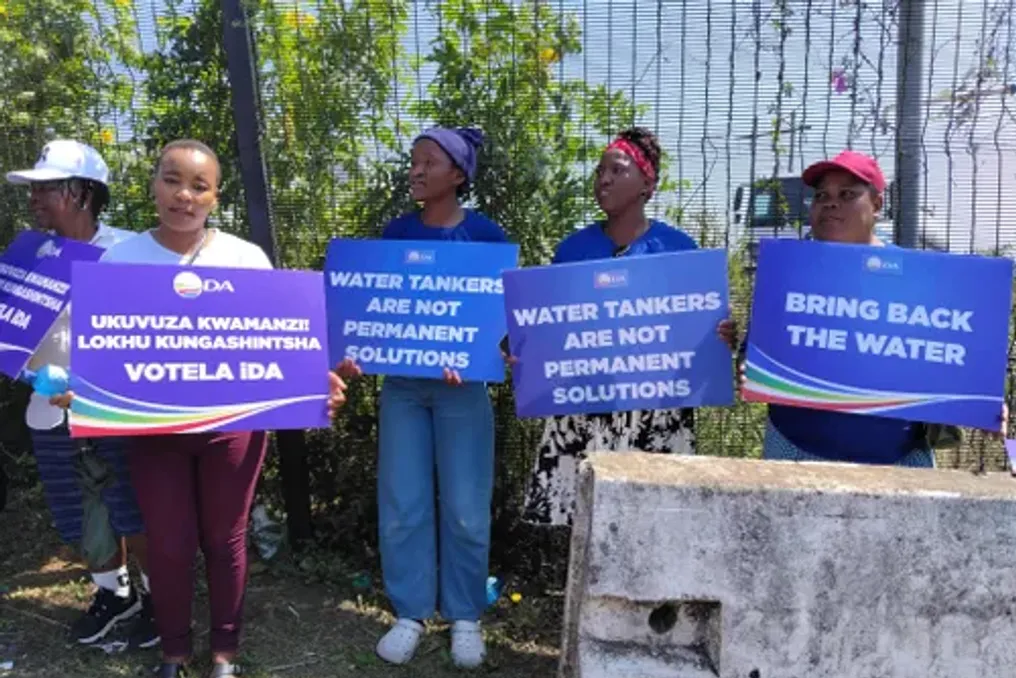
For over four years, Phoenix residents in areas 48, 49, 50, 51, and 52 have been facing daily water supply interruptions. A municipal worker shuts off the water every afternoon and restores it the following morning, usually before 5 am.
If the water is restored after 6 am, residents are told that the municipal worker experienced car trouble or overslept. The daily water disruptions force thousands of residents to manage daily life without water. However, they continue to demand a clear explanation from the eThekwini municipality regarding the reasons for the daily outages and an end date for this situation.
Residents informed POST that sometimes the water is cut off as early as 11 am, often before they return home from work or school. Since there is no published schedule, households do not know when their water supply will end. Nevertheless, it is evident that the outages will occur daily, including weekends and public holidays.
Residents and the Democratic Alliance (DA) party claim that the water is being diverted to Cornwood and other areas. The DA mayoral candidate in eThekwini, Haniff Hussain, stated that water from Phoenix is being redirected to Cornwood and other locations, causing difficulties in replenishing reservoirs in the north.
Hussain stated: 'Municipal officials are intentionally cutting off the water supply to redirect water to fill other areas.' Nalini Naidu, the IFP candidate for Ward 50, acknowledged being aware of residents' claims about water diversion to Cornwood but has no verified evidence to support this reason for the outages.
Naidu emphasized: 'I do not want to present the claim as an established fact. The municipality must openly address these issues. It must provide information on reservoir levels, pumping volumes, supply distribution, and water allocation between Phoenix and Cornwood. Residents deserve answers based on evidence, not speculation.' She added that the municipality previously cited low reservoir levels and strain on the water distribution network as reasons for the restrictions.
Crisinta Mudli, who lives in the Sunford Forest Haven area, reported that the water outages have been ongoing for 10 years. She described having to spend large sums of money on bottled drinking water, extra buckets, and barrels for storage. Daily tasks such as bathing, cooking, and laundry have become a nightmare. They constantly have to fill buckets, containers, and five-liter bottles to flush toilets and heat water on the stove for bathing. Mudli believes the municipality is ignoring their plight because the situation has lasted so long.
She noted that residents have heard many explanations over the years, but the outages continued. Initially, the cause was cited as the construction of new water pipes, which is now complete, yet the interruptions persist. Mudli expressed doubt about the municipality's honesty due to the lack of communication. She also pointed out that other areas of Phoenix do not seem to be experiencing such daily interruptions.
Timothy Govindasamy, a pensioner living in Grove End for the last six years, recounted that residents have been left alone due to the ongoing water problems. He noted that only one water tanker visited their area over six years. Govindasamy reported that they have to struggle with cooking, bathing, and performing daily chores, relying on sponsorship from children living abroad.
Govindasamy mentioned that residents were given until December 2024 to complete reservoir repairs, but the problems have not disappeared. He also noted that when they gathered for a meeting at the Grove End church, leaders did not attend, and it seems the municipality abandoned them, disregarding their suffering. He called for justice, pointing out that they pay for water while some areas receive it for free.
Professor Faisal Bax, Director of the Institute of Water Treatment and Wastewater, could not comment on the cause of the outages as he has not studied the technical aspects of the situation in Phoenix. Nevertheless, he stated that access to water is a basic human right and it is unacceptable for people to be forced to live under such conditions.
At the time of publication, the eThekwini municipality had not responded to the questions.