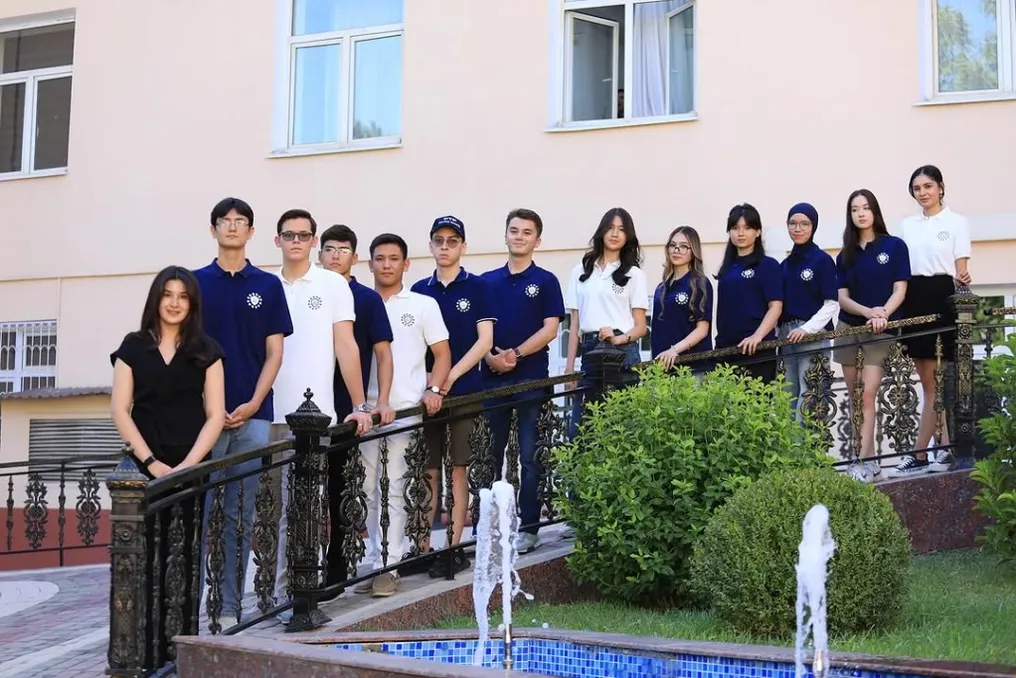
The Xavfsiz Bolalik project is being implemented in Uzbekistan with the goal of helping children who have experienced violence find ways to tell adults what happened and request support. Participants in this Uzbek project teach their peers how to recognize forms of violence and inform them about places where they can seek help in critical situations. Currently, the team is developing a special platform that allows for anonymous reports using artificial intelligence technologies.
A correspondent from Podrobno.uz familiarized themselves with this project during the World Summit on Child Well-being in Samarkand, where it was presented how teenagers are supporting their peers and the role modern technologies can play in this.
How Teenagers Help Their Peers
The Xavfsiz Bolalik project was launched in 2025. Its participants are teenagers striving to make information about protection from violence more accessible to younger generations. According to team representatives, such as Azambek Urmonbekov and Lailo Hasanova, approximately 50 volunteers are currently involved in the project. These volunteers conduct meetings with schoolchildren and children from various institutions, highlighting different types of violence and explaining where to turn if a child is in danger or witnesses such an incident.
The team reports that the project has already reached over three thousand children through its work in five schools and five institutions. During meetings, volunteers also ascertain children's attitudes towards the issue of violence and their willingness to seek help. According to collected data, about half of those surveyed consider violence solely a family matter, while only 1–3% of respondents stated an intention to contact social services or law enforcement agencies in such a situation.
Among the factors preventing children from speaking out about what has happened, project participants cite fear of distrust from adults or a lack of seriousness regarding their words, as well as unfamiliarity with appropriate communication channels.
Why It Is Difficult for Children to Ask for Help
The complexity of the problem lies not only in a child's fears about the reaction of others. Often, children lack sufficient knowledge about what actions qualify as violence, how to act correctly in a dangerous situation, and whom to contact for help. Azambek Urmonbekov noted that for many children, the topic of violence remains little known, and initially, they are reluctant to raise the issue, not knowing an adequate response in dangerous scenarios.
In the opinion of project participants, it is easier to trust a peer than an adult. Therefore, teenagers strive not just to disseminate information but also to create a safe space where children can discuss complex life situations and learn about available methods of receiving support. This issue goes beyond just physical violence; among topics causing concern for children in various countries, cyberbullying, online harassment, pressure from classmates, and home safety issues are mentioned.
During international consultations organized with the participation of the UN, about 1,700 children from 110 countries, including Uzbekistan, participated. Among their wishes were the ability to report problems online and a demand for adults to take children's statements seriously.
How the AI Platform Will Work
The next step in the project's development is the creation of a platform that will allow children to anonymously report cases of violence and request assistance. The team is considering implementing artificial intelligence for this function. It is anticipated that a child will be able to send a message through a chatbot, which will conduct a preliminary assessment of the report, after which the case will be passed on to a social worker to determine the next steps.
The platform is currently in the development stage. Its actual effectiveness will depend not only on technical capabilities but also on how competently the processes for handling reports, ensuring data confidentiality, and transferring information to specialized professionals are organized. Lailo Hasanova emphasized that artificial intelligence should serve as an auxiliary tool for protecting children, but the key element remains the ability of adults to listen attentively.
Information about the activities of the Ombudsman for Children in Uzbekistan was also presented during the presentation. Speakers reported that the agency received 1,064 appeals in 2024, of which only 24 came directly from children, although the source of this data was not specified.
Why One Technology Is Not Enough
Although an anonymous platform can serve as an additional channel for reporting problems, it does not guarantee that a child will receive the necessary help on its own. This requires qualified specialists, a clear protocol for responding to appeals, and the confidence of children that their words will be heard. An equally important element is preventive work: children need to be taught skills for recognizing violence, seeking support, and understanding why they should not remain in a dangerous situation alone. Adults, on the other hand, must know how to listen to a child and not devalue their experiences.
Possible areas of work include creating mutual support groups, ensuring accessible communication channels, training educators and other adults, and involving children themselves in decision-making processes concerning their safety. The Xavfsiz Bolalik project combines the educational activities of teenagers with the concept of a digital tool for reporting violence. Currently, the team is simultaneously developing volunteer activity and working on the platform, and the next important stage is to demonstrate the practical application of these initiatives and ways for children to receive real help after making a report.