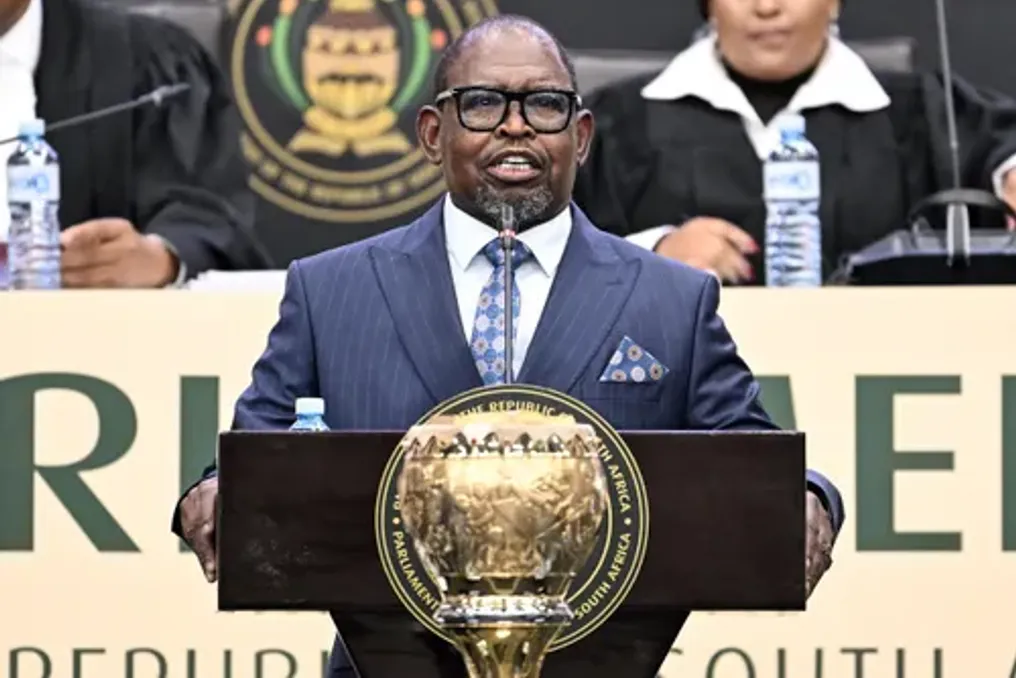
Finance Minister Godongwana announces temporary measures to reduce fuel prices by R10 billion
Read more
IOL
iol.co.za

Finance Minister Godongwana announces temporary measures to reduce fuel prices by R10 billion

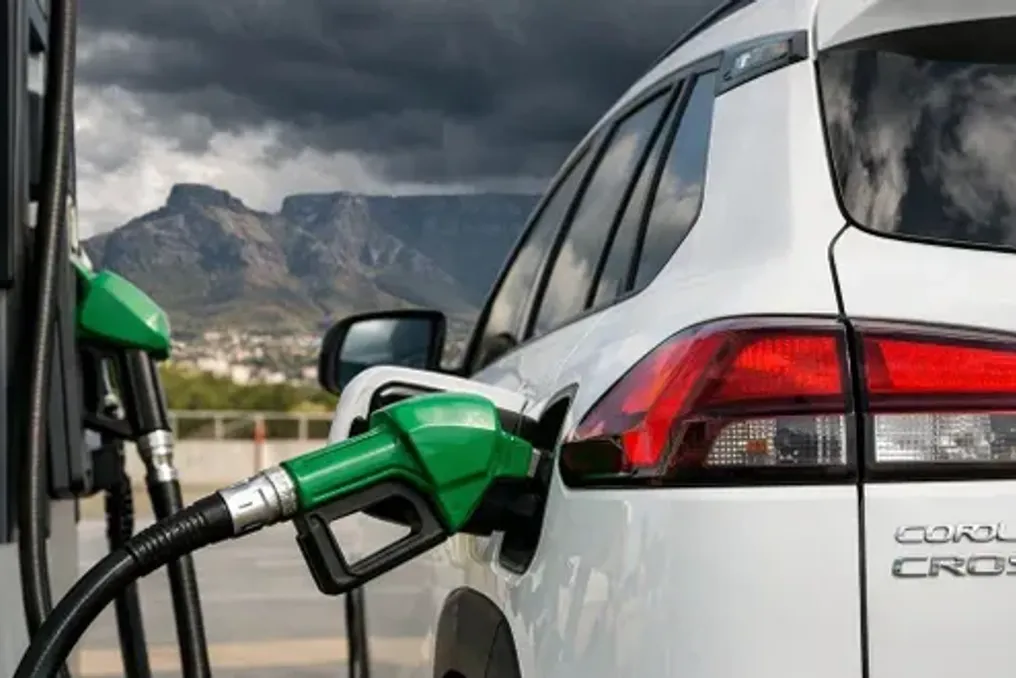
Finance Minister Enoch Godongwana announced the provision of temporary assistance amounting to R10 billion in the form of a reduction in the fuel levy. This measure is aimed at mitigating the effects of rising oil prices caused by the conflict in the Middle East and supporting households and businesses.

During the presentation of the Medium Term Budget Policy Statement for 2026 (MTBPS) in Parliament yesterday, Godongwana noted that the conflict has led to an increase in global oil prices, which has resulted in a sharp rise in the cost of living for the population and businesses.

He stated that thanks to the restoration of fiscal reserves, the government is in a stronger position to react, including the reintroduction of a temporary fuel levy reduction. The Minister informed parliamentarians that the National Treasury is aware of the pressure that rising fuel prices are putting on businesses and families.

Godongwana announced a reduction in the fuel levy of R3 per litre of diesel and R1.50 per litre of petrol. These changes will take effect from November 4, 2026, and will last until December 1, 2026. Further assistance will be provided in a smaller amount until January 5, 2027.

The Minister clarified that these measures will provide support amounting to R10 billion, with the fiscal cost being R10 billion in lost revenue.

To finance this temporary support of R10 billion, which was transferred to the Central Energy Fund (CEF), it will be returned to the National Income Fund and placed in the Contingency Reserve. Director-General Duncan Peters explained that the origin of these R10 billion is related to the overspending of revenues for 2025/26, which was allocated in the Special Appropriation Bill for the CEF.

Peters explained that the CEF will receive these funds through the Special Appropriation Bill, return them to the National Income Fund, and then these R10 billion will be used to compensate for the costs of the fuel levy reduction.

As part of the MTBPS, Godongwana projected real economic growth at 1.2%, which is lower than the forecast of 1.6% made in February. However, growth is expected to reach 1.6% in 2027 and 2% by 2029.

The Minister added that gross tax revenue is projected to increase from R2.14 trillion in the current year to R2.53 trillion in 2029/30. Various funds were allocated through the Appropriation Bill: R6.2 billion for unforeseen and unavoidable expenses, mainly for disaster relief and rehabilitation.

Additionally, R823 million was allocated to SANDF for troop deployment to assist the police in combating crime, and R516 million for the Madlang, Hampepe, and Nkabinde inquiry commissions. Godongwana also mentioned that the Special Appropriation Bill includes funds for Parliament and for the continuation of medical services for South African Armed Forces veterans.

SARS will also receive allocations to strengthen tax collection measures. Within this corrective budget, R150 million has been allocated to improve the technical capabilities of the digital services unit for developing the MyMzansi application, which will allow citizens to access government services through a single digital platform. Furthermore, the Contingency Reserve will increase to R10 billion to respond to potential threats related to El Niño and other risks.

It was noted that projects valued at at least R20 billion are currently being assessed in the infrastructure budget fund. Godongwana also stated that next year the SAPS fleet will be modernized with R810 million, and R2.2 billion has been added to enhance the independence of the judicial system.

The MK party stated that the 1.6% growth forecast proved unrealistic, and that real economic growth was 1.1%. The party called this a 'heavy accusation against the management of our economy' and suggested that the fuel price assistance was announced in connection with local elections.

DA Finance representative Kingsley Wakelin welcomed the National Treasury's steps in the MTBPS, especially the commitment to the fiscal anchor, continued primary surplus growth, and debt stabilization for the first time in almost two decades. He emphasized that these are important steps towards restoring confidence in South Africa's public finances after the deterioration from 2008 to 2024, but noted that fiscal stability must be the foundation of economic growth, not the limit of government ambition.

ActionSA MP Alan Bisley expressed disappointment with Godongwana's announcement of short-term fuel price reduction measures, which are insufficiently effective to alleviate the devastating cost of living crisis and do not address the fundamental problems undermining the South African economy. He stated that the temporary fuel levy reduction of R10 billion, valid until January 2027, is grossly inadequate to solve the high fuel price problem, as these costs have led to increased prices for food, basic goods and services, as well as almost all transport-dependent sectors of the economy.
Similar stories

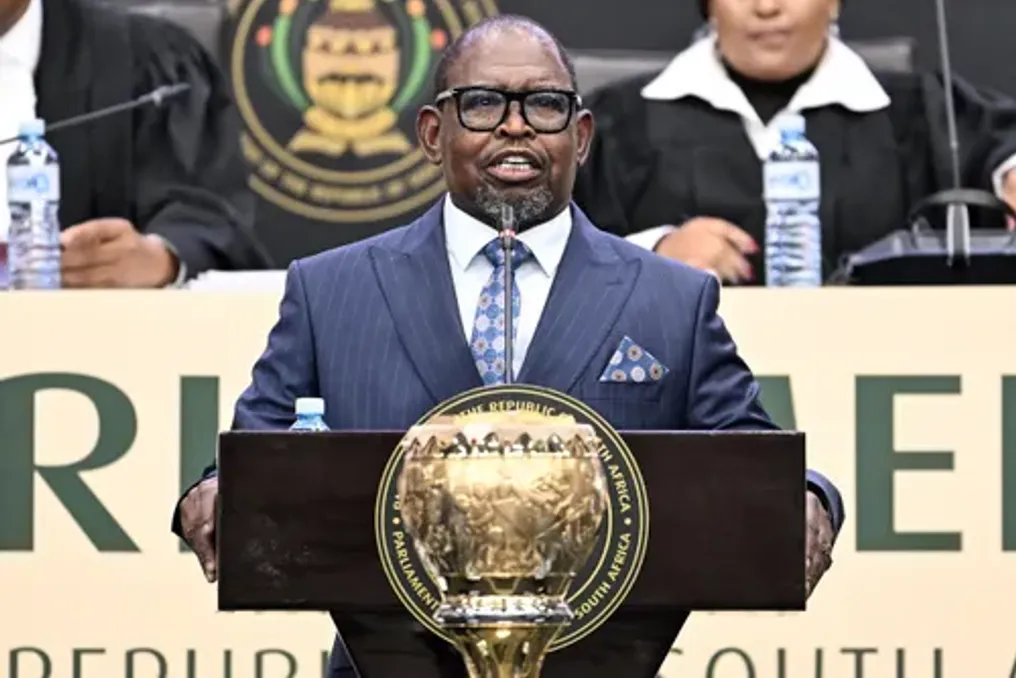
Finance Minister Announces Temporary Fuel Tax Reduction Starting in November
Read more
iol.co.za

Finance Minister Announces Temporary Fuel Tax Reduction Starting in November

Residents of South Africa will receive the long-awaited reduction in fuel prices during November and December. During the presentation of the Medium-Term Budget Policy Statement on Wednesday, Finance Minister Enoch Godongwana announced a temporary decrease in the General Fuel Levy, which will take effect from November 4th.

During the period the measures are in effect, the discount on diesel fuel will be 3 rand per liter, and on petrol—1.50 rand. After December 1st, the discount amounts will change: the price for diesel fuel will be reduced to 1.50 rand per liter, and for petrol—to 1 rand per liter, and this will last until January 5, 2027.

The Minister stated that this support measure will cost 10 billion rand in lost revenue, which will be covered by returning funds transferred to the Central Energy Fund.

Finance Minister Godongwana under pressure over fuel costs and government spending
Read more
iol.co.za

Finance Minister Godongwana under pressure over fuel costs and government spending

Finance Minister Enoch Godongwana is facing increasing pressure amid the presentation of the Medium-Term Budget Policy Statement (MTBPS), as he is expected to take steps to cut spending and propose solutions to combat rising fuel prices.

Godongwana must present plans for public expenditure, revenue forecasts, and public financial management for the next three years. However, the Cosatu union stated that workers are in a difficult position due to youth unemployment at 48% and economic growth of only 1.2%. Parliamentary Coordinator Matthew Parks emphasized that today's MTBPS cannot be routine.

Parks stated: 'The government must demonstrate a decisive shift to stimulate growth, restore public and municipal services, assist workers and the poor, and instill hope in the nation. It is time to stop proven and unsuccessful neoliberal austerity policies that have undermined growth. Now we must invest to develop the economy and solve the unemployment problem.'

DA prioritizes debt reduction and accountability

DA's finance representative Kingsley Wakelin noted that today's MTBPS will show how seriously the government is committed to fixing public finances. He insisted on the need to improve spending, accelerate reforms, and increase accountability.

Wakelin stated that the government must stabilize debt, spend money on necessary things, and accelerate reforms. He added: 'The government must fulfill its obligations to stabilize debt and increase the primary surplus. This year, South Africa will spend R432.4 billion servicing its debt. This is money that could go to schools, clinics, police, and roads.'

Wakelin also reported that tax collection is expected to exceed February estimates. He stressed: 'This money should not be locked up in new recurrent expenditures. Debt must be paid down and growth supported first.'

Parties demand fuel price relief and anti-smuggling measures

ActionSA MP Alan Bisley stated that his party expects Godongwana to develop immediate assistance for South Africans facing rising fuel prices and the cost of living. Bisley noted that the government must act, recognizing that rising fuel prices lead to increased food prices, basic goods, services, and virtually the entire transport-dependent economy.

He also pointed out that given strong SARS revenue collection above targets, largely due to expanded capabilities, the government has a strong opportunity to provide significant relief through fuel levies without compromising fiscal targets. Bisley called on Godongwana to tackle the illegal economy.

Bisley demanded that the minister announce a three-year moratorium on increasing excise duties on these goods above the inflation rate to provide greater certainty for legitimate businesses, protect jobs, and help curb the growth of the dangerous black market. He also noted that combating the illegal economy would expand the tax base by moving economic activity into the formal sector and recovering revenue lost to the treasury.

Bisley concluded that combining fuel levy relief with decisive action against illegal trade would mitigate the cost of living crisis, strengthen revenue collection, and support economic growth. He added that support for ActionSA's corrective budget would depend entirely on the willingness of the National Unity Government to provide urgent aid to needy South Africans and take action against the illegal economy. 'We cannot support a budget that requires South Africans to bear most of the burden while the government fails to address the fundamental issues constraining our economy.'

Build One South Africa MP Nobuntu Khlazo-Webster proposed that Godongwana cut the VIP budget by 20% and redirect those funds to strengthening local police forces. Khlazo-Webster stated that the MTBPS is an opportunity to strengthen parliamentary power to block wasteful expenditure before it occurs.

Popular