Canada and Ontario introduce $8.7 billion support package to counter US tariffs
Read more
CGTN
cgtn.com

Canada and Ontario introduce $8.7 billion support package to counter US tariffs

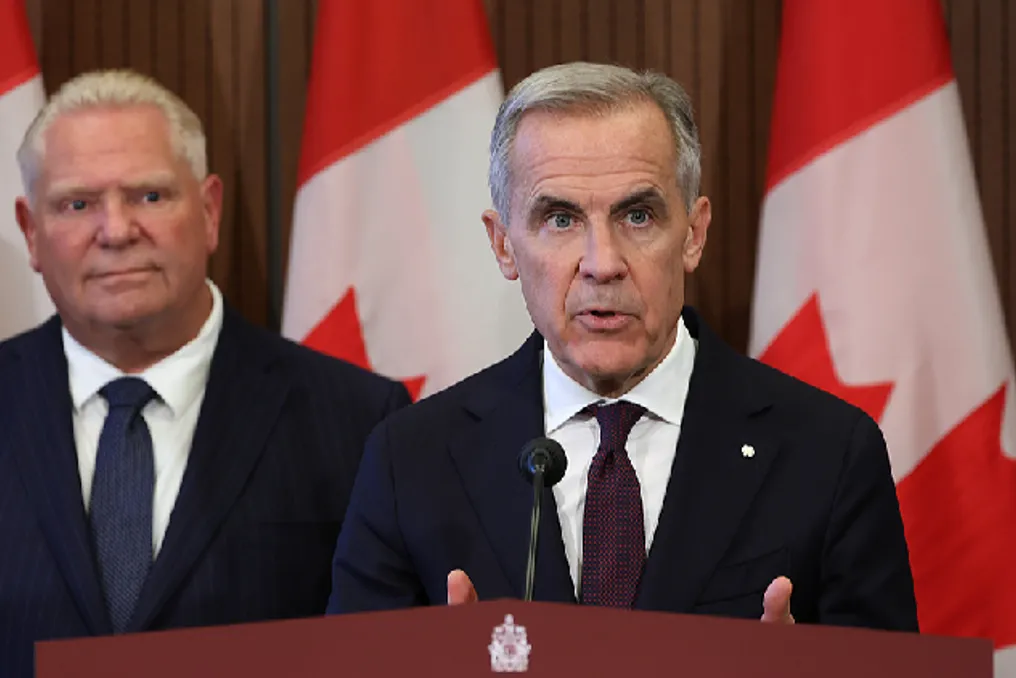
Canadian Prime Minister Mark Carney and Ontario Premier Doug Ford jointly announced on Wednesday a strategic support package for industries valued at $8.7 billion Canadian dollars (equivalent to approximately $6.18 billion USD). This package is designed to protect workers and businesses from existing US tariffs and stimulate long-term economic growth.

The joint federal and provincial plan focuses on securing Ontario's sectors, including the steel industry, automotive manufacturing, and critical mineral extraction. Key investment areas include establishing a joint action fund for steel, modernizing the automotive sector for the production of future electric and connected vehicles, and strengthening the supply chain for critical minerals in northern Ontario through new road construction and streamlined approval procedures.

Mark Carney stated: 'From the mine to the factory and assembly line, Canada and Ontario are protecting jobs today and making bold investments that will build a stronger, more resilient, and independent economy for Canada tomorrow.'

As Ontario is Canada's industrial hub, hosting global automotive and steel industries oriented towards cross-border trade, these sectors are most vulnerable to US tariffs. This new strategy builds upon existing federal assistance programs that have already directed over $25 billion Canadian dollars to Canadian workers and businesses facing US tariffs.

Similar stories

Mirziyoyev ordered the cancellation of excessive bank requirements for issuing loans
Read more
sputniknews.uz

Mirziyoyev ordered the cancellation of excessive bank requirements for issuing loans

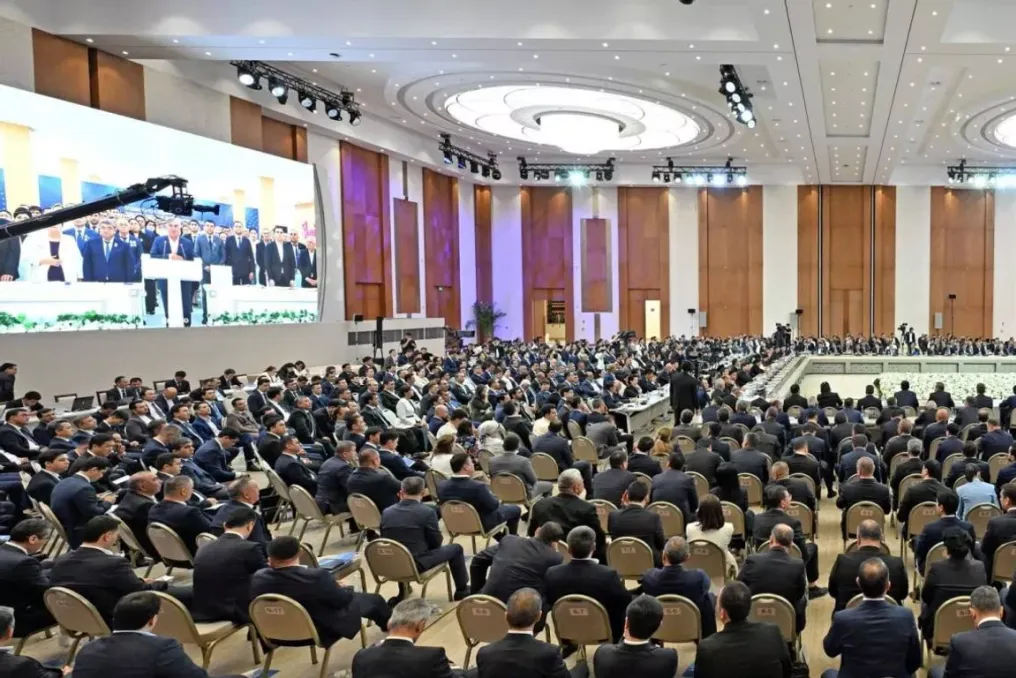
The President ordered the cancellation of unnecessary bureaucratic requirements that banks impose when issuing loans. At a meeting dedicated to the socio-economic development of the Kashkadarya region, it was decided to reduce excessive banking requirements for the lending process.

It is reported that currently, 102 types of documents are required for the lending process. Of these, information on 53 is already contained in information systems, and another 22 types of documents are irrelevant to lending.

The President ordered the abolition of these superfluous requirements. It was emphasized at the meeting that banks must demonstrate practical results in providing financing to projects for the population and entrepreneurs.

It was noted that when issuing loans, attention should be paid not only to collateral but also to the enterprise's actual cash flow and its specific orders. This approach was previously discussed in the Andijan region, where the goal was set to develop 20 new financial products to link lending to cash flows and orders. Now this approach should yield results in Kashkadarya as well.

During the meeting in Andijan, tasks were also set, such as waiving the requirement for a business plan for projects worth up to 500 million soums, and accepting a long-term contract of a small entrepreneur with a large customer as loan collateral.

The head of state stressed that the activity of banks should be evaluated not by the number of new products, but by the growth of enterprises and businesses that received funds through these products.

Beeline Uzbekistan presents vision of digital life through service expansion, including finance and mobility
Read more
uzdaily.uz

Beeline Uzbekistan presents vision of digital life through service expansion, including finance and mobility

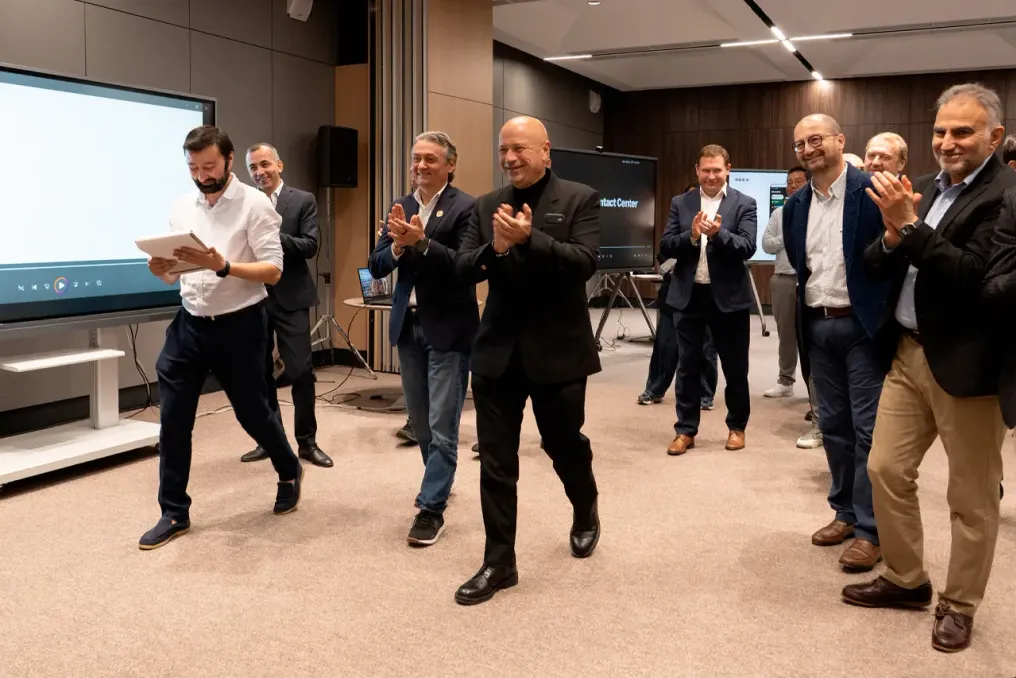
Beeline Uzbekistan held a Demo Day for VEON management, Board members, and key partners to demonstrate how the company is expanding its involvement in customers' daily lives through connectivity, financial services, entertainment, and urban mobility.

At this event, Beeline Uzbekistan's digital portfolio was presented, which includes the OQ and hambi services, the Beepul payment system, the KINOM and riitm entertainment platforms, AdTech solutions for business, as well as integration capabilities with Uklon, which is part of the VEON group.

The use of these services supports the company's goal of strengthening and increasing customer interaction frequency throughout the day—helping people stay connected, make payments, find content, and move around the city.

The next stage of this strategy focuses on improving inter-service interaction. By combining relevant products and simplifying steps between them, Beeline Uzbekistan aims to ease daily tasks and encourage more regular use of its digital services.

Another priority is advanced intelligence. Beeline Uzbekistan is exploring how artificial intelligence can improve customer support quality, make services more relevant to individual needs, and help employees work more efficiently. VEON's approach to advanced intelligence puts people at the center of this transformation, using technology to augment human capabilities.

Can Terzioglu, CEO of VEON Group, stated: 'Uzbekistan is an important market for our Digital Operator strategy.' He added that by combining connectivity with digital services, they see an opportunity to support people and businesses in many aspects of their daily lives. He noted that advanced intelligence develops this ambition by helping people gain knowledge, make better decisions, and unlock new opportunities.

For Beeline Uzbekistan, the commercial priority is transforming connectivity reach into sustainable demand for digital services. More frequent usage, relevant cross-product offerings, and simplified customer journeys are intended to strengthen retention and support long-term digital business growth.

Evgeny Nastradin, CEO of Beeline Uzbekistan, emphasized: 'Our goal is to make our digital services a natural part of daily life in Uzbekistan.' He specified that this means creating products that people want to return to and connecting them wherever it creates obvious value—saving time, simplifying payments, or making entertainment more accessible. The next step will be turning the strength of our portfolio into a simpler customer experience and sustainable growth for every business.

In addition to demonstrations, VEON management and its Board members discussed long-term priorities for Uzbekistan, including investments, digital product development, and opportunities for closer collaboration across the entire portfolio.

The Demo Day demonstrated Beeline Uzbekistan's direction: building upon its connectivity infrastructure to develop digital services that will take a permanent place in customers' lives and contribute to the country's growing digital economy.

Beeline Uzbekistan (Unitel LLC) has been operating as a digital operator under this brand since September 12, 2006. The company is one of the largest taxpayers in the country, having paid approximately $2.1 billion in taxes during its operations in Uzbekistan. With over 2000 employees, Beeline Uzbekistan has been recognized as a Top Employer certified employer in 2024, 2025, and 2026.

Beeline Uzbekistan is part of the VEON Group. Since the Group first entered the market in 2006, VEON has invested over $1.6 billion in Uzbekistan's telecommunications sector. VEON is a digital operator providing connectivity and digital services to over 150 million connected users and over 228 million digital users. Operating in five countries with populations exceeding 6% of the world's population, VEON transforms lives through technology-driven services that empower people and foster economic growth. VEON is listed on NASDAQ.
IIT Mandi study shows one in five Indian college students has started their own business
Read more
www.aajtak.in

IIT Mandi study shows one in five Indian college students has started their own business

According to the GUESSS report published in Shimla on October 21, about a quarter (approximately 22%) of students in India have already started their own businesses. This report was prepared by the Indian Institute of Technology Mandi in collaboration with Reva University from Bangalore.

The survey involved 25,783 students from over 1,200 higher education institutions across 34 states and union territories. In a statement released on Wednesday, it was noted that 43 out of every 100 Indian students intend to start their own business, which exceeds the global average of 23 percent.

The proportion of students who wish to manage their own business immediately after graduation increased from 14 percent in the 2023 study to 16.2 percent in 2025. At the same time, the desire to work in public service after studies decreased from 12.7 percent to 10.1 percent. The desire to work in a large company also decreased from 31.3 percent to 27.4 percent.

GUESS, or Global University Student Entrepreneurship Survey, is one of the largest research initiatives globally on the topic of student entrepreneurship. According to the report, 31 percent of students engaged in regular trade started their business specifically in 2025. Furthermore, 41 percent of these entrepreneurs had previously closed one business and started a new one. Additionally, 42 percent of students run two or more businesses simultaneously.

Dr. Puran Singh, Associate Professor at the School of Management, IIT Mandi, and GUESSS representative in the country, stated that Indian students possess ambitions comparable to those of students in any other country in the world. He emphasized that students who open enterprises create real companies that provide jobs for people.

He added that the curricula, special programs, and incubators located on campus demonstrate their effectiveness. However, in his opinion, there needs to be more people in students' lives who are actively involved in creating businesses, and they need help taking that first real step. After that, it should be assessed how many students turn their intentions into reality instead of just talking about starting startups.

The survey results show that students most often plan their businesses in the fields of IT, artificial intelligence, and digital technologies. Nevertheless, among existing student enterprises, only about one in ten companies is digital. Students whose relatives, friends, classmates, or teachers have already founded a business are three times more likely to start their own business.

This report, titled 'How to Make Students Entrepreneurs?', was written by Dr. Puran Singh and Praver Sharma. The survey itself was conducted from September to December 2025.

Dr. P Shyama Raju, Custodian of Reva University, the national partner of GUESSS 2025, stated that the university's task is now not only to educate students for employment but also to prepare them for running a business so they can create jobs.

Professor Shyam Kumar Maskapalli, Dean of the Department of Sponsored Research and Industrial Consultancy at IIT Mandi, noted that entrepreneurship means creating solutions, opportunities, and impact.

In conclusion, the report states that about 22 percent of college students have already started their own businesses, and the proportion of students wishing to run businesses immediately after graduation has increased. It is also noted that having people involved in business in one's circle increases the chances of students starting their own ventures.

Popular