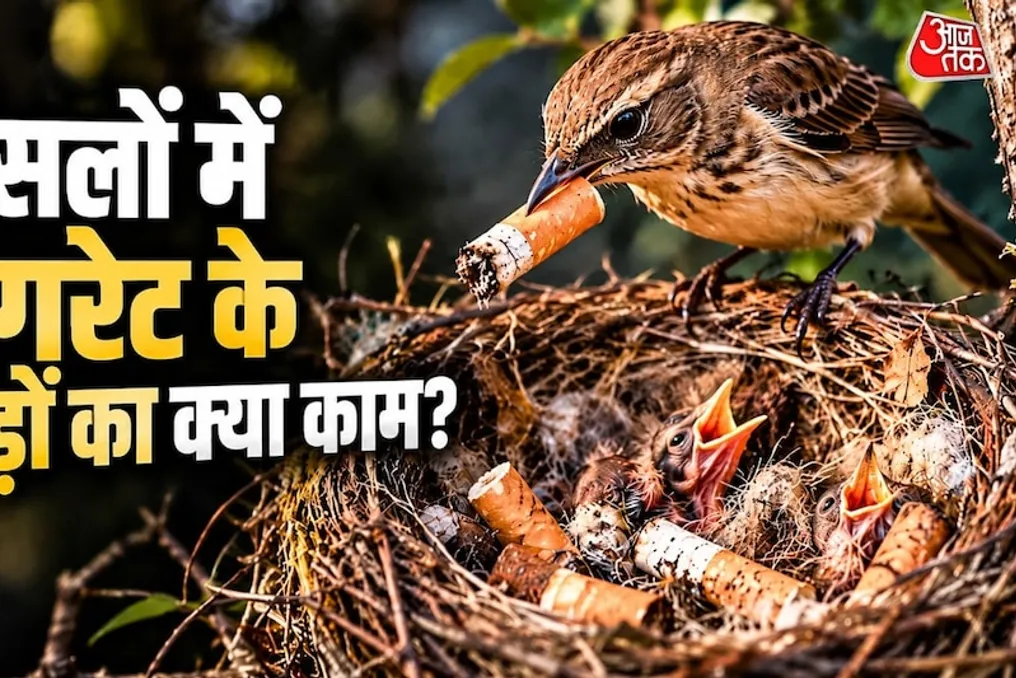
People often see cigarette remnants on streets, in parks, at bus stops, or in various corners, and usually ignore them, considering them trash. However, some birds, such as sparrows, may collect these discarded cigarette butts in their nests. Although this sounds unusual, scientists have observed such cases and uncovered an interesting reason for this behavior.
According to researchers, some birds might place cigarette butts in nests because the chemical substances they contain can help repel parasites and insects living in the nest. These pests can bother chicks and negatively affect their development. Nevertheless, the full reason for this behavior remains unclear. It should be noted that the toxic components of cigarette butts can be harmful to the birds themselves.
For birds, a nest is not only a place to lay eggs but also a refuge during the early period of the chicks' lives. After hatching, chicks are completely dependent on their parents for some time, needing warmth, food, and protection from external threats. However, various small insects and parasites can develop inside the nest, which can suck the blood of the chicks, damage their skin, and weaken them. Therefore, protecting the nest from these pests is very important for birds.
Some scientific studies have shown that certain species of birds collect tobacco or cigarette waste in their nests. One possible hypothesis is that they use the chemicals contained in these butts to combat parasites. However, this does not mean that all birds behave this way, nor that it is the only reason for finding butts in nests.
Cigarettes contain a chemical substance called nicotine. It is naturally present in the tobacco plant and can affect the nervous system of some insects. Furthermore, cigarette smoke and used filters can contain many other chemical substances. This is why scientists continue to study whether cigarette butts in nests can affect the population of local parasites.
However, it is important to understand here: the effect of any chemical substance on insects and its safety for birds are two different issues. It also cannot be stated that the amount of chemical substances in a cigarette butt is always sufficient to repel insects. Consequently, it is incorrect to say that cigarette butts act as a natural medicine for birds.
Another interesting question is why birds choose specifically cigarette butts. Do they know about the chemical composition of these items, or do they simply use them like other available materials? This is an important question for scientists. Birds use dry grass, leaves, small twigs, feathers, and other handy materials to build nests. Urban birds also find plastic, threads, paper, and other human-discarded trash around them.
Therefore, it is possible that some birds use cigarette butts as one of the available building materials. There is also a possibility that under certain conditions, they are influenced by the chemical properties of these butts. But to prove that birds consciously choose cigarette butts to protect against parasites, additional research into their behavior and nests is necessary.
Although finding cigarette butts in a nest may be interesting for scientists, it does not allow us to conclude that they are beneficial for birds. Cigarette filters usually contain a plastic material called cellulose acetate, which does not easily decompose in the environment. Residues of nicotine and other harmful substances may remain in the filters after use.
If chicks peck at or accidentally swallow these pieces, they can be harmed. Moreover, the chemicals present in the nest can come into contact with eggs and chicks. The fibers used in cigarette filters can also persist in the environment for a long time. Thus, even if there is a possibility that cigarette butts influence insects under certain circumstances, it does not mean that they will generally benefit birds. Their potential advantages and risks must be considered separately.
Human carelessness can pose a threat to birds. Cigarette butts are easily visible on streets, in parks, sewers, and public places in cities. People often consider them insignificant trash, but their environmental impact can last a long time. Birds may take objects nearby into their nests. Under such conditions...