Large automotive conglomerates that group various brands under one umbrella create cars with unexpected characteristics. For example, the new Jeep Avenger combines the off-road style of the American manufacturer but uses the French Peugeot 208 platform, an Italian Fiat engine, and a Japanese Aisin CVT gearbox.
The exchange of vehicles between different manufacturers is not a new phenomenon; it has existed since the earliest stages of the automotive industry. This article recalls examples of cars that originally belonged to one brand but were sold under another.
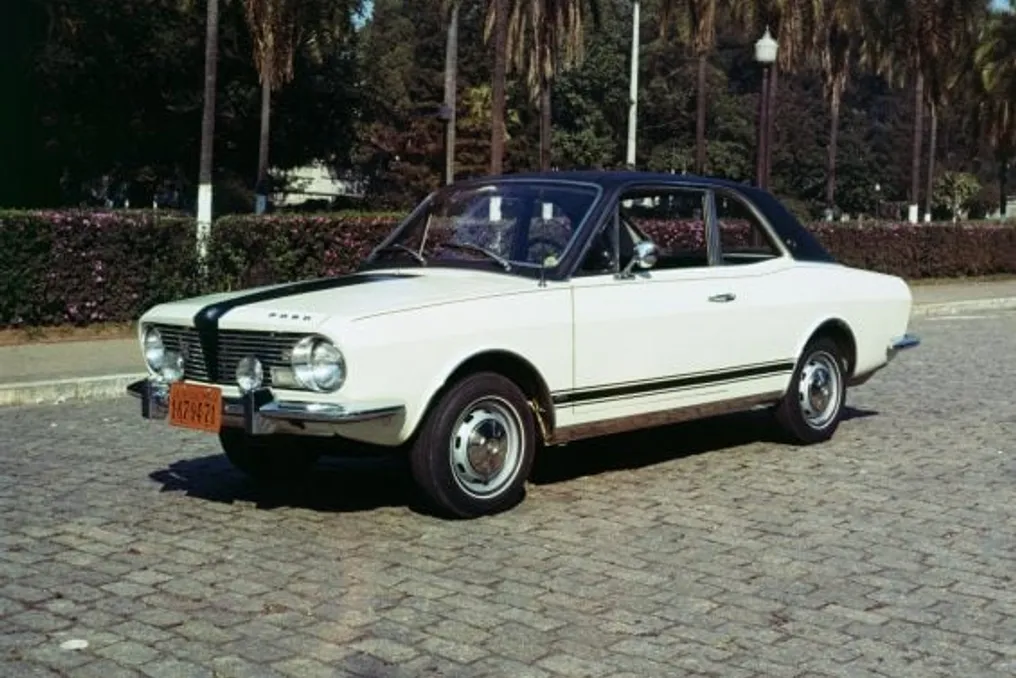
It is sometimes amusing to observe how people on social media call French cars 'bombs' and criticize the Renault Kwid for wheels secured with three bolts, while praising the Ford Del Rey or the Pampa pickup. The brand with the blue oval receives credit for the Corcel and its derivatives, but the true credit here belongs to France.
This story began with Willys-Overland in Brazil, which sold models from both the American parent company and Renault. The Dauphine, Gordini, and Interlagos models were French projects that did not find their place in the Brazilian market. The company worked on a new compact car based on the Renault 12, which was called Project M. Willys-Overland developed the design locally, as did the Aero sedan and Rural wagon.
Parallel to this project, Willys's Brazilian operation was acquired by Ford. Project M was launched in 1968 as the Ford Corcel; the first units came out with the Willys logo applied to the windows.
This merger proved to be very timely: it provided Ford with a modern, ready-to-produce compact car, as well as Jeep. Until then, the brand only produced pickups, trucks, and the luxurious Galaxie.
Renault also positively influenced the origin of the Corcel: the economical and reliable Cléon engine became the first front-wheel-drive car produced in Brazil and the first to pass inspection.
Fiat always sought to sell mid-sized pickups in Brazil. It created the compact car segment in the country and has dominated it for decades thanks to the Strada. Ten years ago, it created the intermediate model segment with the Toro, but it lacked something larger with a frame.
Fiat's acquisition of Chrysler in 2014 was late; at that time, American manufacturers only offered large models, and there was no interest in the mid-range there. The decision only came after Fiat merged with PSA to create Stellantis.
Peugeot designed a mid-sized pickup in partnership with Changan and was preparing to launch this model in Brazil as the Landtrek. After the formation of Stellantis, Fiat Brazil intervened because such a vehicle would have greater success in the Italian brand's network.
After replacing the grille and emblems, the Fiat Titano entered the market in early 2024. The pickup debuted with a 2.2 turbodiesel engine from Peugeot with 180 hp, in the version it was sold in Uruguay. This first version was temporary: Fiat engineers in Betim (Minas Gerais) were already working on replacing this engine with their 2.2 Multijet engine with 200 hp, implementing the 8-speed ZF gearbox from the Ram 1500, and improving suspension comfort. This second phase, starting in 2025, had more Fiat 'DNA', differing from the initial models.
The Brazilian Dodge Polara was one of many variations of the British Hillman Avenger. This compact car was created by European Chrysler and conquered the world, always undergoing small local changes.
In Argentina, it was sold as the Dodge 1500 and came in sedan and wagon body styles, always with four doors. Argentine Chrysler was bought by Volkswagen in 1980, as in Brazil. The Dodge 1500 continued to be sold in the market as the Volkswagen 1500, retaining the Chrysler emblem until 1987. Since then, the grille has featured the VW letters, making it the only passenger car in the brand's history with a front engine and rear drive.
The Argentine Volkswagen 1500 had some related components, such as wheels from Voyage and typography of the emblems. It was discontinued in 1990, giving way to Gacel—the name Voyage received there.
Subaru and Saab have a very similar origin. Both companies manufactured aircraft and transitioned to car production after World War II. They also pay great attention to quality engineering and the use of proprietary solutions.
Their paths intersected through General Motors, which owned Saab and held a 20% stake in Subaru. North American market research showed that the Swedish brand would benefit from having an entry-level model there.
The Saab 9-2X appeared based on the Subaru Impreza wagon, but with some technical modifications to look like a Swedish model. It received additional sound insulation and front seats with active headrests.
Saab also required the use of aluminum rear suspension arms and a reduction in unsprung mass. In the sporty 9-2X Aero version with a turbocharged engine, the STI model's steering linkage was used in a more direct manner.
The model was also better equipped, potentially offering a sunroof, leather heated seats, xenon headlights, and a CD player with a cassette. Despite being an upgraded WRX wagon, Saab fans were skeptical of the model, and it only lasted two years.
Seat became part of the Volkswagen Group in 1986, positioning itself as an affordable option with a sportier character. Their cars used the parent company's platforms with their own developments.
When they entered the executive sedan segment, the natural choice was to create a 'brother' to the Passat. But they chose a different path and used the Audi A4 to create the Exeo.
The third generation of the Audi A4 was discontinued in 2008, and its equipment was transferred from Germany to the Seat factory in Spain. Exeo breathed new life into this version of the German sedan. The Spanish version had a different front and rear design. The dashboard was taken from the convertible version with three round vents in the center to give it a sportier look. The wagon body was also returned to Seat.
The Exeo was released with 1.6 atmospheric, 1.8 20V turbocharged, and 2.0 turbo-diesel engines; starting in 2010, the turbocharged engine was replaced by the 1.8 TSI and 2.0 TSI. Unlike the Audi A4, the Seat sedan never had all-wheel drive and was sold only with front-wheel drive. In 2014, it was discontinued without a successor.