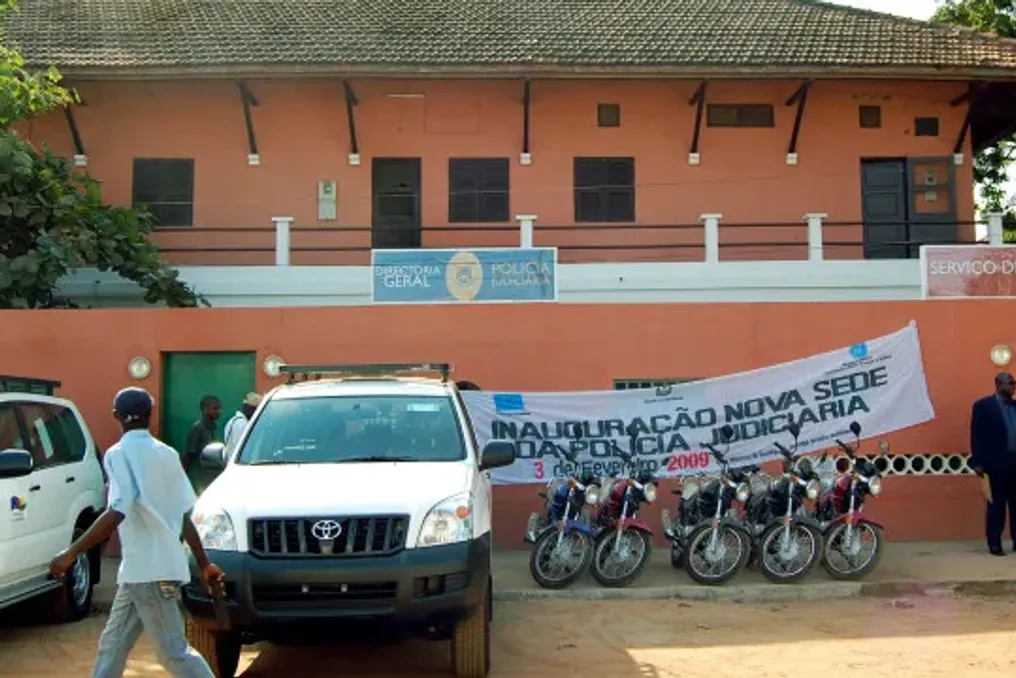
The Judicial Police (PJ) of Guinea-Bissau reported through a statement that it seized a batch of hepatitis B vaccines intended for newborns. These vaccines were associated with a clinical trial funded by the United States, which is currently suspended.
The Guinean PJ detailed that the intervention resulted in the seizure of the vaccine batch, which was to be used to vaccinate children in the country. The search operation took place on Monday at the facilities of the Bandim Health Project, located in Bissau.
Cited by the French agency France-Presse (AFP), the PJ stated that this action is part of investigations aimed at clarifying the circumstances surrounding this batch of vaccines. The additional objective of the operation is to protect the health of children and preserve the public interest.
The police emphasized that the seizure of the batch is merely an investigative act and, by itself, does not allow determining whether there are irregularities regarding the quality, safety, or efficacy of the vaccines.
The Danish research center, Bandim Project, received authorization from Guinea-Bissau earlier this year to proceed with the study. This project receives funding of $1.6 million from the North American Center for Disease Control and Prevention, which depends on the equivalent body to the Ministry of Health in European governments.
In February, the World Health Organization (WHO) classified the study as 'unethical,' given that it planned to exclude some newborns from receiving the hepatitis B vaccine at birth. The start of the clinical trial was planned for this year, but Guinean authorities announced its suspension in January due to controversy generated by various experts.
For the WHO, this experimental plan, whose purpose was to analyze the reaction to the disease in vaccinated newborns and others who would not receive the vaccine, is considered 'contrary to ethics,' as it would leave children without the necessary doses at birth, exposing them to a high probability of infection and, consequently, a significant number of deaths.
The US Department of Health funds the Bandim Health Project clinical trial in Bissau with $1.6 million (equivalent to 1.35 million euros), and this involved administering the hepatitis B vaccine at birth.
The Guinean Government had announced in January the cancellation of the clinical trial and the postponement of vaccine introduction until 2028, maintaining the current national plan, which provides for vaccination at six, ten, and fourteen weeks.
The clinical trial, which aimed to study the different effects of hepatitis B vaccination at birth, would involve 14,000 newborns in Guinea-Bissau. Half of these would be immunized at birth, while the other half would follow the current plan, with the first vaccine administered at six weeks of life.
The Director-General of the WHO, Tedros Adhanom Ghebreyesus, declared that 'denying half of the world's children access to a vaccine that has been available, safe, and effective for more than 14 years is unethical.' The WHO aims, by 2028, to ensure vaccination within the first 24 hours of life against the disease in countries with a high prevalence of hepatitis B, such as Guinea-Bissau.
In response to protests, the managers of the Bandim Project argue that no doses are withdrawn from babies, given that the Guinean vaccination scheme does not provide for administration to newborns. They add that, although they recognize that 'the protective effect of the hepatitis B vaccine against infection is well established and unquestioned,' the study addresses a different issue: 'What are the general health effects—positive, neutral, or negative—of introducing the dose at birth together with BCG and the oral polio vaccine in this specific context?'
Guinea-Bissau is cited as one of the countries most affected by hepatitis B, where the infection rate is close to one in five people. The disease can lead to death in 15% to 25% of individuals with chronic infections, causing cancer or kidney failure, according to Rolling Stone magazine.