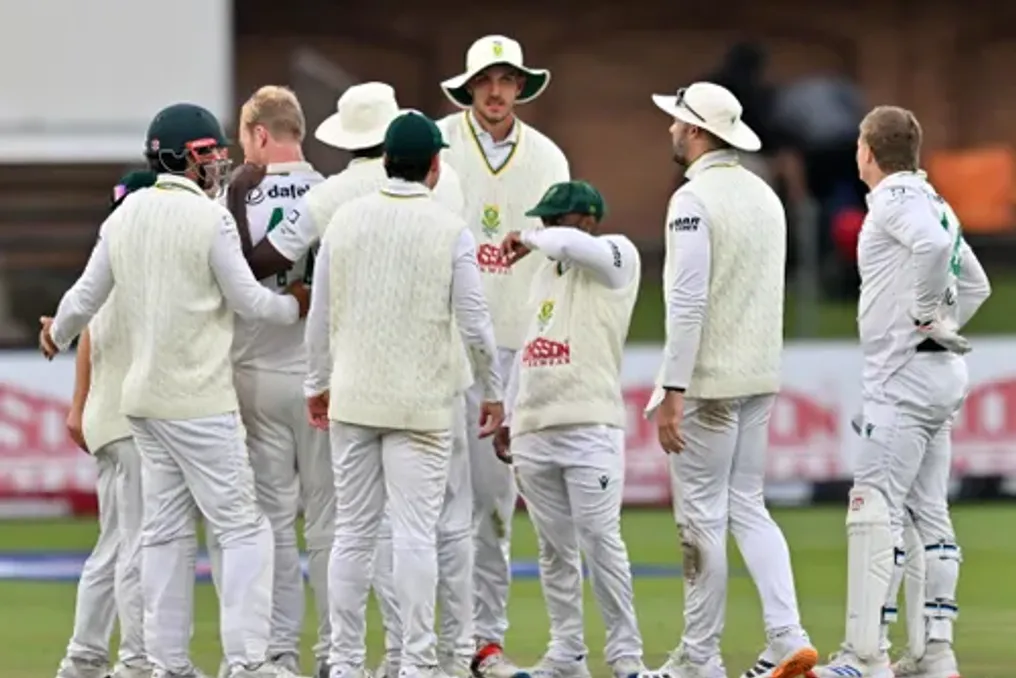
Marco Jansen states Proteas is ready to overcome Travis Head and secure victory in the match against Australia
Read more
IOL
iol.co.za

Marco Jansen states Proteas is ready to overcome Travis Head and secure victory in the match against Australia

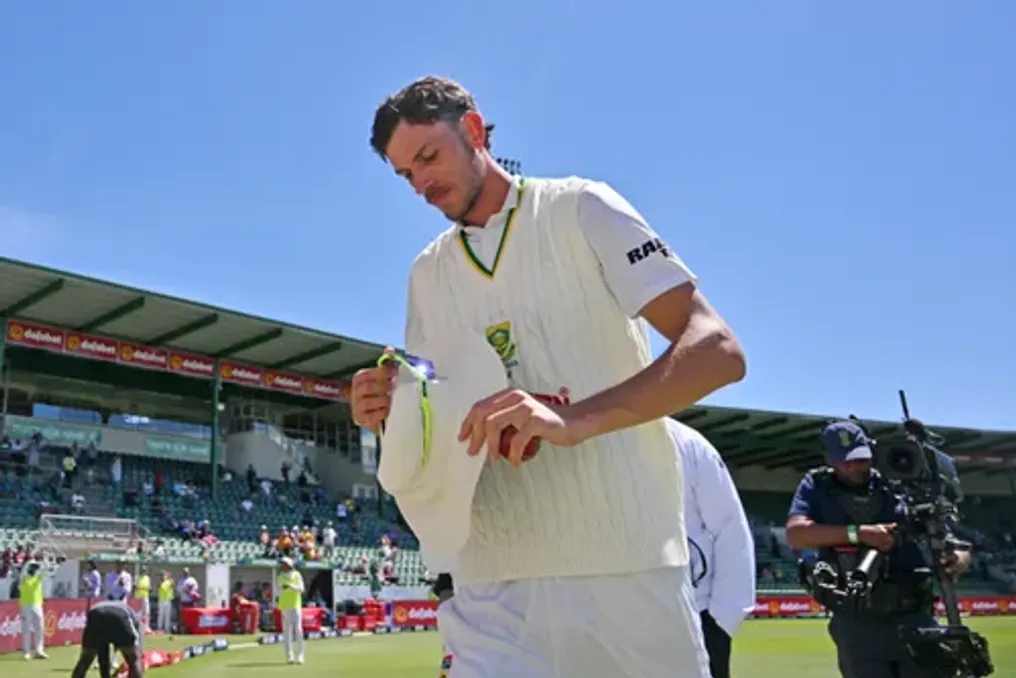
Senior all-rounder Marco Jansen reported that the Proteas team is prepared to play until the end of the fifth day if necessary to clinch victory in the second Test against Australia, which is being held at St George's Park.

The hosts only need a loss of six wickets out of 98 possible overs on the fifth and final day following an impressive batting performance on Wednesday.

Jansen led this innings, achieving his fifth career five-wicket haul, which allowed them to defeat the Australians by a narrow margin of 99 runs. It was a spectacular collapse, leaving the visitors behind by 326 runs.

However, Australia showed significantly better play in the second innings, reaching a score of 156/4 in their subsequent innings thanks to an unbeaten 87 runs from Travis Head, who came to the crease early.

Despite the deficit remaining substantial—170 runs—Jansen is not relaxing. He noted that Travis Head is still active and capable of scoring 150 runs if he decides or wants to.

Jansen added: 'We know they can overcome this, and we understand there is a possibility that we might have to come out again. But for us right now, the main task is to try and get them out of the game before they reach that deficit. We will direct all our efforts and all our concentration on this right now, and then just act as things unfold.'

The 26-year-old athlete believes that the key to success lies in maintaining focus on the current moment rather than the final result. He emphasized that too much foresight can create problems.

He explained that the team handled the focus on executing tasks well at the moment, regardless of whether a new or old ball was used. In his opinion, as soon as a person starts thinking too far ahead, their mind stops being where it should be. A person thinks about possible scenarios of events, but in reality, they can only do what they can do with the current ball, and then with the next, and so on.

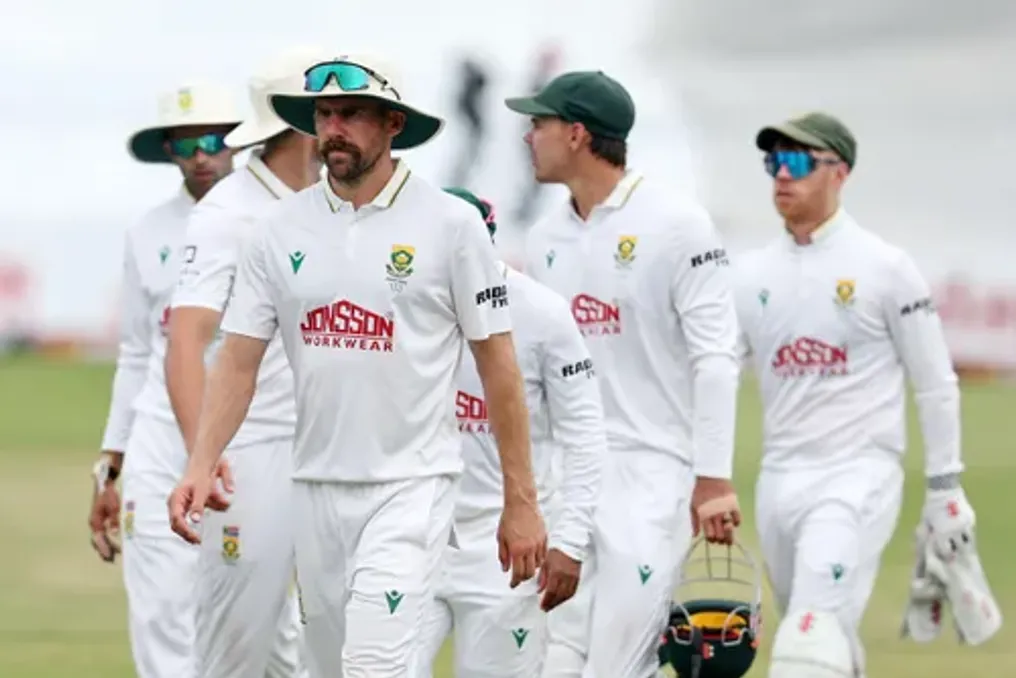
The Proteas team will have to complete the task without the injured fast bowler Anrich Nortje, who has been ruled out with a groin injury. Nevertheless, Jansen believes that the current conditions are ideal for Simon Harmer, the off-spinner, to shine.

He remarked: 'It is a shame that we lost Anrich early. Now the question is who and how long you will bowl. As soon as we got the feeling that the ball would start spinning at some stage, and we always had that feeling, we knew that Harmer would play a big role in this match, especially on this pitch. Obviously, Harmer has played here many times. He knows what he needs to do and what he should do.'
Similar stories

Marco Jansen becomes a key figure in the game as Proteas heavily pressures Australia
Read more
iol.co.za

Marco Jansen becomes a key figure in the game as Proteas heavily pressures Australia

The fourth day of the match at St George's Park proved tense and action-packed, during which the Proteas team completely dominated, forcing Australia to fight for survival with a score of 156/4 in the second innings (trailing by 170 runs) after having to agree to a follow-on.

Marco Jansen demonstrated his mastery, concluding the rout of the Australian team in the first innings. In addition to previously distinguishing himself with a wrist shot, scoring 85 runs, Jansen led the South African team's attack with the ball.

This left-arm fast bowler took 5/33 in Australia's first innings, dismantling the opposition's middle order through relentless pace and sharp bounce. In his morning session, he removed the dangerous Travis Head, and then before lunch, twice in three balls, dismissed the dangerous Matt Renshaw and Alex Carey.

Holding a huge advantage of 326 runs after Proteas finished destroying Australia's last four wickets for only 30 runs after lunch, Temba Bavuma insisted on a follow-on without hesitation. Kagiso Rabada marked the milestone by taking his 200th Test wicket on home soil in Australia's first innings when he dismissed Mitchell Starc. While Wiaan Mulder helped the team by taking two crucial wickets, including a major success against Steve Smith for 28 runs shortly after the former Australian captain surpassed 11,000 Test runs.

The day was not without losses for both teams. Proteas fast bowler Anrich Nortje felt pain in his groin in the fourth over of the morning session and could not continue bowling for the day, which was a serious blow to South Africa's workload management. Meanwhile, the Australian batting lineup was changed in the second innings as Steve Smith dropped down the order due to constant neck strain that prevented him from playing in his usual fourth position.

Australia faced difficulties at the start of the second innings when Rabada dismissed Nick Maddinson for 8 runs. However, Travis Head (87*) and Marnus Labuschagne (39) showed commendable resilience, building a solid partnership of 92 runs to slow down the Proteas. Head helped Australia resist throughout the day and evening, scoring a half-century in the struggle and counter-attacking under the darkening sky and strong wind.

Just when it seemed Australia was ready to bat all day, the South African bowlers delivered decisive blows before sunset. Off-spinner Simon Harmer broke up a dangerous partnership by dismissing Labuschagne, and later caught Bo Bubster on a legitimate delivery for 8 runs. Meanwhile, Rabada returned to bowl against Matt Renshaw, who scored 11 runs. When Australia approached 156/4, still trailing by 170 runs, and night watchman Scott Boland prepared to continue the game on Thursday morning with Head.

Five steps Proteas must take to save the first Test against Australia in Kingsmead
Read more
iol.co.za

Five steps Proteas must take to save the first Test against Australia in Kingsmead

The Proteas team must focus on two key tasks to have a chance of saving the first Test against Australia, which is being played in Kingsmead: they need to hold their own with the bat and become significantly more decisive in the game with the ball.

Australia has a significant advantage after recovering from a score of 124/6 to 390, thanks to the outstanding contribution of Matt Renshaw (190 runs) and a record partnership at number nine with Nathan Lyon (134 runs). Following this, South Africa allowed themselves to fall behind by 106 runs in the first Test match, and by the end of the third day, Australia increased this lead to 139 runs.

The only consolation is the team's prior experience at this venue. In the WTC final at Lord's last year, the Proteas were trailing Australia by 74 runs after the first innings, and then the Australians increased their lead to 102 runs before losing the first wicket; history showed how that ended.

Despite the substantial differences in conditions between Durban and London, the team needs to rely on this past experience, knowing that they have handled difficulties before.

How to achieve success

IOL Sport expert Zachir Adam described exactly how the team can succeed. First—immediately break the opening partnership. Nothing will happen until South Africa gains momentum in Australia's second innings. Pakistani players Heinrich Northey, Marco Jansen, and Bian Mulder must secure early wickets on the fourth day to prevent Australia from 'winning' the match by wearing down the Proteas.

A lead of 139 runs is considered manageable, but a deficit of 250 runs or more could be fatal.

Second—avoid repeating the situation of Renshaw and Lyon's 'rescue'. The decisive moment of the match came when South Africa had Australia in a difficult position (124/6) before allowing them to recover to 390. Matt Renshaw's innings (190) and the record partnership with Nathan Lyon completely changed the course of the game. If Australia loses early wickets in this innings, the Proteas must remain resolute and finish the job, preventing such a rescue act from happening again.

Third—spinners Keshav Maharaj and Simon Harmer must perform. The Proteas selected two spinners not just for nothing. In an ideal scenario, they would like to play on the last day to win the match, but now they have to perform heroic feats on the fourth day to give the team a chance to save the Test.

Proteas batting coach Ashley Prince noted: 'We will see a few more spinners tomorrow. Perhaps some innovative field placements and we will put the ball in front of them so they come and play.'

Nathan Lyon demonstrated a model for them in Australia's first innings, and now it is time for them to make their contribution.

Fourth—bat patiently. When the Proteas come out to bat again, they should copy the plan presented by Renshaw. His 190 runs scored off 397 deliveries were an example of discipline, not dominance. South Africa's first task is to forget the deficit and simply occupy the crease. Australian bowlers succeeded through impatience, especially when the Proteas chased runs instead of relying on defense.

Prince explained: 'Some players are more aggressive than others. Some tend to chase shots more than others, and over a long period, they get rewarded for it. And sometimes, you know, it doesn't pay off.'

South Africa's batsmen need to adopt a patient approach: survive first, then score runs.

Fifth—turn resistance into confidence. The Proteas are current Test World Champions and have repeatedly shown resilience under pressure. They do not need to force things from the start. Every session segment survived and every wicket taken weakens Australia's control over the match. A couple of early wickets on the fourth day could change the mood in the South African dressing room and make Australia reconsider its plans for declaring the match.

Popular