In the heart of the Maya Biosphere Reserve in Guatemala, in the village of Carmelita, the dawn over the settlement is accompanied by rooster crows, and residents take machetes to head into the communal forest.
Despite its modest appearance, this small settlement in Petén, the northernmost department of Guatemala, has long been an example of success in global nature conservation. For over two decades, the residents of Carmelita have engaged in sustainable harvesting of timber, honey, and other forest products, managing nearly 55,000 hectares within the biosphere reserve.
According to an agreement with the government signed in 1994, significant areas of Guatemalan forests are leased to local communities through so-called 'community concessions,' as is the case with Carmelita. These custodians monetize forest resources under a sustainable management plan developed jointly with the Guatemalan national environmental organization—the National Council of Protected Areas (Conap). Community concessions within the Maya Biosphere Reserve have collectively protected about 484,000 hectares of ecologically vital forest, while neighboring lands would have faced rapid deforestation.
'It's like a garden,' says Jesús Barrera, Carmelita's legal representative. 'You prune it, and it becomes more beautiful. The forest is the same way.'
Since the creation of the Maya Biosphere Reserve in 1990, the United States Agency for International Development (USAID) has played a crucial role. It funded everything from logging equipment and wood processing workshops to technical assistance for mitigating forest fires.
However, the story of conservation has encountered a worrying political turn. A month after taking office, US President Donald Trump froze almost all international support from USAID in February 2025.
Julio Javier Madrid, coordinator of the Petén Forest Communities Association (Acofop), notes: 'USAID was an important ally of the forest model from the beginning. We saw that resources reached the right places.'
Dozens of community concessions in the reserve have depended on international aid for decades. With USAID's departure and the approach of the peak fire season, they face growing uncertainty about the future.
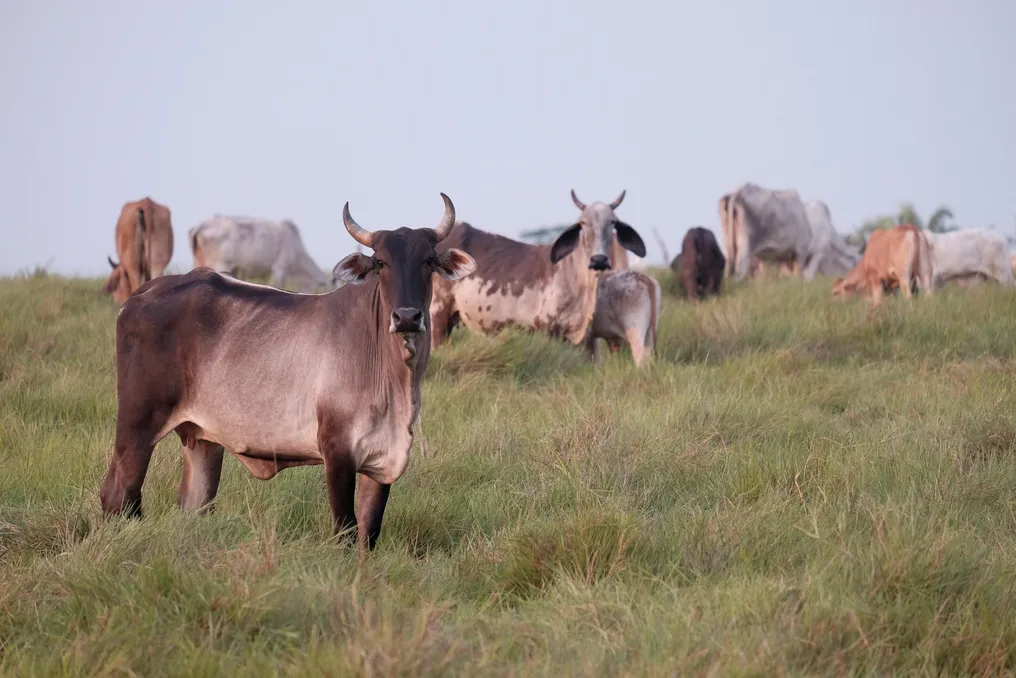
Fires have always been part of this territory. Traditional agricultural methods using controlled burning have been practiced here for millennia by different generations of Mayan civilizations. However, increasingly unpredictable dry seasons combined with the rapid expansion of livestock farming in Petén over the last century have led to forests burning at an alarming rate. On average, about 27,000 hectares of protected land burn annually in Guatemala, and this number increases during El Niño years.
Estuardo Miguel Julián Díaz, treasurer of one of the reserve's community concessions, the Integrated Forest Association of Cruz a la Colorado, states: 'Fires caused us the most damage. They were difficult to control.'
USAID contributed to the creation of a network of state institutions, non-governmental organizations, and community concessions dedicated to monitoring and preventing fires. This network includes satellite monitoring, community firefighting patrols, centralized management of approved burns, and hundreds of miles of firebreaks. Experts note that this has led to a reduction in fires in community-managed areas compared to the reserve's buffer zone.
Conap Coordinator Sergio Balan believes: 'The withdrawal of USAID happened at a very critical moment.'
Funding ceased after the worst fire season in decades, when resources were already extremely limited. In 2024, over 230,000 hectares of protected land burned in Petén.
Balan explains that 'the state no longer had enough resources because this fire season was severe, and available resources for fire prevention and suppression were exhausted.'
The current situation is having to achieve more with fewer resources. Julio Javier Madrid, coordinator of the Petén Forest Communities Association (Acofop), emphasizes this problem.
Over the past year, illegal land invasions driven by livestock farming have intensified in the reserve, especially along the so-called Conap 'Carmelita route,' which is a degraded landscape currently being restored. Balan notes: 'There used to be many fires, but they affected relatively small areas. Now land invasions have increased, and the affected territories have become much larger.'
Without funds to counter these invasions, according to Balan, fires have spread to previously untouched areas. The reduction in funding has forced changes in response mechanisms. Madrid reports that Acofop must now wait for official confirmation of a fire before dispatching resources to fight it.
As El Niño intensifies before the fire season in January, the reserve may face its most serious challenge. Madrid reiterates: 'Our situation now is that we have to do more with less.'
Many in Acofop doubt the sustainability of their jobs. Madrid explains: 'Previously, our salaries were paid directly from USAID funds.'
The organization lost about $375,000 USD in annual funding, which immediately led to the cancellation of a $60,000 project related to a community honey collection center. According to Madrid, this could have given the reserve's beekeepers better access to international markets and increased income.
The international NGO Rainforest Alliance, which supported community concessions in the reserve for decades with USAID backing, has also been severely affected. Since 2023, Rainforest Alliance has been funding community projects through its Prosperous and Resilient Landscapes (PRL) program. USAID allocated up to $6 million to cover this project until 2028, but the funds expired in September.
Jorge Cruz, manager of the Rainforest Alliance office in Petén, says: 'International cooperation has always been timely in critical matters.'
The sudden loss of USAID funding does not mean complete collapse, but some projects remain heavily dependent on external aid for community development and landscape restoration. Cruz adds: 'New concessions definitely require more attention. They need to be strengthened; the concession model must be reinforced.'
Business continues to thrive in Carmelita. The local factory and carpentry center allow the concession to sell furniture and processed wood at higher prices; sales in national and international markets account for about 70% of the concession's annual revenue. The concession also earns income from sate, the leaves of the decorative palm valuable to international florists for bouquets and wedding decorations, as well as from chicli, raw material for chewing gum. Carmelita is also expanding its beekeeping business: it currently has 138 hives producing honey. Tourism is also increasing revenue, attracting thousands of visitors annually.
Barrera concludes: 'Carmelita has reached a stage of self-sufficiency. We have had ups and downs, such as fluctuations in wood prices, but we keep going.'
Other concessions are still in the learning process. The Integrated Forest Association of Cruz a la Colorado (Aficc), located about a thirty-minute drive from Carmelita, is struggling with illegal cattle rancher incursions and deforestation linked to land disputes. Aficc does not possess the rich reserves of mahogany that help sustain Carmelita's operations. Aficc has focused on restoration since 2021, with most of the work financed by the Rainforest Alliance's PRL project. This funding ended last month. Samuel Kishchan, a Rainforest Alliance technician working closely with Aficc, says: 'Next year will be very difficult. We will only be able to continue about 20% of the work.'
Aficc is working to follow the Carmelita model by developing alternative sources of income, which will require continuous investment. Aficc Treasurer, Miguel Julián, notes: 'Today, restoration work is in order, but it will end. What will people do then?'
Can REDD+, the international carbon credit system, offer salvation to the reserve despite its mixed results? Last December, the reserve's flagship carbon reduction project, GuateCarbon, received its first REDD+ payment for 1.1 million tons of prevented carbon emissions due to deforestation reduction. This provided relief to communities seeking to offset the reduction in USAID funding. Years of bureaucracy and property rights issues delayed the project. Ten years passed after the project's verification in 2014 before GuateCarbon could sell its first tranche of carbon credits in 2025. The project has not yet sold any carbon credits on voluntary markets, which the project manager, Sergio Guzmán, considers a missed opportunity.
Guzmán states: 'It is a success story in terms of procedures, processes, and learning. But it is also a failure story because those standard voluntary market tons are still lying there.'
Each concession received $3.6 million USD from the first REDD+ tranche, which was directed towards strengthening social, production, and protection components. Acofop also received about $0.7 million USD for project administration, and the government received $1.1 million USD. In Waxactun, another concession in the reserve, its president Mavil Barrientos says that the GuateCarbon funds were vital for fire prevention, covering salaries and other expenses. Aficc used these funds to purchase an all-terrain vehicle for better fire monitoring. However, unlike USAID contributions, new buyers for GuateCarbon credits must be regular, which is a challenging task requiring time and negotiation.
The Maya Biosphere Reserve was created with the idea that communities living in the forest are its best guardians. USAID's support and decade-long investments helped build this foundation. The question is no longer whether communities can protect one of the world's most vital tropical forest ecosystems. The question is whether they can do so without one of their largest financial sponsors.
According to Guzmán, 'we need to find a way to maintain sustainability independently.'