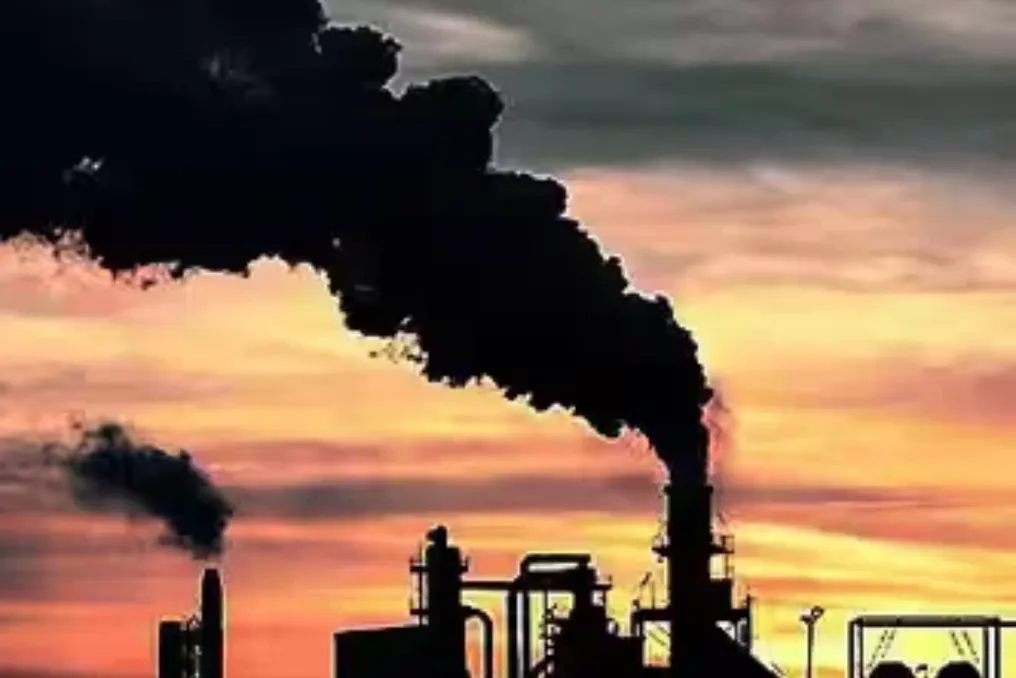
Despite the continued threat of rising global greenhouse gas (GHG) emissions to global warming, India reported a decrease in its emissions in 2025 compared to the previous year. This trend interrupted a long period of rapid growth, resulting from both climatic factors and structural changes in the country towards renewable energy sources, as noted by the United Nations Environment Programme (UNEP) in its annual 'Emissions Gap Report,' published on Wednesday.
According to the report, India is currently the third-largest emitter in terms of total GHG volume. However, its per capita emissions are less than half of the global average and significantly lower than those of the two leaders—China and the USA, whose total emissions increased last year.
In addition to India, the EU countries (27 states combined) and Russia also recorded a decrease in emissions in 2025, while the overall global emission volume remained comparable to that of 2024. Meanwhile, the increase in emissions in the USA significantly exceeded the growth of all other countries. The next largest projected increases were noted in Turkey (the host country for the upcoming climate conference COP31), Iran, and Indonesia.
Although many countries are making efforts to reduce their carbon footprint, the report emphasizes that temperature projections remain 'too high,' and the chance of keeping global warming below 1.5 degrees Celsius without exceeding this threshold has disappeared.
The report indicates that if current policies persist, warming could reach 2.8 degrees Celsius this century relative to pre-industrial levels (1850–1900) and continue to rise after this period. Highlighting the enormous gap in emission reduction requirements, the report notes that the world needs to cut GHG emissions by 18% by 2030 and by 45% by 2035 relative to 2025 levels to stay within a less destructive warming limit.
However, the full implementation of current climate action commitments by all nations combined will only lead to a reduction of 5–8% by 2030 and 11–15% by 2035 relative to 2025 levels, making countries more vulnerable to catastrophic climate change impacts.
The report states: 'These results are worse than last year's forecasts due to the US withdrawal from the Paris Agreement and revised estimates of historical emissions. New Nationally Determined Contributions (NDCs) submitted since last year have had a negligible impact on these forecasts.' While the report calls for urgent emission reductions to avoid exceeding the 1.5-degree Celsius threshold, it also notes that keeping peak warming below 1.7–1.8 degrees Celsius (by mid-century) will become rapidly impossible without immediate action.
Inger Andersen, Executive Director of UNEP, stated: 'Every five years at current CO2 emission levels raise peak warming by approximately 0.1 degrees Celsius.' She added: 'Every additional fraction of a degree and every additional year of warming above 1.5 degrees Celsius intensifies climate impacts and risks, such as deadly floods, heatwaves, and wildfires that affected many countries this year. Therefore, we must make every effort to minimize peak warming and return to 1.5 degrees Celsius by the end of the century.'
The report examines the 'least possible' scenario for exceeding the 1.5-degree Celsius threshold, where peak warming is limited to 1.7–1.8 degrees Celsius. To achieve this path, global GHG emissions must be reduced by 18% by 2030, 45% by 2035, and 69% by 2040 relative to 2025 levels.
UN Secretary-General António Guterres stated in a statement on the report: 'Exceeding the threshold is not capitulation. We can still make it as small and short as possible—and bring the temperature back below 1.5 degrees by the end of the century.'
In 2025, G20 members collectively increased their emissions by 0.7%. Under current policies, only six G20 members (China, India, Indonesia, Russian Federation, South Africa, and Turkey) are assessed as likely to meet their unconditional 2030 targets, while the assessment for the European Union remains uncertain.
The report also notes that although global GHG emissions in 2025 were similar to 2024 figures, emissions of CO2 from fossil fuel combustion (oil, coal, and gas), as well as nitrous oxide (N2O) and fluorinated gases (F-gases), continued to rise last year, while methane (CH4) emissions remained almost the same as in 2024.
'This increase was offset by a reduction in CO2 emissions from the land use, land-use change, and forestry (LULUCF) sector by approximately 0.5 gigatonnes of CO2 equivalent (GtCO2e). The reduction in CO2 emissions in the LULUCF sector was partly due to decreased biomass burning emissions, including a reduction in global carbon emissions from forest fires in 2025 compared to the exceptionally active season of 2024,' the report says.