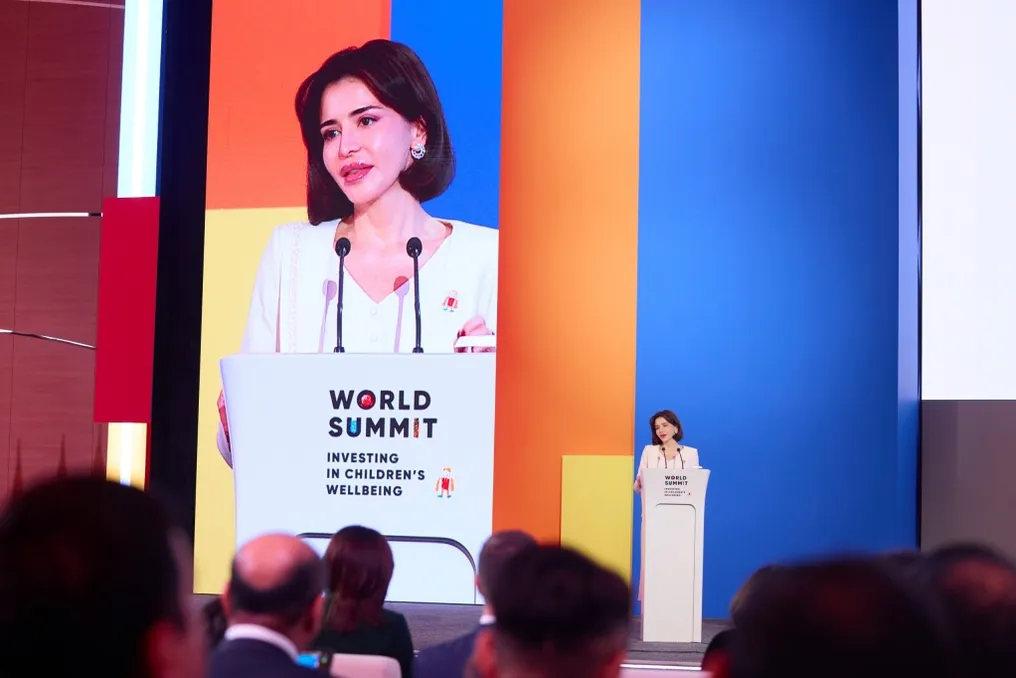
The World Summit on Child Well-being was held in Samarkand on October 21–22. Participants gathered to find ways to reduce the gap in children's access to medical care and education, as well as to improve social support and protection from violence. Particular attention was paid to the issue of pediatric oncology and the disparities in recovery chances depending on the country of residence.
During the summit, the formation of a Global Network for Supporting Children with Serious Illnesses was announced. Organizers insist that a child's health, education, social protection, and safety should not be viewed as isolated areas of state policy, but rather as interconnected factors influencing their development. In their view, the effectiveness of social policy should be assessed not only by the presence of institutions or programs, but also by how it genuinely changes a child's life.
The concept of this approach was illustrated by the exhibition 'The World Through a Child's Eyes,' which included 13 thematic exhibits and interactive zones. The exhibits covered various stages of a child's life—from ensuring safety during childbirth and maternal health to issues of education, rehabilitation, and preparation for independent living. Sections were presented dedicated to early intervention, family support, inclusive education, and the protection of children who have experienced violence.
Using the example of the 'Najot' center, modeled after Barnahus, a model of comprehensive psychological, legal, and medical assistance was demonstrated. This integrated approach is designed to minimize the need for repeated questioning of affected children and reduce the risk of secondary psychological trauma.
Data on progress in the country's social support system were presented during the discussions: the number of types of social services increased from 26 to 140, the rate of child poverty decreased from 21.5% to 5.4%, and preschool education coverage increased from 27.7% to 78%. 208 'Inson' social service centers operate in the country, where about 9 thousand social workers assess family needs, develop individual assistance plans, and direct citizens to necessary services. Information about families and children included in the Social Register is used for targeted support.
In the field of education, 5.6 thousand assistants help children with disabilities in school and facilitate their interaction with classmates. Over the last two and a half years, inclusion centers have conducted over 500 thousand therapeutic and developmental classes. Furthermore, the 24-hour helpline receives more than 7.5 thousand calls monthly. Over two years, the number of foster families has doubled, and the number of children raised in them has grown from 1.4 thousand to 11.8 thousand. 277 children in difficult situations received support from social workers, as well as medical, psychological assistance, and shelter.
Addressing the summit participants, Uzbekistan's President Shavkat Mirziyoyev outlined five key areas for further discussion: investment in children from the earliest age, including early detection and treatment of childhood cancer; reducing the gap in access to preschool and school education; ensuring a safe environment, including online; strengthening targeted and expanding social protection; and involving children themselves in decisions concerning their lives. The head of state also proposed establishing a platform for interaction among all interested parties.
The Chairman of the 81st session of the UN General Assembly, Khalilur Rahman, put forward four principles: prioritizing children's interests over bureaucracy, building systems around the child's needs, focusing on the most vulnerable groups, and ensuring funding for commitments made. Rahman noted that UNICEF monitors 48 indicators of the UN Sustainable Development Goals, and two-thirds of these goals are behind schedule.
He specifically highlighted the problem of pediatric oncology: annually, about 400 thousand children and adolescents face cancer. In high-income countries, over 80% of such patients are cured, whereas in low- and middle-income countries, this figure is less than 30%. Rahman called for achieving the World Health Organization's goal—to ensure at least 60% survival rate for children with oncological diseases worldwide by 2030.
Samarkand Declaration
Rahman emphasized that the Samarkand Declaration must serve as a foundation for practical actions and reporting, and the results of the summit must be taken into account when preparing for the Sustainable Development Goals summit in 2027. He stated that political commitment only gains real strength after passing through the budgetary process, because 'a declaration does not vaccinate a child' and 'applause cannot buy necessary medicines.'
Sabina Mahl, UN Resident Coordinator in Uzbekistan, read out a message from UN Secretary-General António Guterres. The Secretary-General thanked Uzbekistan for hosting the summit and used the inequality in access to childhood cancer treatment as an example of the consequences of insufficient investment in public social services. According to him, risks to children increase due to conflicts, economic crises, climate disasters, poverty, and healthcare problems, while the need for humanitarian aid and long-term development grows, and debts limit the opportunities of developing countries.
UN Deputy Secretary-General Amina Mohammed strongly recommended making child well-being a priority in national budgets. She supported the SDG Stimulus initiative aimed at increasing countries' financial resources for sustainable development and stressed the need to consider the actual conditions under which children receive education and medical care. Mohammed noted that having a place in school is meaningless if a child is hungry or afraid to come.
The II International Congress on Childhood Cancer 'From Recovery to Quality of Life,' which also took place on October 21–22, was organized by the Ministry of Health of Uzbekistan, the Scientific and Practical Medical Center for Pediatric Oncology, Hematology, and Immunology, and the International Academic Hub for Childhood Cancer. Experts from WHO, St. Jude Global, Dana-Farber Cancer Institute, Vienna Medical University, as well as specialists from Uzbekistan, Germany, India, Italy, Kazakhstan, China, Russia, and Turkey participated in the congress. Topics discussed included hematopoietic stem cell transplantation, cellular and gene therapy (including CAR-T), as well as digital solutions and data exchange.
According to data presented at the summit, in Uzbekistan, the period from suspicion of a child's oncological disease to the start of treatment has been reduced from 130–160 days to 10–18 days. One-year survival has increased from 37% to 44.5%, and the availability of anti-cancer drugs has risen from 33% to 88%, with the number of such drug names increasing from 89 to 194. Congress organizers emphasized that helping children with cancer requires a systemic approach that includes not only treatment but also rehabilitation, psychological support, continued education, and return to normal life.
Within the discussions, issues of palliative care, the development of children's hospices, and rehabilitation centers were considered. The 'Imkon' network of centers annually helps over 5 thousand children by providing them with rehabilitation, speech development classes, psychological support, and self-care skills training. One of the decisions made in Samarkand was the establishment of the Global Network for Supporting Children with Severe and Life-Threatening Diseases, including oncological ones. Carlos Rodriguez-Galindo, Vice President of St. Jude Children's Research Hospital and Director of St. Jude Global, announced the creation of this network, which aims to unite First Ladies and spouses of heads of state for international experience exchange. The First Lady of Uzbekistan, Ziroat Mirziyoyeva, became the chair of the network for two years. The summit continued the international dialogue initiated in 2024 in Tashkent at the I International Congress on Childhood Oncology and Hematology.