Countries in Asia and the Pacific have achieved significant success in reducing poverty over the last three decades through a combination of economic growth, government programs, and community-level initiatives.
However, the nature of poverty and vulnerability is changing due to factors such as climate change, population aging, digital transformation, and frequent economic shocks. These changes are reshaping the understanding of who is poor, how people cope with hardship, and how vulnerable they are to future risks. Nevertheless, there are tools and evidence available to address these issues.
The region has numerous examples of successful practices: universal health insurance in Thailand has reduced out-of-pocket healthcare costs and infant mortality, with the poorest households benefiting the most. Nepal has nearly halved child growth stunting thanks to coordinated nutrition policies, despite limited economic growth. China has implemented targeted employment assistance mechanisms for vulnerable groups to expand their employment opportunities.
Furthermore, Malaysia is increasing access to childcare and elderly care services through government investment, community-based services, and financial incentives. Mongolia supports unpaid family caregivers through state-funded care allowances. Cooperatives from Cambodia, India, Kiribati, and Vietnam demonstrate how community-owned and participatory models can generate income and resilience, especially in rural areas.
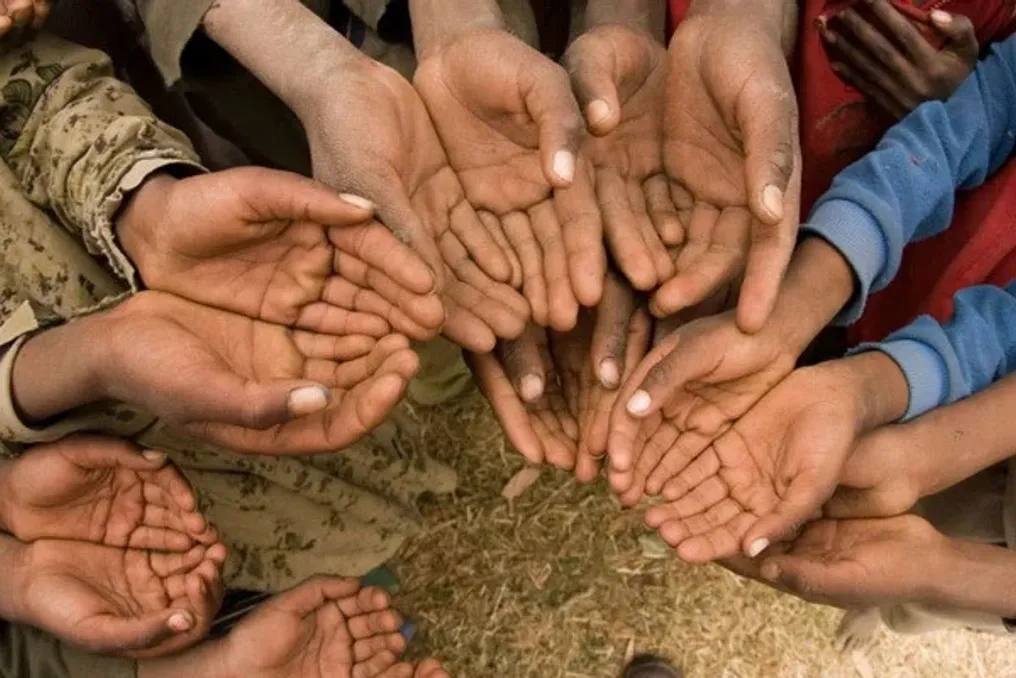
These actions have contributed to the region recording one of the most significant success stories in modern human development. Thanks primarily to economic growth, the rate of extreme poverty, which affected about half the population 30 years ago, has dropped to just 4 percent in 2024, lifting hundreds of millions out of acute deprivation. However, this aggregate statistic hides a serious problem: 190 million people still live in extreme poverty, almost 500 million suffer from multidimensional poverty, and 660 million are vulnerable to multidimensional poverty.
When considering hybrid poverty lines that reflect the real cost of a decent life in each country, the trends look even more alarming: by 2026, over 1.1 billion people will live in poverty, an additional 1.2 billion are above but very close to their poverty thresholds, and 310 million are classified as extremely poor. People lack not only income but also adequate housing, education, nutrition, or social protection. Even more critically, millions remain one shock away from falling into or deepening poverty.
Since many factors driving poverty cross borders, regional cooperation is not an option but a necessity. Through regional public goods such as the 'Leave No One Behind' Platform, the Online Social Protection Tool, the Risk and Resilience Platform, and the SDG Gateway, we help translate collective regional experience into policy tailored to national conditions and evidence-based. Moreover, platforms like ESCAP's Action Plan for Strengthening Regional Social Protection Cooperation enable governments to facilitate knowledge sharing and scale up policy approaches. Since government action alone is insufficient to close the gap, the private sector and civil society organizations also play a crucial role through inclusive business models that reach vulnerable populations.
Our study, 'Social Outlook 2026,' highlights three simultaneously evolving transitions: climate change, digital transformation, and rapid population aging, which are changing the composition of the vulnerable population. Extreme climatic events destroy work time equivalent to millions of jobs and reduce agricultural yields, negatively impacting food security. The region is aging faster than any other in human history, transitioning from an aging to an aged society. While digital technologies have already helped lift people out of poverty by expanding access to markets, finance, and services, the digital divide continues to exclude the most vulnerable, who are also most susceptible to automation and face existing labor market deficiencies.
Moreover, the ongoing crisis in West Asia has disrupted energy and fertilizer markets, trade routes, and remittances across our wider region, exacerbating inflation, especially for households least able to absorb it. This follows a cost-of-living crisis, and precedes a pandemic, with each shock hitting a population still recovering from the previous one. These compounding crises underscore a harsh reality: progress in the fight against poverty is reversible, putting the region at risk of losing a decade of inclusive development.
The report not only measures poverty and analyzes its causes but also changes our understanding of who and why people are poor. In our region, poverty is consistently concentrated among large rural households and in remote areas, among people with low or no education, among children, among informal sector workers, and among women bearing a disproportionate share of unpaid care. In 25 studied countries using ESCAP's 'Leave No One Behind' algorithm, disaggregating monetary and multidimensional poverty through household surveys showed that the intersection of multiple deprivations, rather than a single deprivation alone, uniquely defined those in the worst situations. Understanding these country-specific overlapping deprivations is crucial for developing targeted policies that address the interconnected barriers trapping people in poverty.
Integrated investments in human capital, healthcare, decent work, and social protection, underpinned by gender-sensitive, disability-inclusive, and age-friendly policies, are key pillars of one agenda: empowering people and eradicating poverty in our region. We have a plan, and the Asia-Pacific region has already proven it capable of reducing poverty at scales and rates unmatched globally. What is needed now is coordinated action to implement this on a broad scale.
The evidence base for action is strong, and sustainable progress depends on consistent strategies that align economic, social, and environmental goals, strengthen institutions, and build lifelong human capacity and resilience. The question posed by 'Social Outlook 2026' is whether we will make the final decisive push to finish the job by 2030, or if we will maintain 'business as usual' thinking and allow the next shock to undo the progress made.