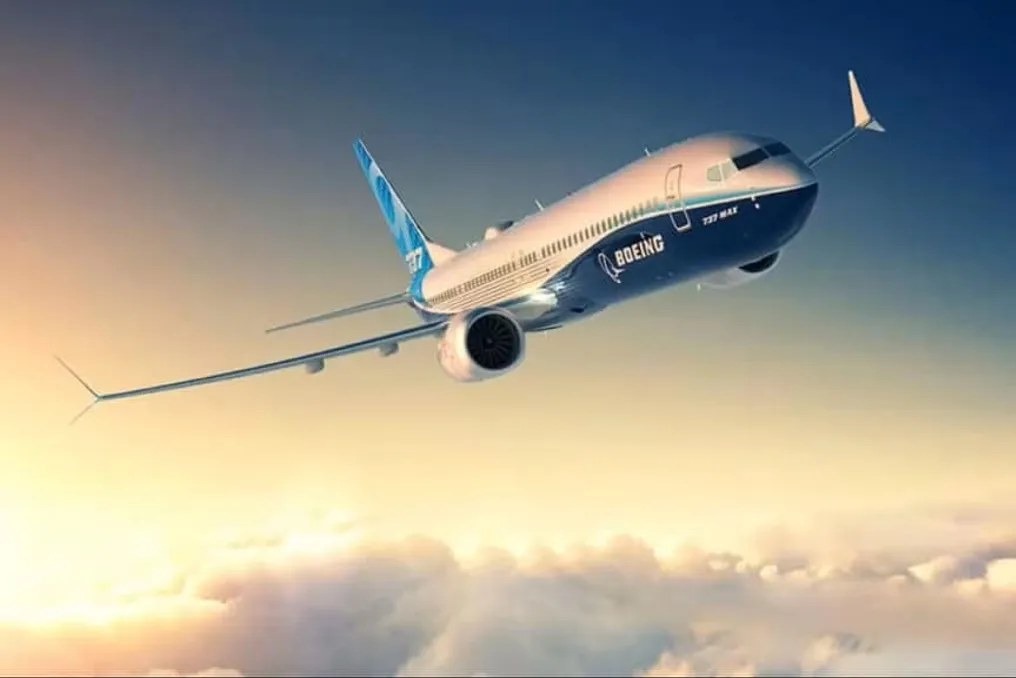
The Boeing 737 MAX 10, the most robust version of the 737 MAX line, received final approval from the U.S. Federal Aviation Administration (FAA) this Tuesday, the 20th. This authorization allows deliveries to begin in the coming weeks, ending a period of long delays and safety requirements.
With over 1,550 units ordered, this aircraft has a capacity to carry up to 230 passengers. Boeing uses this model to strengthen its finances, while several airlines await the arrival of the aircraft.
Passenger capacity is a strong point of the MAX 10; it accommodates 230 people, surpassing the MAX 9, which carries 195, and the MAX 7, with a capacity of 160. Boeing already has units of this aircraft ready, awaiting only permission for delivery.
According to the aviation consultancy IBA, orders for the MAX 10 account for 31% of the remaining orders in the 737 family. Airlines such as United Airlines, Alaska Airlines, Ryanair, Delta Air Lines, and American Airlines are among those expecting to receive this model.
Stephanie Pope, President and CEO of Boeing Commercial Airplanes, confirmed that deliveries will begin in the coming months. She highlighted that the aircraft offers advantages such as greater passenger capacity, longer flight range, and better economy per seat within its category.
Initially, Boeing planned to start delivering the MAX 10 in 2020. However, constant postponements impacted the manufacturer's business goals, which seek to regain market share and improve its financial health.
The certification process became stricter after two fatal accidents involving the 737 MAX 8, which occurred in 2018 and 2019, resulting in 346 victims. Additionally, in January 2024, an incident added pressure to Boeing: a fuselage panel on a 737 MAX 9 operated by Alaska Airlines detached during a flight.
To obtain approval for the MAX 10, the FAA imposed improvement requirements on the flight control system and the installation of an enhanced angle of attack sensor. This sensor measures the angle between the aircraft's trajectory and the surrounding airflow. These modifications will also be applied to aircraft already in service in the coming years.
Other technical issues also contributed to the delays. A fault detected in 2023 in the engine anti-icing system affected the certification schedule for both the MAX 7 and the MAX 10. In August, the FAA finally approved the MAX 7 after an analysis that exceeded eight years.
At the end of September, Boeing also disclosed a flaw in the navigation software update for the 737 MAX family. However, the FAA determined that this issue posed no safety risk and therefore did not require its correction as a condition for certifying the MAX 10.
The 737 MAX family covers several versions with different capacities to meet the demands of airlines. Boeing continues to work on the certification of the 777-9, its largest commercial aircraft, whose design has been delayed by six years, with completion and the start of deliveries expected in 2027. For the company, the release of the MAX 10 represents a chance to advance accumulated orders and resume the delivery schedule.