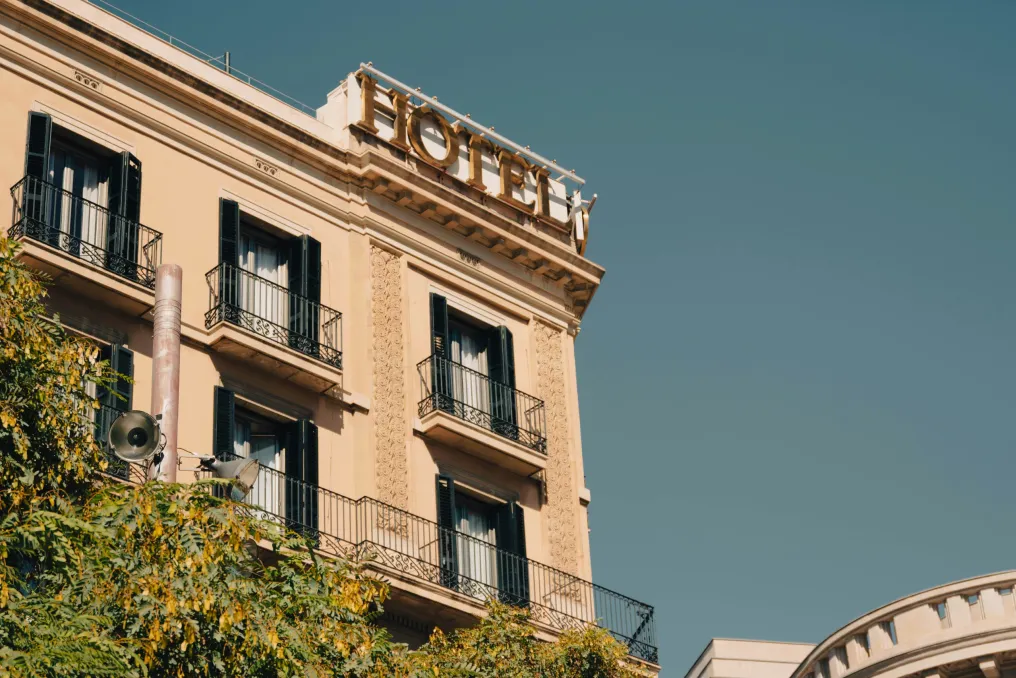
Europe boasts numerous historic hotels that offer travelers more than just beautiful rooms; they allow guests to step into the histories that shaped these places. These hotels transport visitors back in time, whether it's a former pilgrim hospital in Spain or magnificent Venetian palaces.
Parador de Santiago de Compostela, located opposite the famous Cathedral of Santiago de Compostela, has been hosting guests since the 15th century. This hotel, also known as Hostal dos Reis Católicos, was commissioned by the Catholic monarchs of Spain as a hospital for pilgrims undertaking the Camino de Santiago. Its richly decorated facade, stone corridors, and four courtyards retain traces of its original purpose.
For pilgrims, staying here is a memorable way to mark the completion of the Camino, while for other visitors, it is an opportunity to experience a building shaped by centuries of travel.
Best suited for:
Camino pilgrims and travelers exploring Galicia.
The Gritti Palace, overlooking the Grand Canal, dates back to the 15th century and became the residence of Andrea Gritti, Doge of Venice, in 1525. It later opened as a hotel in the 19th century. Historical artwork, antiques, and architectural details reflect Venice's artistic past, while the canal outside reminds one of the waterway that made the city a major trading power. Returning to the former residence of the nobility after strolling through Venice's narrow streets adds another level of experience.
Best suited for:
Art lovers and unique urban retreats in Venice.
Ashford Castle is situated on the shores of Lake Corrib in the county of Mayo, with a history spanning over 800 years. The estate was later owned by the Guinness family before becoming a hotel. Today, guests can explore the surrounding forest, enjoy lake views, and engage in activities such as falconry, archery, and horseback riding. The castle's appeal lies in the combination of historical architecture and the Irish countryside beyond its walls.
Best suited for:
Castle stays and nature escapes.
Cliveden House, which overlooks the Thames in Berkshire, has hosted aristocrats and influential figures for centuries. Originally built in 1666 for George Villiers, the second Duke of Buckingham. After fires and renovations, the estate became associated with the Astor family and Britain's political and social elite. It is also linked to the Profumo scandal of the 1960s. Today, the hotel is located on 376 acres of National Trust land with gardens and forests. Guests can explore the grounds and admire the river view. Cliveden's history offers insight into the wealth, influence, and intrigue surrounding the tradition of country houses in Britain.
Best suited for:
Historic estates, gardens, and nature retreats near London.
Ritz Paris, opened in 1898 by Swiss hotelier César Ritz, helped redefine luxury hospitality. Early amenities included private bathrooms in rooms and electricity on every floor. The hotel attracted famous guests such as writer Marcel Proust and fashion designer Coco Chanel, becoming closely associated with Parisian high society. Following a massive renovation completed in 2016, the Ritz continues to blend modern amenities with historic charm. Its location on Place Vendôme also provides guests with easy access to the Louvre and the Tuileries Gardens.
Best suited for:
Parisian history, architecture, and classic urban leisure.
Hotel Danieli, located near St. Mark's Square, occupies historic palaces reflecting various periods of Venetian life. The main building, Palazzo Dandolo, dates back to the 14th century and was once the residence of the noble Dandolo family. Ornate staircases, marble details, and historical artwork preserve its palatial atmosphere. Outside, the lagoon and surrounding streets facilitate walking tours of Venice's attractions. A stay here offers a different perspective on the city, where history extends beyond the famous squares, into its canals, bridges, and quiet streets.
Best suited for:
Venetian architecture and exploring the historic center.
These hotels offer more than just a place to sleep; their walls reflect the people who lived there, the events they witnessed, and the changing role of historic buildings over time. For travelers, this history becomes part of the experience itself, and sometimes the place where you stay is remembered as much as the destination itself.