
First Lady of Uzbekistan Ziroat Mirziyoyeva Heads Global Network for Support of Seriously Ill Children
Read more
UzDaily
uzdaily.uz

First Lady of Uzbekistan Ziroat Mirziyoyeva Heads Global Network for Support of Seriously Ill Children

The First Lady of Uzbekistan, Ziroat Mirziyoyeva, has been appointed as the chairperson of the Global Network for Support of Children with Serious Illnesses for a two-year term. This international initiative was announced during the Second International Congress on Childhood Cancer, held in Samarkand as part of the World Summit on Child Well-being, according to the press service of the Zamin Foundation.

The new network will unite first ladies and spouses of heads of state to promote international cooperation, exchange experiences, and provide assistance to children suffering from serious and life-threatening diseases, including cancer.

The initiative was presented by Carlos Rodriguez-Galindo, Vice President of St. Jude Children's Research Hospital and Director of St. Jude Global in the United States. Mirziyoyeva's appointment to the chairmanship was officially formalized during the congress.

Addressing the event, the First Lady of Uzbekistan called on the international community, governments, scientists, and humanitarian organizations to join forces to meet the needs of children requiring medical care.

Mirziyoyeva stated: 'Illness and suffering do not recognize political borders, nationality, or income level. Let us unite for the future well-being so that no child and no family is left alone with their pain.'

The Second International Congress on Childhood Cancer was held under the slogan 'From Treatment to Quality of Life.' Participants included representatives of healthcare bodies from Uzbekistan, Azerbaijan, Kazakhstan, Kyrgyzstan, Tajikistan, and Russia, as well as the World Health Organization, the International Society of Pediatric Oncology, the European School of Oncology, foreign university hospitals and medical centers, research organizations, and civil society groups.

The network is intended to strengthen international cooperation in the field of supporting children with severe ailments. Mirziyoyeva's appointment underscores Uzbekistan's efforts to develop services in pediatric oncology and expand children's access to quality healthcare.

Similar stories

Uzbekistan proposed creating a unified computing infrastructure for Central Asian countries
Read more
podrobno.uz

Uzbekistan proposed creating a unified computing infrastructure for Central Asian countries

Uzbekistan has put forward the idea of establishing a common computing infrastructure for all Central Asian countries, which would be based on an interconnected network of national data centers. This initiative is aimed at promoting the joint use of computing resources and stimulating the development of domestic digital projects, especially in the field of artificial intelligence.

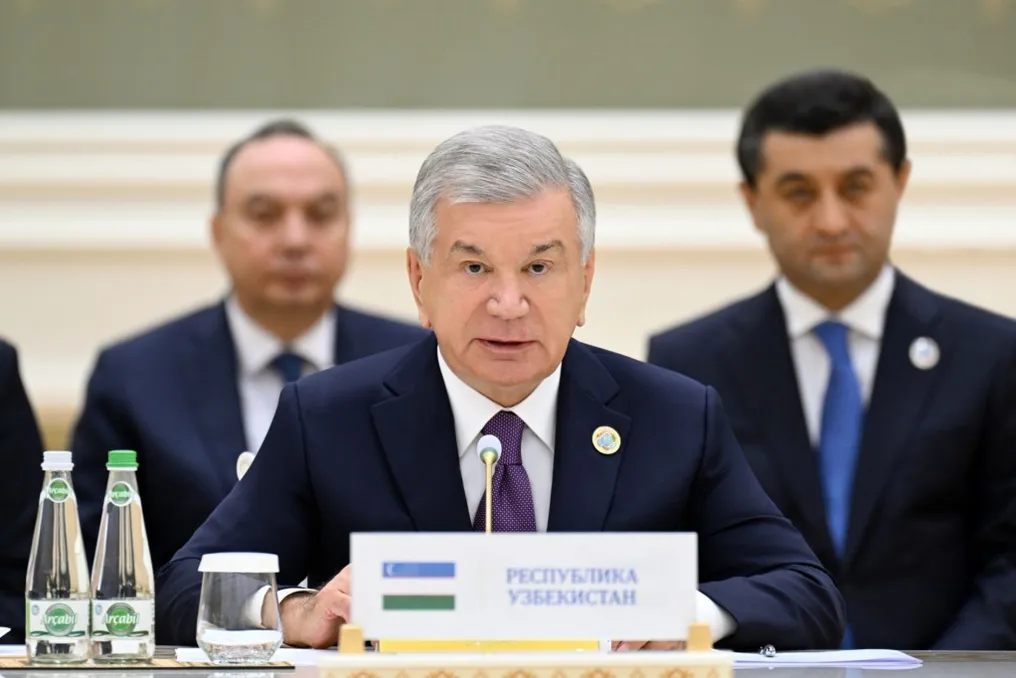
The President of Uzbekistan, Shavkat Mirziyoyev, announced this proposal on October 8 during the eighth Consultative Meeting of Heads of State of Central Asia, held in Turkmenistan. According to the president, big data and artificial intelligence technologies are transforming sectors such as transport, energy, agriculture, education, industry, and public administration.

Mirziyoyev emphasized that the future competitiveness and productivity of the region's economies will largely depend on the pace of these technological developments. The proposed model involves connecting the national data centers of the region's countries, which will ensure more efficient use of existing computing power and create the necessary technical foundation for large-scale AI projects.

In addition to technical aspects, the president focused on training qualified personnel. He suggested launching joint educational programs, supporting scientific research, and expanding opportunities for technological entrepreneurship. It should be noted that at the same meeting, Mirziyoyev also proposed that the countries of Central Asia and Azerbaijan develop common industrial and technological chains, as well as form new tools for implementing joint initiatives.

Popular