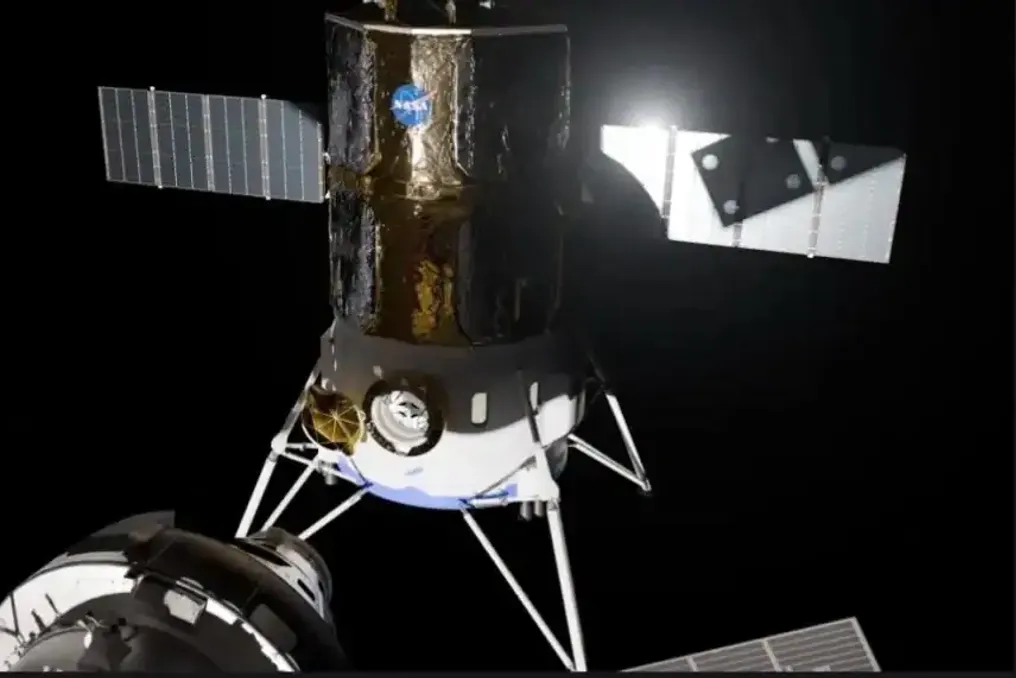
NASA details SpaceX and Blue Origin plans for lunar missions, targeting 2028
Read more
Olhar Digital
olhardigital.com.br

NASA details SpaceX and Blue Origin plans for lunar missions, targeting 2028

NASA has released the schedules established by SpaceX and Blue Origin for preparing their respective modules destined for the Moon. Both companies are competing for the mission that is set to return astronauts to the lunar surface, projected for the year 2028.

Before this milestone, Artemis 3, scheduled for the third quarter of 2027, will be used to test the connection of the vehicles with the Orion spacecraft. The data obtained from this test will help the space agency determine which module will be suitable for the subsequent mission.

On October 5, during the International Astronautical Congress held in Turkey, Steve Creech, interim manager of the Human Landing System (HLS) program, presented the future phases of these projects.

Artemis 3 will carry four astronauts into low Earth orbit. The crew will test the docking of Orion with versions of the Starship module from SpaceX and Blue Moon from Blue Origin. It is important to note that this mission will not include a lunar landing; its purpose is only to confirm compatibility between the spacecraft before moving on to the next stages.

This change is part of a restructuring communicated by NASA in February. The agency moved the goal of conducting the first crewed landing of the program to Artemis 4, maintaining the 2028 horizon for the return to the lunar surface. The decision on which module will be chosen will depend on the test results and each company's ability to prove that its vehicle operates safely.

SpaceX is focused on developing the cabin of the lunar version of Starship and the necessary systems for it to dock with Orion. Among the goals set for 2026 are the recovery of the new V3 engine and the capture of a upper stage of the spacecraft. SpaceX's challenge goes beyond launch tests, as to reach the Moon, Starship will need to receive fuel from tank vehicles already in orbit. The company also needs to prove its ability to transfer and store propellants in space with minimal loss. SpaceX plans to conduct an unmanned lunar landing demonstration by the end of 2027.

In the context of Artemis 3, the Starship used in the test will not have a cabin suitable for astronaut entry. The docking aims solely to verify compatibility with Orion, without any crew aboard the SpaceX spacecraft.

Blue Origin is developing the Blue Moon Mark 2, a module that is approximately 16 meters high and equipped with three BE-7 engines. The test version of this module should incorporate a cabin, part of the life support systems, and features that allow astronauts to access the vehicle from Orion. Furthermore, the company needs to restore the launch facilities at Cape Canaveral, which were damaged by an explosion in May. NASA anticipates that operations will resume in the fourth quarter of 2026, although a Reuters report indicates the possibility of a delay until early 2027.

The main milestones expected for Blue Origin include very tight schedules. While SpaceX aims for the end of 2027 to demonstrate an uncrewed landing, Blue Origin projects this phase for early 2028. NASA will need to analyze the results before approving any crewed mission. For now, the main goal remains unchanged: to bring astronauts back to the Moon in 2028.
Similar stories

Japan launches MMX probe to collect samples from Mars' moons, Phobos and Deimos
Read more
olhardigital.com.br

Japan launches MMX probe to collect samples from Mars' moons, Phobos and Deimos

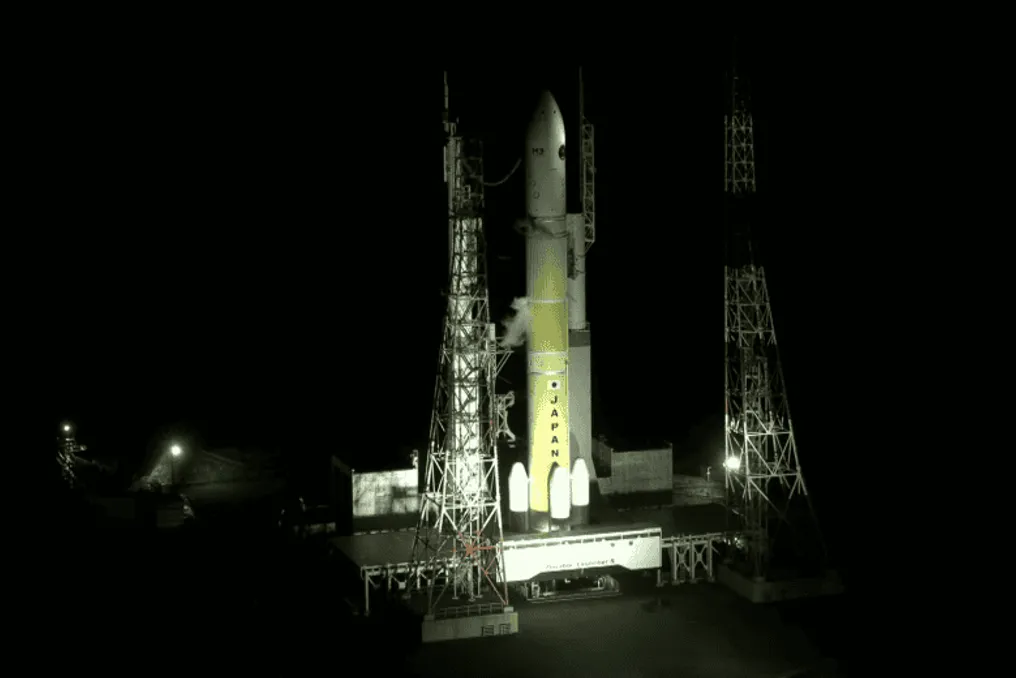
Japan began a space mission on Monday, the 19th, at 4:41 PM (Brasília time), with the launch of the MMX probe (Mars Moon Exploration). This mission aims to bring samples from one of Mars' moons back to Earth.

The MMX probe was launched aboard an H3 rocket from the Tanegashima Space Center in Japan. It is scheduled for a journey of about five years, with the purpose of investigating Phobos and Deimos, the two natural satellites of the red planet.

Under the leadership of the Japan Aerospace Exploration Agency (JAXA), the mission seeks to achieve an unprecedented feat: landing on Phobos, collecting material from its surface, and bringing it back to the planet. The goal is to obtain a minimum of ten grams of samples, which are expected to arrive on Earth in 2031.

This endeavor involves the participation of NASA and European space agencies, as well as various institutions and companies that provided essential scientific equipment and technologies for the mission.

One of the primary scientific focuses of MMX is to understand how Phobos and Deimos originated. There are two main theories to explain the genesis of these Martian moons. One suggests that the satellites resulted from material ejected into space after a large impact on the planet, where the fragments agglomerated to form the two moons.

The second hypothesis maintains that Phobos and Deimos are asteroids that approached Mars and were captured by the planet's gravitational force. The analysis of the collected samples will be crucial to differentiate between these possibilities. If the origin was an impact, the materials may contain traces of Mars mixed with debris from the impacting body. On the other hand, if they are captured asteroids, they may retain chemical characteristics of other areas of the Solar System.

The findings of this mission also have the potential to expand knowledge about the geological evolution of Mars and the formation of rocky planets. Additionally, MMX will investigate the viability of Phobos serving as a natural space station for future crewed missions to Mars.

MMX is part of a global effort aimed at better understanding the Martian environment and developing the necessary technologies for long-duration space exploration. JAXA plans to utilize accumulated experience from previous asteroid sample collection missions to conduct the operation on Phobos. NASA also supports the spacecraft, contributing scientific instruments, collection equipment, and communication systems.

If the mission is successful, it will enable the study in terrestrial laboratories of materials taken directly from a Martian moon. The detailed investigation of these materials may answer questions that remote observations have not yet been able to solve. The capsule containing the samples is expected to return in 2031, at which time scientists can begin analyzing the material gathered during the journey.

Popular