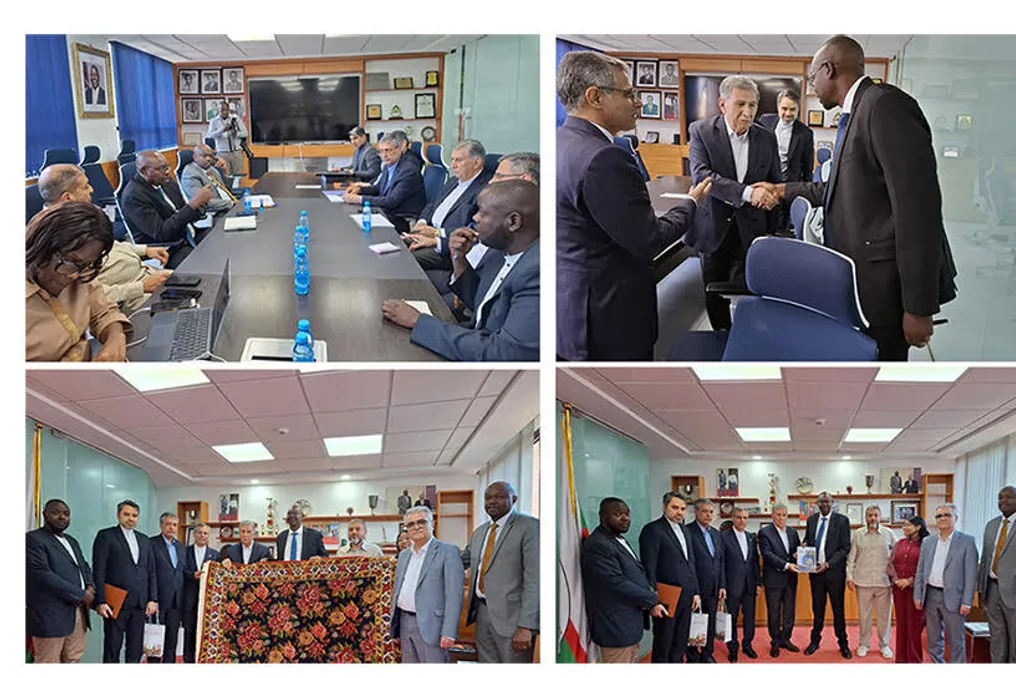
The Presidential Advisor for Economic Cooperation emphasized the need to transition from formal and preliminary negotiations to economic diplomacy focused on achieving concrete results in developing trade ties with Africa. He noted the importance of coordinating efforts among state structures, the private sector, and academic centers.
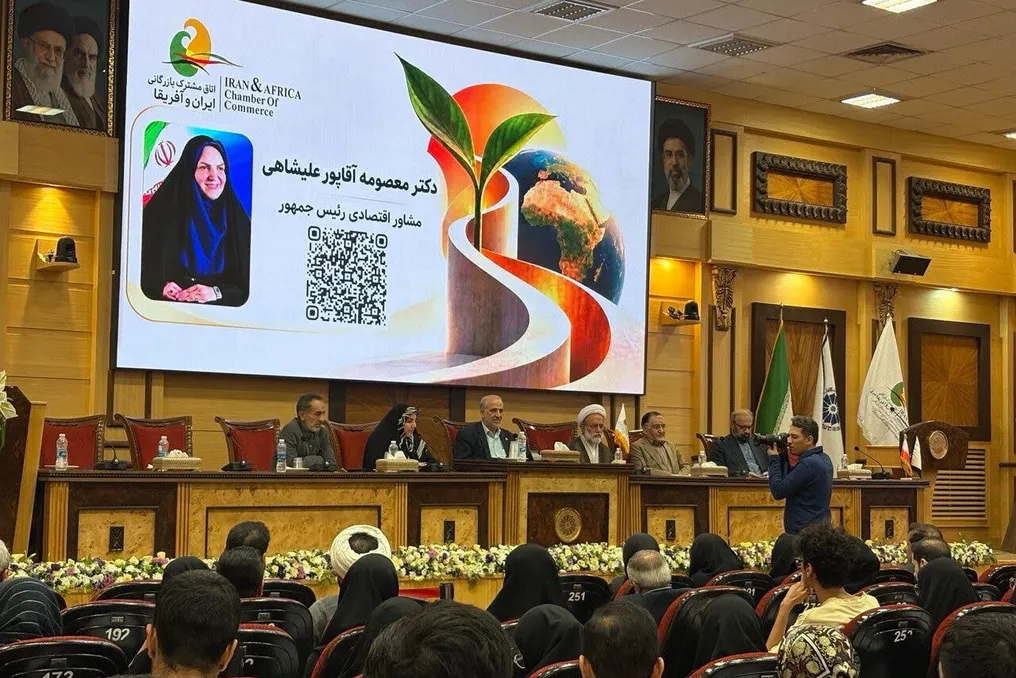
During the second session of the Iran-Africa Chamber of Commerce, aimed at involving the younger generation in international trade, Masoumeh Aghapour stated that for this goal to be achieved, the government must create conditions for the private sector's activity. At the same time, universities and scientific centers are obliged to provide necessary expertise and support, while economic actors must take primary responsibility for promoting trade projects based on market knowledge and their capabilities.
Aghapour added that none of these sectors can realize its full potential alone. Cooperation and division of responsibilities between the government, universities, and the private sector will form the basis for an effective external trade development system.
The Presidential Advisor for Economic Cooperation stressed the necessity of transforming the Iranian approach to developing trade relations with the African continent. He specified that success in African markets will not come from increasing the number of trips or signing memorandums of understanding, but through the implementation of real projects, the creation of competent companies, the conclusion of effective contracts, and the training of a new generation of international trade participants.
He also emphasized that Africa is not just a market for Iranian products, but a strategic horizon for the future economy of Iran, as well as an important platform for the effective presence of the new generation in the field of international trade.
Addressing the government's attention to youth opportunities, Aghapour noted that belief in the potential of young people and their role in the country's economic transformation is a key element in transitioning Iran's economy from traditional structures to a modern model and expanding international contacts.
He stated that young people, especially those familiar with modern technologies and global economic processes, are capable of shaping new directions for foreign trade, finding international opportunities, creating innovative enterprises, and strengthening Iran's economic ties with other countries.
Analyzing Africa's demographic, economic, and trade potential, the Presidential Advisor for Economic Cooperation concluded that the continent, with its young population, broad production and consumer capacities, and developing markets, is one of the most important areas for expanding Iran's economic interaction. Therefore, the view of this continent must evolve from a short-term approach limited to one-off interactions to a long-term and targeted strategy.
For the effective utilization of these opportunities, the opinion of economic subjects regarding Africa must be based on deep market knowledge, assessment of prospects, and the development of action plans. Thus, success in international markets becomes significant when initial contact leads to sustainable economic cooperation, joint projects, export development, and the creation of added value for the country's economy.
Aghapour, commenting on the difficulties of economic activity in foreign markets, stressed that a successful presence in African markets requires a detailed understanding of the economic conditions, regulations, and trade mechanisms of the destination countries. Before entering any market, economic players must professionally study potential risks, supply chains, legislation, banking and currency systems, and trade operation methods.
The Presidential Advisor for Economic Cooperation added that Iranian exporters must carefully study the target market before offering their products. By understanding distribution methods, retail shelf features, household preferences, and consumer expectations, they must develop and offer goods that meet market needs.
Aghapour considered the creation of a specialized department for trade with Africa and the training of specialized personnel as important steps in developing economic cooperation with the continent. He stated that one of the country's fundamental needs is the cultivation of personnel familiar with the specifics of African markets and possessing specialized knowledge in international trade.
He also noted that specialized training should be linked to practical experience so that young people can not only master the theoretical foundations of trade but also gain experience in real negotiation processes, marketing, business partner search, and contract implementation.
In conclusion, the Presidential Advisor for Economic Cooperation stated that developing cooperation with this continent should not be limited to the export of traditional goods. It is also necessary to ensure conditions for the presence of Iranian technology companies, research firms, and specialized service providers. Therefore, the central element of trade planning must be determining the real needs of the destination countries and aligning the capabilities of Iranian companies with these needs.