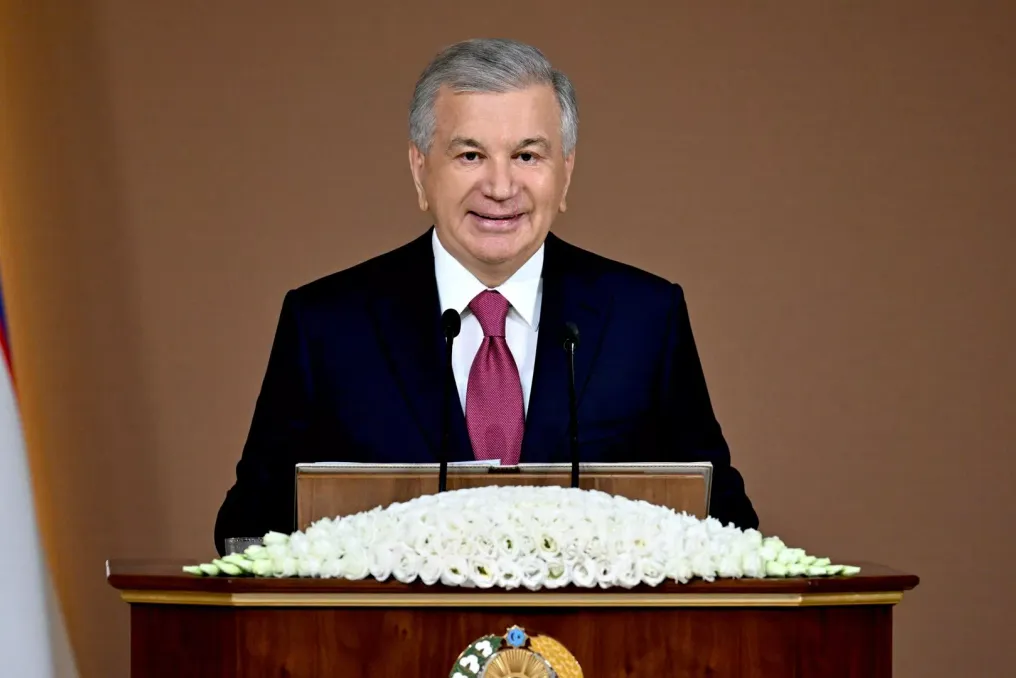
The President of Uzbekistan outlined tasks for the development of the Uzbek language in the fields of education, science, and the digital environment. A law concerning the alphabet was also signed. The head of state emphasized the importance of improving the quality of education, simplifying official documents, as well as developing scientific publications and artificial intelligence technologies in the Uzbek language.
In his address, the President focused on several key areas. Firstly, education and textbooks: it is necessary to develop reading, comprehension, fluent speaking, and literate writing skills among students, taking into account the needs of children learning Uzbek as their native or state language during the updating of educational materials.
Secondly, this concerns understandable government documents: laws, decrees, instructions, and responses to citizens' appeals must be drafted in simple, clear, and accessible language so that citizens can easily understand their rights and obligations.
Thirdly, science and terminology: it is necessary to increase the number of reliable scientific works, high-quality translations, and electronic resources in the Uzbek language in fields such as medicine, engineering, and economics. It is also important to make scientific terms more understandable and regularly update dictionaries.
The fourth area is artificial intelligence and digital technologies: electronic dictionaries, translation and editing programs in the Uzbek language should be developed, as well as speech-to-text and text-to-speech conversion technologies should be improved.
Furthermore, the President mentioned international cooperation and translation, noting support for those studying Uzbek abroad and ensuring them with literature and educational resources. In this context, the inclusion of the 'Uzbekshunoslik dasturi' program in Oxford University was mentioned.
The issue of linguistic diversity was also highlighted: alongside creating favorable conditions for learning the Uzbek language, it is necessary to support the development of the Karakalpak language and other languages of the country.
The President specifically noted the attitude of state institutions towards the language, stating in his congratulation: 'Respect for the state language must be demonstrated in the provision of public service.' It was also emphasized that the main criterion for assessing the quality of artificial intelligence systems is how accurately and usefully they operate in the Uzbek language.
On the day of the celebration of the Uzbek language, the President signed a law on improving the Uzbek alphabet based on the Latin script. According to this law, the spelling of four letters will change. Additionally, the letter Ng will be designated as a separate letter, independent of the alphabet. The new alphabet will consist of 28 letters and one diacritical mark.
The law will come into force six months after its official publication. Documents, national currency, and securities issued in the old alphabet will retain their legal validity. Textbooks, professional manuals, and reference books will be replaced gradually.
It should be recalled that the Uzbek language was granted the status of state language on October 21, 1989, and since 2019, this date has been celebrated as Uzbek Language Day in the country.