Seedling center established in Kashkadarya for neighborhood greening with plans to increase production
Read more
Podrobno.uz [uz]
podrobno.uz

Seedling center established in Kashkadarya for neighborhood greening with plans to increase production

A center designed for propagating seedlings to improve local mahallas was opened in the Guzar district of Kashkadarya region. Initially, the production is planned for 1.6 million trees and plants, but in the future, the output volume is set to increase to five million seedlings annually.

President Shavkat Mirziyoyev inspected the work of this center as part of the nationwide 'Yashil Maqon' initiative during his visit to the region. The complex covers an area of 65 hectares, and the total project cost is estimated at 9.5 billion soms. The creation of the center has resulted in about 100 new jobs.

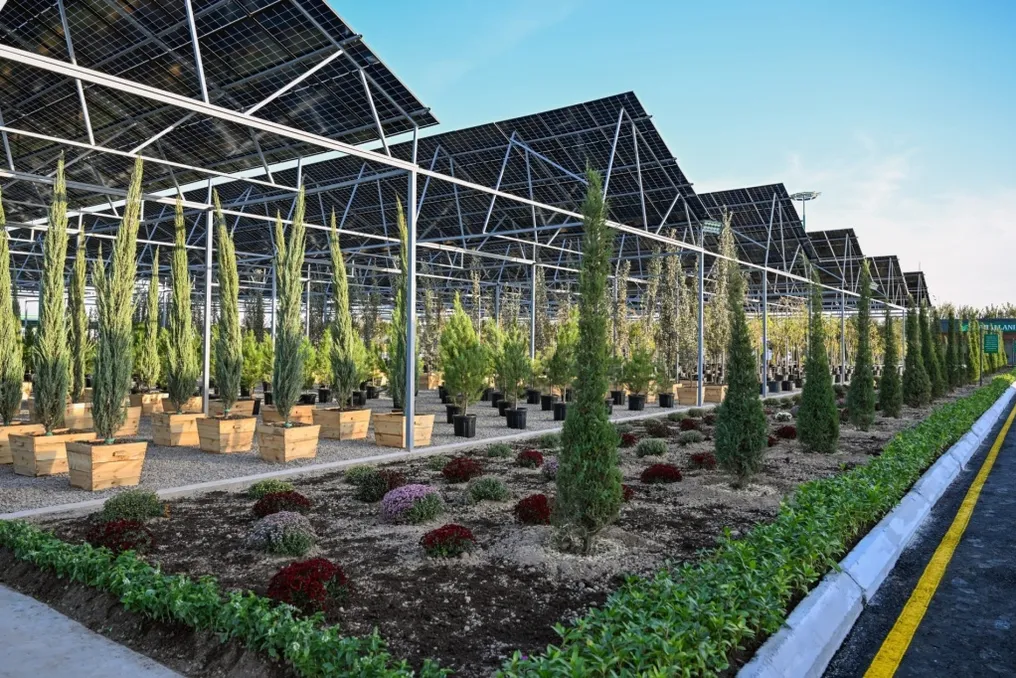
The center's territory is divided into zones: 50 hectares are allocated for growing ornamental trees, five hectares for fruit crops, and another three hectares are used for cultivating shrubs and flowers. The center features 41 varieties of ornamental and coniferous trees.

The center's infrastructure is equipped with a greenhouse, special cultivation plots, seed germination facilities, and protective structures. Three reservoirs with a total capacity of 4.2 thousand cubic meters have been installed for irrigation, and a drip irrigation system has been implemented on 20 hectares. Additionally, composting and mulching units are used, and some energy needs are covered by solar panels.

Thanks to the application of modern technologies, seedling cultivation is possible throughout the year, including periods outside the main planting season. Preliminary estimates suggest this allows for an 8–10 times increase in production volume compared to traditional methods and reduces water consumption threefold. It is projected that the cost of seedlings will decrease by 30–40%.

The center will also support mahallas in greening efforts: it will supply necessary trees and shrubs, manage the treatment of damaged plantings, soil mulching, and installation of drip irrigation systems. A mentor-forester will be assigned to each mahalla, and training is conducted for members of the 'mahalla seven' before the start of each planting season.

Residents can also participate in the project: they will be issued young plants based on cooperative agreements. After caring for these seedlings on their private plots for one or two seasons, the ready plants are guaranteed to be purchased, allowing families to earn additional income.

During his visit, the head of state noted that planting trees and creating gardens is a valuable tradition of the Uzbek people. He was also presented with information on the complex's potential to expand green areas in mahallas and increase the income level of the local population.

Similar stories

Why birds collect cigarette butts in nests: scientists' explanation
Read more
www.aajtak.in

Why birds collect cigarette butts in nests: scientists' explanation

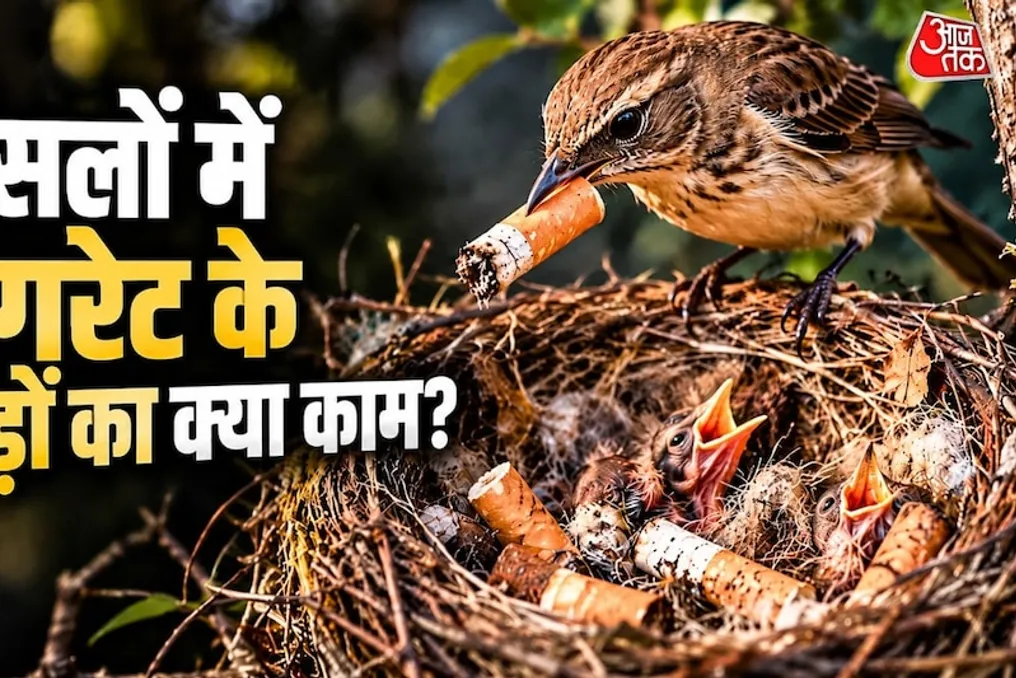
People often see cigarette remnants on streets, in parks, at bus stops, or in various corners, and usually ignore them, considering them trash. However, some birds, such as sparrows, may collect these discarded cigarette butts in their nests. Although this sounds unusual, scientists have observed such cases and uncovered an interesting reason for this behavior.

According to researchers, some birds might place cigarette butts in nests because the chemical substances they contain can help repel parasites and insects living in the nest. These pests can bother chicks and negatively affect their development. Nevertheless, the full reason for this behavior remains unclear. It should be noted that the toxic components of cigarette butts can be harmful to the birds themselves.

For birds, a nest is not only a place to lay eggs but also a refuge during the early period of the chicks' lives. After hatching, chicks are completely dependent on their parents for some time, needing warmth, food, and protection from external threats. However, various small insects and parasites can develop inside the nest, which can suck the blood of the chicks, damage their skin, and weaken them. Therefore, protecting the nest from these pests is very important for birds.

Some scientific studies have shown that certain species of birds collect tobacco or cigarette waste in their nests. One possible hypothesis is that they use the chemicals contained in these butts to combat parasites. However, this does not mean that all birds behave this way, nor that it is the only reason for finding butts in nests.

Cigarettes contain a chemical substance called nicotine. It is naturally present in the tobacco plant and can affect the nervous system of some insects. Furthermore, cigarette smoke and used filters can contain many other chemical substances. This is why scientists continue to study whether cigarette butts in nests can affect the population of local parasites.

However, it is important to understand here: the effect of any chemical substance on insects and its safety for birds are two different issues. It also cannot be stated that the amount of chemical substances in a cigarette butt is always sufficient to repel insects. Consequently, it is incorrect to say that cigarette butts act as a natural medicine for birds.

Another interesting question is why birds choose specifically cigarette butts. Do they know about the chemical composition of these items, or do they simply use them like other available materials? This is an important question for scientists. Birds use dry grass, leaves, small twigs, feathers, and other handy materials to build nests. Urban birds also find plastic, threads, paper, and other human-discarded trash around them.

Therefore, it is possible that some birds use cigarette butts as one of the available building materials. There is also a possibility that under certain conditions, they are influenced by the chemical properties of these butts. But to prove that birds consciously choose cigarette butts to protect against parasites, additional research into their behavior and nests is necessary.

Although finding cigarette butts in a nest may be interesting for scientists, it does not allow us to conclude that they are beneficial for birds. Cigarette filters usually contain a plastic material called cellulose acetate, which does not easily decompose in the environment. Residues of nicotine and other harmful substances may remain in the filters after use.

If chicks peck at or accidentally swallow these pieces, they can be harmed. Moreover, the chemicals present in the nest can come into contact with eggs and chicks. The fibers used in cigarette filters can also persist in the environment for a long time. Thus, even if there is a possibility that cigarette butts influence insects under certain circumstances, it does not mean that they will generally benefit birds. Their potential advantages and risks must be considered separately.

Human carelessness can pose a threat to birds. Cigarette butts are easily visible on streets, in parks, sewers, and public places in cities. People often consider them insignificant trash, but their environmental impact can last a long time. Birds may take objects nearby into their nests. Under such conditions...

UNESCO Head of Biodiversity Calls China's Experience a Model for Global Nature Conservation
Read more
cgtn.com

UNESCO Head of Biodiversity Calls China's Experience a Model for Global Nature Conservation

The UNESCO Head of Biodiversity stated that China's experience in biodiversity conservation can offer valuable lessons to the world, especially regarding the combination of ambitious commitments with scientifically sound approaches, effective institutions, and long-term investments.

Astrid Schomaker, Executive Secretary of the Convention on Biological Diversity (CBD) Secretariat, made these statements during the 17th meeting of the CBD Conference of the Parties (COP17), which began on Monday in Yerevan, the capital of Armenia.

According to Schomaker, China's experience is particularly notable due to the scale of conservation measures and the integration of biodiversity into national development planning. She noted that the system of ecological red lines, the network of national parks, ecological restoration programs, and investments in biodiversity monitoring demonstrate practical methods for fulfilling national obligations.

In her view, three key lessons stand out from China's experience: nature conservation must be integrated into broader economic and land planning; continuous investment is necessary for ecological restoration; and effective monitoring is crucial for assessing achieved results.

China's contribution extends beyond internal efforts. Schomaker emphasized that China's support for multilateral cooperation is vital amid current geopolitical challenges. She specifically highlighted China's role in ensuring the adoption of the Kunming-Montreal Global Biodiversity Framework (KMGBF), one of the most important international agreements on nature in recent decades.

As President of COP15, China facilitated complex negotiations between countries with different priorities and capacities. Working closely with Canada, which hosted the meeting in Montreal, China helped form the consensus necessary for adopting this framework and its 23 targets. Schomaker called this a 'landmark diplomatic achievement,' adding that in four years, the task is to turn this agreement into measurable results, as 'COP15 gave us the plan, and COP17 is about making that plan work.'

Financing is a key element of implementation. China established the Kunming Biodiversity Fund to help developing countries strengthen their capacity in biodiversity conservation. Schomaker described this fund as an important CBD tool created specifically to support the implementation of the KMGBF. She also noted the fund's ability to attract private sector contributions alongside Chinese government funding.

Schomaker considers South-South cooperation particularly valuable, as countries facing similar challenges can exchange experiences, technologies, and knowledge. The first global review of progress in implementing the KMGBF, to be held at COP17, showed encouraging engagement: nearly 90% of parties have set national biodiversity targets, and over 140 countries have submitted national reports. However, less than half of the agreed national targets, assessed by the parties themselves, are currently on track.

The biggest gaps relate to targets requiring changes in economic systems, especially those related to business influence and disclosure, sustainable consumption, harmful subsidies, and biodiversity financing. Significant shortcomings also remain in the coverage of protected areas and efforts to combat invasive alien species. Schomaker stressed that 'the fundamental problem is that biodiversity cannot remain solely the responsibility of environmental ministries.'

Progress increasingly depends on decisions made by ministries of finance, agriculture, energy, and other economic departments. The main difficulty lies in ensuring that developing countries have adequate, predictable, and accessible financial resources to meet their obligations. Developing countries insist on the need for greater international support, while developed countries emphasize mobilizing funds from a wider range of sources and increasing their efficiency. Both positions are recognized as necessary.

Countries agreed to mobilize at least $200 billion annually for biodiversity by 2030. However, the UN Environment Programme estimates that for every dollar invested in nature protection, approximately $30 is directed towards activities that harm it. Schomaker concluded: 'We cannot close the biodiversity financing gap simply by adding more money while continuing to fund biodiversity destruction.' COP17 must achieve progress in fulfilling financial commitments, improving access to finance, strengthening capacity, and reforming harmful subsidies and incentives so that economic decisions support, rather than undermine, nature.

Designing Residential Buildings on Polluted Industrial Sites: Reclamation Examples
Read more
archdaily.com.br

Designing Residential Buildings on Polluted Industrial Sites: Reclamation Examples

Industrial activity can cease long before its consequences disappear from the territory. Factories close, buildings are demolished, and old industrial areas gradually transform into new residential complexes. However, the soil beneath them may still contain traces of previous use, sometimes requiring complex interventions before construction begins.

The rehabilitation of these zones raises the question of what portion of the original soil can be preserved and what is necessary to build housing on it. The scale of contamination determines the required actions before starting work, while the cost of site preparation can influence the project itself. Much of this work remains unseen beneath completed buildings, leaving little evidence of the site's former condition.

Preparing Industrial Sites

In Glasgow, the Dalmarnock area was once a center of heavy industry on the banks of the River Clyde. Its factories produced steel and equipment for major engineering projects, leaving behind an area that required large-scale environmental remediation when the city selected it for the 2014 Commonwealth Games.

Before work began, contractors excavated about 140,000 cubic meters of contaminated soil over an area of 33 hectares. A specially installed washing station treated about 100,000 cubic meters, while another 6,000 underwent biological treatment. Materials containing asbestos required special removal and disposal.

This work prepared the site for the master plan by Paul Stallan Studio, which was part of RMJM, envisioning the construction of about 700 residential units. The project was initially intended for athlete accommodation before becoming permanent housing. Some duplexes could be adapted by adding an extra staircase, allowing for internal layout changes after the Olympics.

A significant portion of the contaminated soil was successfully cleaned and reused on-site, reducing the volume that needed to be disposed of in another region. Thus, the residential quarter occupied land that previously required thorough treatment to allow for construction.

Building on Contaminated Soils

In Bordeaux, the Brasses district occupies a former industrial zone on the right bank of the Garonne River. Environmental studies revealed contamination of the soil and groundwater. Rehabilitation was carried out on a plot-by-plot basis, with remediation requirements set according to the intended use of each property. Complete removal was not required across the entire area, so some plots retain residual contamination under concrete slabs.

In this context, the Volumes Capables residential complex, designed by A6A, faced additional costs related to contaminated soil and specialized foundations. The operation, initiated by the Bordeaux municipality, aimed to prevent families from moving to remote suburbs while offering spacious, controlled-price housing.

The architectural team designed apartments based on an 18-square-meter living core embedded within a larger volume. Their five-meter high interiors allow residents to add mezzanines and gradually expand their space, reaching up to 90 square meters in the smallest typology. A technical channel with pre-installed connections ensures future installations are possible, allowing units to develop without needing all interior construction finished before occupancy.

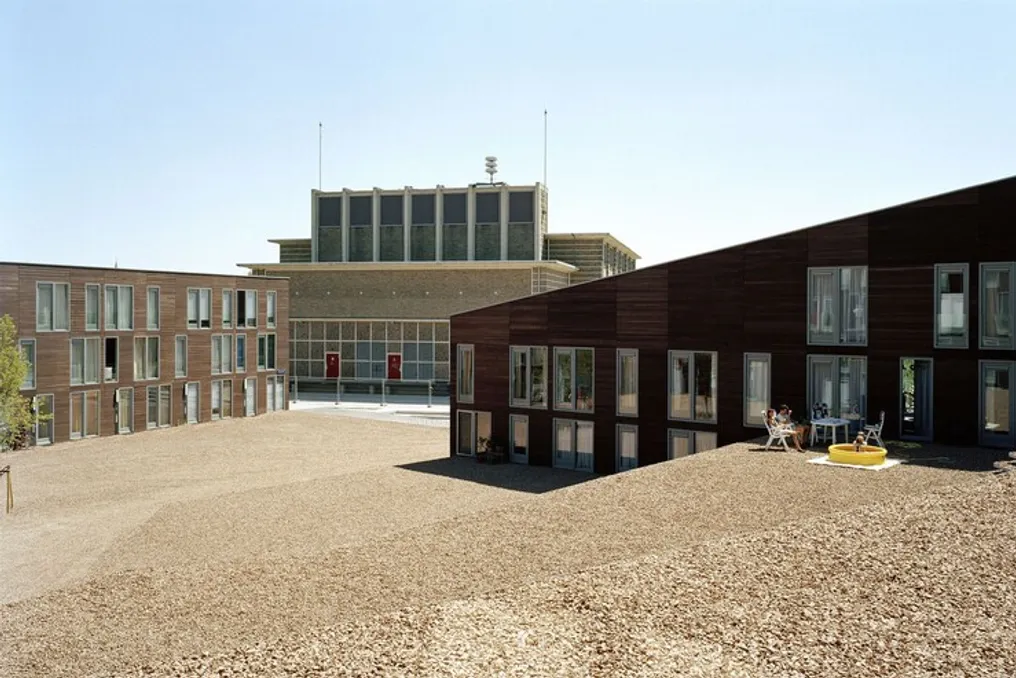
In Groningen, Studio Woodroffe Papa addressed the issue of contaminated soil on a neighborhood scale. The CiBoGa project occupies a former industrial area of 14 hectares near the city center.

The firm developed a master plan that utilized underground parking structures to cover the contaminated area. New residential buildings were organized into compact blocks with shared courtyards above this infrastructure, while some existing industrial structures were preserved for public use.

Later, the architectural team designed the Schots 1 + 2 Residential Complex, integrated into the project. The complex consists of two blocks connected by a sequence of public spaces, with the underground parking integrating a solution that allowed the former industrial zone to accommodate residential use.

Planning in Contaminated Zones

In Gentbrugge, Belgium, the Puntfabriek factory produced steel wire for nearly 150 years before closing in 1993. The factory occupied a large area in an established residential district, and its closure paved the way for housing and a public park where industrial production once took place. Nevertheless, the land still bore traces of this activity. Soil decontamination was required before the site could receive a new purpose.

When the firm HUB designed Den Draad, the placement of two residential buildings was partly determined by how the soil decontamination would be conducted. The architectural team positioned them along the boundary of a future 1.5-hectare park to make soil cleanup more efficient and economical. This decision also placed the new housing between existing urban quarters and the old factory site, connecting surrounding streets with the emerging public landscape behind them.

The apartments faced the park, featuring private outdoor areas overlooking the once-industrial zone. The buildings also preserved existing trees and provided a pedestrian path across the site, allowing the new intervention to integrate with the remaining elements of the factory closure.

Restoring Existing Settlements

Cantinho do Céu, in the southernmost part of São Paulo, has been expanding along the Billings reservoir since the late 1980s. This area included a catchment basin for environmental protection, but residential development proceeded without proper sanitation. Sewage discharged into the reservoir contributed to the deterioration of its water quality.

When the firm Boldarini Arquitetos Associados developed the urbanization project, the settlement had already become a large residential area. Previously, a civil lawsuit demanded the clearance of the land, but the proposed intervention aimed to restore ecological conditions while preserving most of the existing homes.

The project implemented sanitation and drainage infrastructure throughout the settlement. A linear park along the reservoir replaced shoreline sections that were occupied, providing public access to the water and helping to protect the banks. Residential homes located in ecologically sensitive areas or unable to connect to main utility networks had to be demolished.

The park's alignment followed this process. According to the project authors, its boundaries were defined by the houses slated for demolition, and each section was designed as buildings were cleared in that area. Of approximately seven kilometers planned along the reservoir, about 1.5 kilometers were completed by the time the project was published. The design team developed each sector as land became available, adapting the park to the topography revealed after demolitions.

What Remains Under Residential Buildings

The transformation of old industrial zones usually begins long before residential buildings take shape. In CiBoGa, residual contamination influenced the very organization of the district. In Gentbrugge, it dictated the location of new residential buildings. After completion, these projects offer little evidence of the environmental restoration work that preceded construction.

Cantinho do Céu presents a different scenario, where ecological rehabilitation required interaction with an already established and inhabited neighborhood. Existing residential homes dictated the development of the intervention, determining which areas along the reservoir could actually be restored.

As old industrial sites integrate into new residential areas, their former use continues to dictate what can be built on that land. Even after factories disappear and new buildings appear, the hidden legacy underground remains active in how we utilize these territories.
Popular