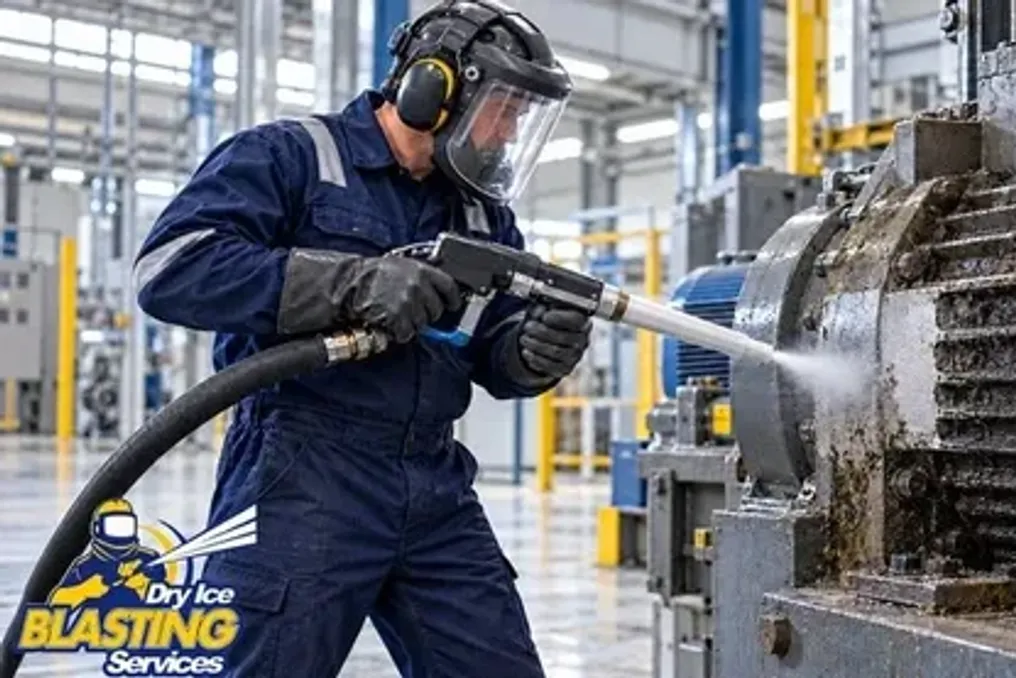
When conducting industrial cleaning, the choice of dirt removal method is as important as the cleaning process itself. Using an inappropriate approach in industrial settings affects water consumption, increases chemical usage and waste volumes, and complicates and slows down their disposal.
Although chemical cleaning agents are widely used in various industries, they lead to the formation of byproducts that require subsequent treatment after cleaning is complete. Dry ice offers an environmental advantage due to reduced consumption of water and chemicals, which ultimately decreases the need for long and complex waste disposal.
The dry ice blasting method uses fine granules made of solid carbon dioxide, or CO2. Compressed air ejects these granules toward the contaminated surface at high speed.
According to Dry Ice Blasting Services, the impact force and rapid temperature change help separate dirt and soot when the dry ice granules come into contact with the surface. The granules then sublimate, meaning they transition directly from a solid state to a gaseous state, bypassing the liquid phase.
As a result, no dry ice particles remain on the equipment or floor after cleaning; only the removed contaminants remain.
One of the most obvious differences between dry ice cleaning and chemical cleaning is that the dry ice cleaning process does not introduce detergents or other chemical cleaners into the operation.
When using chemical cleaning, the product mixes with grease or other contaminants, forming an additional waste stream that must be properly collected and disposed of. The environmental impact will depend on the chemical used and the type of cleaning itself.
Does dry ice cleaning use water? No. It is a dry cleaning method, making it an excellent choice in areas where there is a problem with water consumption or contaminated runoff.
Wet industrial cleaning usually requires large volumes of fresh water and produces contaminated wastewater. This water must then be disposed of according to current regulations. Spills of detergents into rivers highlight the need for careful management of contaminated water.
Industrial cleaning without water reduces the demand for fresh water, as well as the volume of wastewater and the risk of runoff entering drainage systems or adjacent areas. Furthermore, no drying of the equipment is required after the procedure. This is a significant advantage for businesses in South Africa, where water scarcity makes reducing consumption particularly important.
Does dry ice cleaning create waste? The process may generate waste, but the dry ice itself does not remain as spent cleaning material. This is one of the most important environmental advantages of dry ice cleaning. The dry ice granules disappear through sublimation, leaving only the removed dirt or soot for further management. Although it is not a 'zero-waste' process, dry ice cleaning minimizes any secondary waste because no chemicals or detergents were added to the mixture.
Therefore, is dry ice cleaning environmentally friendly? Dry ice cleaning represents a more environmentally responsible option when it replaces a process that requires large amounts of chemicals and water. This process is characterized by lower water consumption, reduced use of chemical cleaners, and decreased secondary waste. Since dry ice provides dry cleaning without residue, some devices can be cleaned even without the need for disassembly.
No cleaning method is sustainable in all aspects. The right choice is the one that achieves the best result while using fewer resources and having less environmental impact.