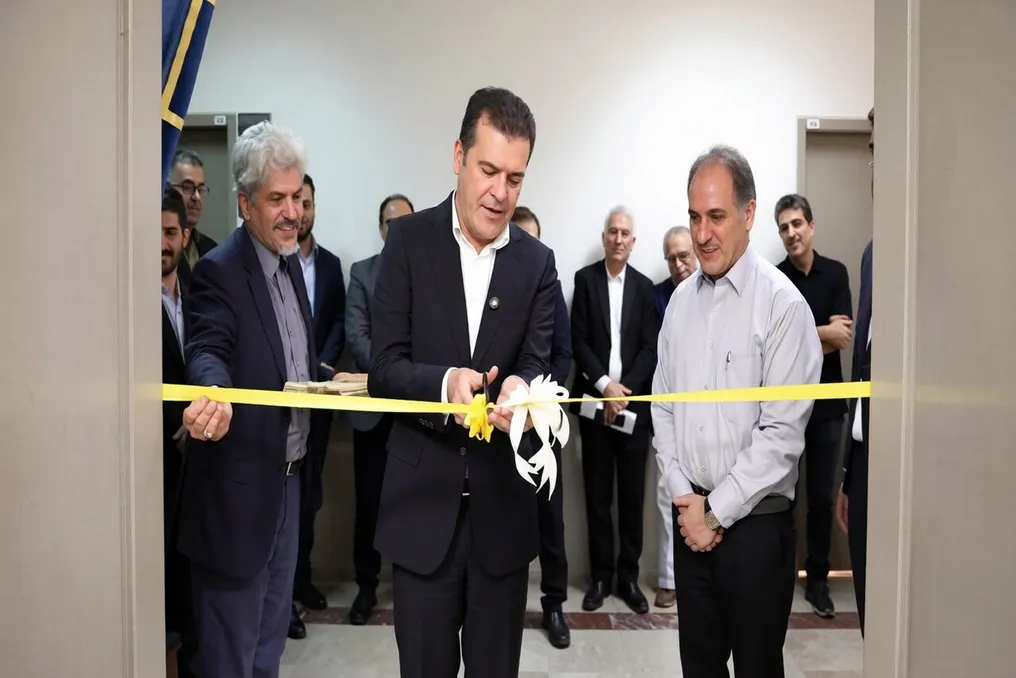
Iran has joined the countries possessing modern laboratories for the practical mastery of quantum technologies. This was made possible by the opening of three specialized facilities in the field of quantum optics and quantum information, established with the support of the Vice Presidency for Science, Technology, and Knowledge-Based Economy.
Quantum technologies are globally recognized as one of the strategic areas of science and technology. As reported by IRNA, the development of these technologies requires progress in fundamental research, specialized training, and the availability of advanced laboratory complexes.
Three new advanced laboratories were solemnly opened at Isfahan University of Technology (October 14), Shahid Beheshti University (October 17), and Sharif University of Technology (October 20). The goal of this step is to strengthen the scientific potential of universities, form a national quantum technology ecosystem, provide practical training, expand student experience, and prepare personnel necessary for advancing quantum research and technologies.
Iranian students now have access to infrastructure that allows for complex experiments such as entangled photon generation, single-photon detection and generation, experimental verification of Bell's inequality, two-photon interference, quantum tomography, quantum key distribution, and the study of diamond-based quantum systems.
In July 2025, President Masoud Pezeshkian announced the implementation of a 'national document on quantum science and technology.' Abdollah Hassan Bahrami, an official from the Vice Presidency for Science, Technology, and Economy, quoted by IRNA, noted that this document represents a comprehensive set of main goals, evaluation indicators, national strategies, implementation mechanisms, and monitoring.
This document is conceived as a roadmap for developing research, expanding technologies, and commercializing quantum developments. Within this initiative, a headquarters for quantum science and technology will be established to improve coordination between relevant organizations, develop an implementation plan, create a regulatory framework, track national and global achievements, and submit proposals for refining the document.
To implement this document, the vice presidency, together with other relevant institutions, will first present a national labor distribution plan in the quantum science and technology sector. This will be followed by support in developing applications, commercialization, and participation of knowledge-based companies to maximize internal innovative capabilities.
The Head of the Presidential Affairs Directorate at the Islamic World Science Citation Center (ISC) reported in August that Iran ranks first among Islamic countries in key scientific result indicators in fields such as quantum science, cognitive sciences, artificial intelligence, biotechnology, and advanced materials.
According to Saeed Bahtiyari, quoted by IRNA, the country is actively competing with Turkey and Saudi Arabia in these areas. He made these remarks at a press conference on August 17, emphasizing that the development of science in these directions is also included in national development plans.
According to the Web of Science database, Iran leads among Islamic countries in scientific publications in some of these fields, ranking second or third in others. Nevertheless, overall, Iran holds the highest position. Bahtiyari specified that in the field of advanced materials—an interdisciplinary area covering physics, chemistry, mechanics, and materials science—Iran ranks second among Islamic countries and ninth globally.
He added that in artificial intelligence, Iran ranks third, trailing Saudi Arabia and Turkey, and in quantum science, it ranks second after Saudi Arabia. The ISC official also stated that Iran ranks first among Islamic countries in scientific results in cognitive sciences and leads overall.
According to WoS data, over a five-year period (from 2021 to 2025), Iran (with 32 documents) ranks first among Islamic countries in cognitive sciences. Turkey, with 23 documents, and Saudi Arabia, with 22 documents, rank second and third, respectively. Between 2014 and 2023, Iran ranked first or second in most cognitive science fields among Islamic countries. During this decade, the country ranked first in cognitive neuroscience, cognitive rehabilitation, and cognitive linguistics, publishing 387, 156, and 30 documents, respectively.
In cognitive psychology, Iran ranked second (124 documents), in cognitive education—first (561 documents), in philosophy of mind—third (34 documents), and in cognitive assessment—first (898 documents). The country achieved its best global ranking in cognitive neuroscience, where it placed 15th.
In cognitive neuroscience, the top three places were held by Tehran University of Medical Sciences (73 documents), University of Tehran (39 documents), and Shahid Beheshti University of Medical Sciences (32 documents). In cognitive psychology, the leaders were the University of Tehran (10 documents), Ferdowsi University of Mashhad (7 documents), and Allameh Tabataba'i University (6 documents).
In cognitive linguistics, the top three were Tehran University (3 documents), Al-Zahra University (3 documents), and Allameh Tabatabai University (2 documents). In cognitive education, the top three were Tehran University of Medical Sciences, Iranian University of Medical Sciences, and Shahid Beheshti University of Medical Sciences.
In cognitive rehabilitation, the top three were Tehran University of Medical Sciences (21 documents), University of Tehran (16 documents), and Iranian University of Medical Sciences (12 documents). Among the top three universities in philosophy of mind were the University of Tehran, Isfahan University, and Amkirabir University of Technology.
In cognitive assessment, Tehran University of Medical Sciences took first place with 196 documents. Iranian University of Medical Sciences (105 documents) and Shahid Beheshti University of Medical Sciences (91 documents) took second and third places.
The country ranks second in the quantum field (216 documents) and in advanced materials (5975 documents), trailing Saudi Arabia, which has 283 documents in the quantum field and 6160 in advanced materials. Malaysia ranked third in the quantum field (154 documents), and Egypt ranked third in advanced materials (3151 documents).
As stated by Minister of Science Hossein Simai-Sarraf, citing IRIB, despite illegal sanctions, Iran maintains the first place among Islamic nations in cognitive sciences and ranks ninth globally in advanced materials. Many prestigious Iranian universities and institutions are included in international rankings. These achievements highlight the country's scientific capabilities, which he noted at the 7th Turkish Educational Technology Summit (TETZ 2026), held in Istanbul from June 26 to 28.
Iran represents a significant opportunity for investment in higher education and modern technologies. The country has one of the largest higher education systems in the region, with over three million students and more than seventy thousand faculty members and researchers. Simai-Sarraf emphasized that the rapid development of new technologies, including AI, is radically transforming human relations and higher education systems worldwide at an unprecedented speed. He also noted that the effective use of intelligent technologies requires creating a system based on algorithmic transparency, educational equity, accountability, protection of student rights, and responsible data governance.