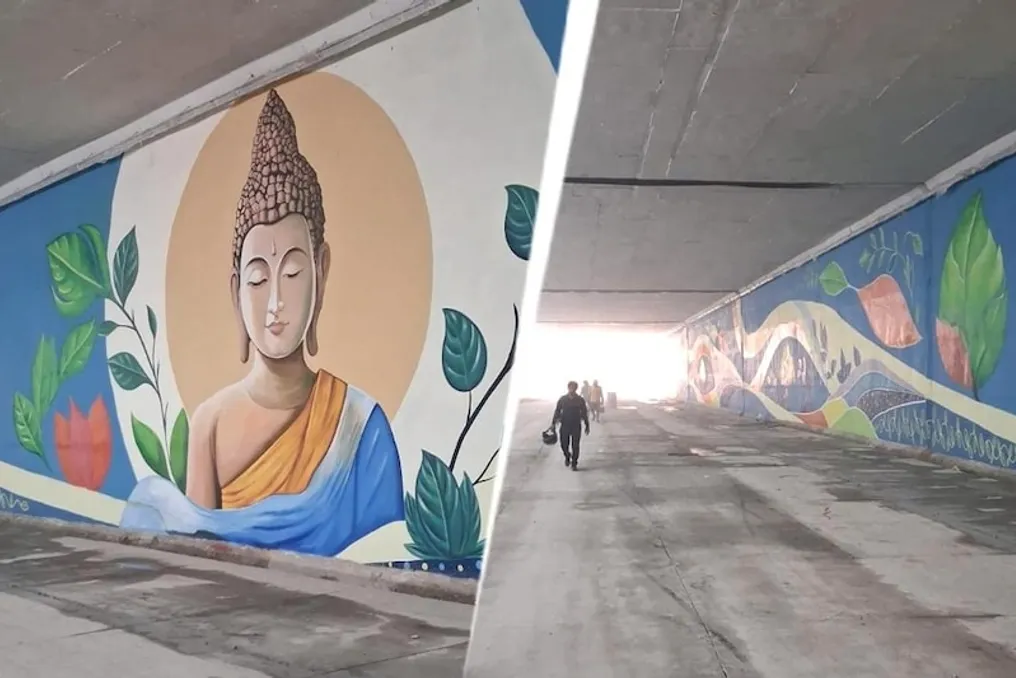
Residents of West Greater Noida have good news: the daily traffic jams at Gur Chowk are expected to be soon eliminated. The six-lane underground passage, the construction of which cost approximately 92 crore rupees, is in its final stages. The main construction work has been completed; final works such as road marking, installation of street lighting, and wall painting are currently underway.
The Greater Noida Development Authority plans to launch this facility for traffic movement before the Diwali festival, although the official opening date has not yet been confirmed. For a long time, residents have awaited the opening of this passage because long queues of vehicles form here during morning and evening rush hours. This negatively affects the daily commutes of residents of Gur City, West Greater Noida, and neighboring residential complexes, so the opening of the passage should bring them relief.
A.K. Singh, General Manager of the Greater Noida Development Authority, stated that the priority is to launch the underground passage by Diwali to ease the traffic situation for residents of Greater Noida Extension. He emphasized that 'our priority is to launch this underground passage by Diwali. It will reduce the load on road traffic and be a big gift for the residents of Greater Noida Extension.'
Initially, the Gur Chowk underground passage project was estimated at approximately 60 crore rupees. However, due to construction work and other necessary measures, the total cost increased to nearly 92 crore rupees. As part of the project, besides constructing the passage itself, utility relocation work was carried out. The total length of the entire project is about 730 meters, and it provides for six lanes of traffic. According to A.K. Singh, the main part of the underground passage is about 160 meters long, while the entire project covers an area of about 730 square meters. The main goal of this initiative is to reduce pressure on traffic flows at Gur Chowk and ensure smooth movement.
The six-lane system is expected to improve transport accessibility. After commissioning, the underground passage may reduce traffic at the intersection, helping people avoid constant congestion. Although the main construction is complete, additional work is being done before opening to the public, including road marking, installation of street lighting, and wall painting. According to A.K. Singh, various painting has been done on the sides of the underground passage walls, giving the facility an attractive appearance. The remaining tasks for preparation for operation are now being finalized, but the final opening date has not yet been announced, although the priority remains launching before Diwali.
Construction of the Gur Chowk underground passage started in July 2024. The initial plan assumed completion of work in about 18 months. However, several difficulties arose during construction that slowed down the work and led to exceeding the original deadlines. The process was affected by mushroom collection restrictions imposed due to air pollution, as well as rains, the need to relocate utilities, and work related to ramps. These factors required more time to complete the project. Now that the main construction work is finished, attention is focused on finalizing the project, including marking, lighting, and painting, after which it will be ready for public use.
Gur Chowk is a key transport hub in West Greater Noida. A large number of people travel from here daily to work, school, and other errands. During peak hours, the number of vehicles increases, leading to traffic jams at the intersection. This affects the commutes of residents of Gur City and surrounding residential complexes. Passengers traveling to Surajpur and Ghaziabad also face traffic pressure on this route, and sometimes the jams force them to spend more time reaching their destination. Therefore, the six-lane underground passage is considered a vital project for improving the transport situation in this area, as it will help reduce the load on the intersection and make movement more convenient.
The greatest benefit from the opening of the underground passage will be enjoyed by people who regularly use this route. Commute times for workers may be reduced, and school buses and passengers from nearby residential complexes will also be able to avoid traffic jams. Reduced traffic at Gur Chowk will also improve journeys for those heading to Surajpur and Ghaziabad. Although real relief will only come after the underground passage begins operation.