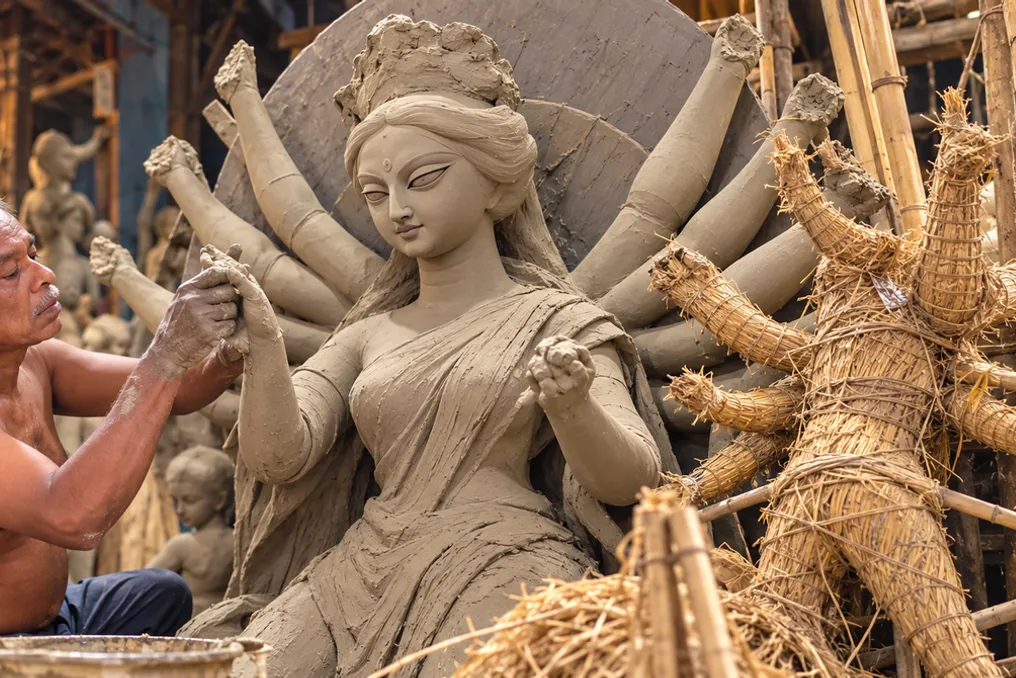
In the workshop of Joy Durga Bandar, located in Kumartuli, North Kolkata, Kaushik Ghosh begins work on an idol using a framework of bamboo and wood, which is tied together with jute rope. It is from this base that the sculptural figures, decorations, and layers of color seen by devotees during Durga Puja are formed.
Kaushik is well acquainted with this process. For many generations, artisans of Kumartuli have manually created idols from bamboo, straw, and clay to celebrate Durga Puja in Kolkata.
Over time, many workshops began using polystyrene decorations, synthetic paints, and plastic ornaments because they proved to be faster or cheaper to apply. However, Kaushik is seeking ways to return more traditional materials to his work.
He states: 'The frame, clay, straw—that has always been ours. Polystyrene and chemical dyes appeared later because they were cheaper and faster. I am returning to what came before.'
He is working to decorate the idols with natural clay, shola (a soft plant core used for fine ornamentation), and natural dyes instead of polystyrene. Every year after Durga Puja, thousands of idols are immersed in the Hooghly River and other water bodies. According to The Times of India, in 2025, about 5200 idols were immersed in 34 main Hooghly ghats and approximately 30 other water bodies in Kolkata and its surrounding suburbs.
City workers clean up the immersion sites from debris, but polystyrene and plastic decorations require careful collection and disposal as they can persist in the environment. Neel, a volunteer who has cleaned the banks of the Hooghly near Babughat for several seasons, recalls finding floating polystyrene, colored remnants near the banks, and plastic ornaments accumulated along the ghats.
For Kaushik, the main task is to make the decorations less wasteful while maintaining the accessibility of the craft for families who depend on it.