Rand Water warns of impending water crisis due to municipalities exceeding consumption norms
Read more
IOL
iol.co.za

Rand Water warns of impending water crisis due to municipalities exceeding consumption norms

Rand Water has issued a warning about an approaching water crisis as several municipalities continue to exceed established water distribution norms. This is creating growing pressure on the centralized water supply system, even though pumping stations are operating at maximum capacity.

The water supplier stated that although it is operating at full capacity, demand continues to rise, reaching record consumption levels. A Rand Water representative, Makenos Maru, noted: 'Constant excessive consumption makes balancing supplies across the network difficult and increases the risk of failures if demand is not brought under control.'

Johannesburg and Tshwane are among the largest consumers

Municipalities in the Gauteng region and neighboring areas are under scrutiny for exceeding their water consumption limits. The city of Johannesburg recorded some of the highest consumption levels, using approximately 1,801 megaliters of water against an allocated limit of 1,356 megaliters, which exceeds the norm by 445 megaliters.

The city of Tshwane consumes 794 megaliters against a norm of 667 megaliters, while the City of Ekurhuleni uses 1,005 megaliters compared to allocated 1,022 megaliters. Other municipalities exceeding limits include Emfuleni Municipality, consuming 315 megaliters against a norm of 239 megaliters; Mogale City—107 megaliters against a norm of 93 megaliters; and Rustenburg Municipality—72 megaliters against a norm of 68 megaliters.

It was also noted that Midvaal Municipality consumes 39 megaliters against a norm of 28 megaliters, and Lesedi uses 25 megaliters against a norm of 23 megaliters. Ngwathe consumes 8 megaliters against a norm of 7 megaliters. Madibeng uses 14 megaliters against a norm of 8 megaliters, and the Kingdom of Bophuthatswana consumes 13 megaliters against a norm of 10 megaliters.

Some other municipalities remain below stated limits, but they are under observation due to concerns about sustainable demand in the network. Metsimaholo consumes 47 megaliters against a norm of 51 megaliters, while Govand Mbeki Municipality uses 75 megaliters against a norm of 106 megaliters. Merafong Local Municipality consumes 67 megaliters against a norm of 86 megaliters, Rand West—79 megaliters against a norm of 91 megaliters, Victor Khanye—15 megaliters against a norm of 17 megaliters, and Thembisile Hani—30 megaliters against a norm of 31 megaliters.

Rand Water's call for immediate action

Maru stated that Rand Water has repeatedly appealed to all municipal clients, demanding immediate measures to reduce consumption and stabilize the system. She emphasized that current interactions with municipalities are focused on agreeing on mitigation strategies and determining additional measures to strengthen the water supply system.

Despite efforts made, persistently high consumption in certain areas continued to undermine the stable balance of supplies in the network. Therefore, Rand Water calls on all municipal clients who are overconsuming to reduce their usage according to allocated volumes. Maru added that immediate compliance is critical to prevent the risk of system failure and ensure continuous water supply.

She warned that Rand Water will take appropriate action if necessary, including restricting water supply to clients who continue to exceed their limits. Maru stressed: 'Rand Water is obligated to protect the centralized water supply system and will not hesitate to take appropriate measures if required.'

Rand Water also highlighted that conserving water resources is a shared responsibility, urging municipalities, residents, and businesses to use water responsibly to ensure sustainable and equitable supply for all.
Similar stories

Residents of the 59th Ward Demand Permanent Solution to Long-Standing Water Crisis
Read more
iol.co.za

Residents of the 59th Ward Demand Permanent Solution to Long-Standing Water Crisis

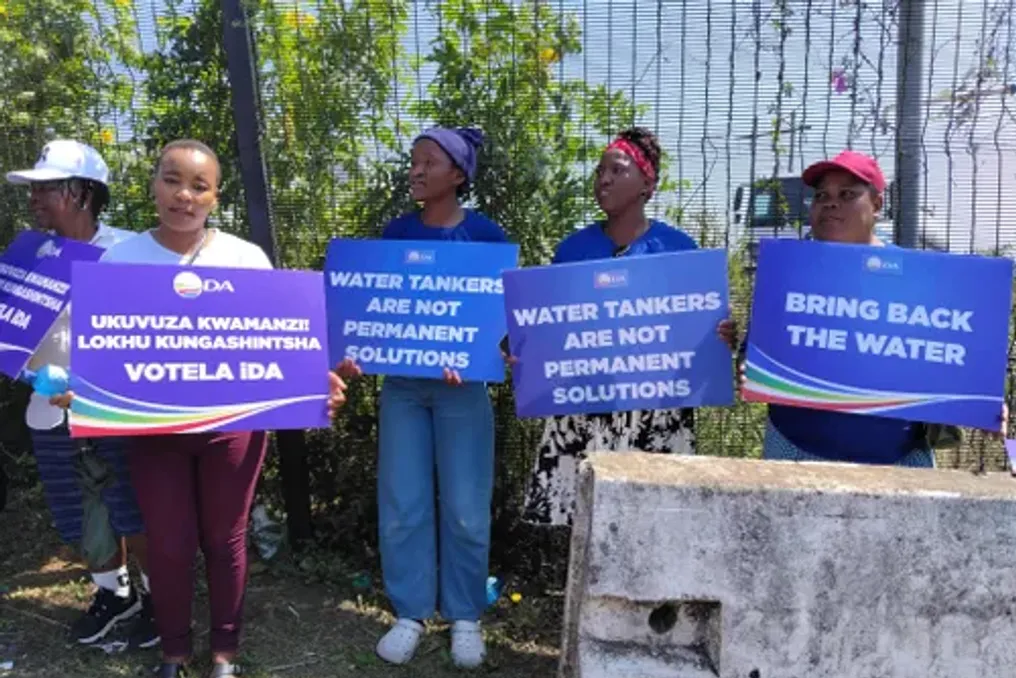
Residents of the 59th ward in eThekwini stated that irregular water tankers and dried-up public taps have deprived households of reliable access to water, and they insist that the municipality provide a permanent solution to this problem. On Friday, residents held a protest.

The protest took place in front of the eThekwini Water and Sanitation offices. Residents living in the areas of Buffelsdraai, Osindisweni, and Zwelisha emphasized that prolonged water supply interruptions have seriously complicated living and working conditions for many years.

They noted that using water tankers is not a long-term solution and called for intervention that will ensure stable access to water for communities. The protesters expressed hope that their action would draw more attention to the water supply issues.

Residents pointed out that the water crisis in Osindisweni is related to insufficient capacity at the Ogunjini Waterworks treatment plant. In April 2023, the eThekwini Municipality announced plans to restart the pump and increase the capacity of this station. In August 2025, the city also announced temporary measures, which included increasing water deliveries by tankers and restarting the pump during infrastructure modernization.

Recent complaints cast doubt on the progress of the implemented measures and whether they have led to reliable water supply for affected households.

Resident Lungile Ngkobo reported that water tanker supplies were inconsistent and insufficient; sometimes residents did not see trucks for weeks. She added that when trucks arrived, they only served specific parts of the ward, leaving others without water. Ngkobo recounted that residents have to use water from the nearest water body for other domestic needs, as the water from the tankers is only suitable for drinking. 'For toilets, cooking, and cleaning, we use water from the nearest water body. The situation is so bad that children are often sent home from school,' she stated. The crisis has lasted for years, forcing some residents to connect to water illegally. She also mentioned that homes lack individual taps, and public taps in some parts of the area are dry.

Sabelo Ndlovu stated that residents decided to picket because patience had run out. He noted that the City is aware of the situation, as he sent several emails that received confirmation but did not lead to any action. Ndlovu added that a ward councilor is also upset because attempts to intervene have been unsuccessful.

eThekwini Municipality acknowledged ongoing water supply problems in some parts of the city, including Buffelsdraai, following an unexpected shutdown of a repaired pump at the Durban Heights Water Treatment Works. A city representative, Senzelwa Mzila, reported that the pump supplying raw water to the treatment facilities initially failed on October 5, leading to a deficit of about 50 million liters of water per day. Mzila specified that the city's water supplier, uMngeni-uThukela Water, restored the pump's operation, but it stopped again during testing on October 8. Technical teams are investigating the cause, and the timeline for full restoration of water supply has not yet been determined.

The municipality is monitoring reservoir levels and strongly urges residents to conserve water until the repairs are completed, while also apologizing for the inconvenience caused by the reduced water supply.

Popular