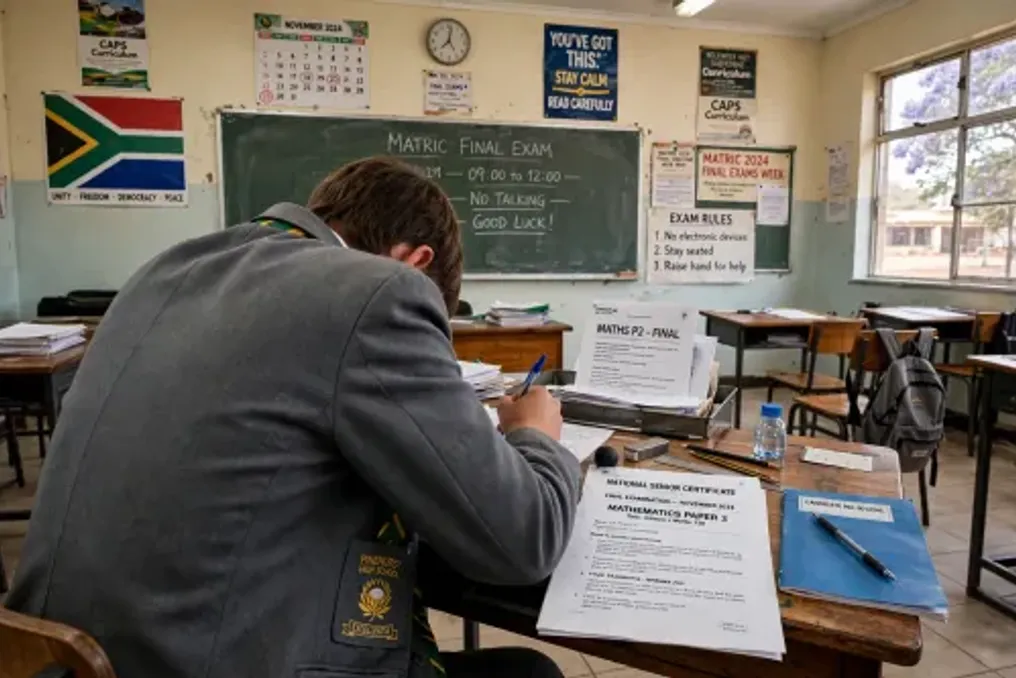
When you enter the examination room knowing the answers, but your mind suddenly goes blank, your heart starts beating faster, confidence disappears, and previously simple questions seem insurmountable. The question arises: what exactly has changed—the tasks themselves, your knowledge, or your psychological state?
Exams test not only the volume of your knowledge but also your ability to apply it under pressure. You might have prepared for subjects for months, but have you prepared your mind?
Although you cannot control the exam paper itself, your preparation, attitude, effort, and reaction are largely within your control.
Before opening the paper, the mind is often filled with anxious thoughts: 'What if I fail? What if I don't get the desired score? What will others think?' Does worrying about scores actually improve the quality of answers? It distracts attention from the work itself.
You should not obsess over desired grades. Instead, focus on the effort required to achieve those results. Read carefully, manage your time, and answer one question at a time. It is important to remain calm, focused, and present in the moment. Your task is to answer the question before you, not to worry about the future outcome!
The day before the exam, try sitting in silence for about ten minutes. Breathe slowly and visualize the process of receiving the paper, reading calmly, and answering with concentration. Imagine yourself handling even a difficult question confidently.
In the examination room, relax your shoulders, take a few slow breaths, and carefully study the instructions. Knowledge matters, but calmness helps you use it. Knowing the answer is one thing; recalling it under pressure is quite another. A unfocused mind turns an easy task into a difficult one, whereas a focused mind makes a difficult task manageable.
It is common to be tempted to compare yourself to others: 'She finished the course. He gets higher grades. It seems everyone is better prepared!' You sit down to study a subject, but instead, you study the progress of those around you.
Your classmates' progress does not define your potential. You need to learn from their habits without turning their successes into a verdict on your ability. Instead of asking 'Am I better than them?', ask yourself: 'Do I understand more than yesterday? Can I answer what I struggled with before? Have I corrected a mistake or improved a study habit?' Compete with your past self, not with other people today.
Looking sideways will not complete your preparation; the next step will! Trust your preparation, not miracles.
Replace the phrase 'What if I fail?' with 'How can I give my absolute best?' Confidence means trusting your preparation and maintaining stability when things get tough. A difficult question is not a prediction of failure. Don't let it make you doubt everything you know. Pause, reread, and work on what you understand. If you get stuck, move on and come back later.
Confidence will not give you the answers, but it will help you think clearly. You don't need every question to be easy; you need to remain composed when it is not easy.
After the exam, do not keep replaying it in your head! Obsessing over regrets drains you. Replaying mistakes and endlessly comparing answers will not change what you submitted. It steals time and energy from your next exam.
Figure out what is useful and move on. One difficult exam does not have to turn into two. Give your all, accept the rest, and focus on the next subject. You cannot rewrite yesterday's answers, but you can strengthen your preparation for tomorrow.
Stuck on a question? Don't let it hold your entire exam hostage! Try to give it a reasonable answer, move on to what you can answer, and return to it later. One difficult question does not make the whole exam difficult.
Let the points dictate your time. Don't spend twenty minutes trying to earn five points while sacrificing twenty points elsewhere. Thinking about what you don't know steals time that could have been spent demonstrating what you do know. Stay calm, watch the clock, and keep writing.
Don't confuse staying awake longer with deeper learning. A tired mind struggles to recall what a rested mind remembers. Ensure you get enough sleep, eat healthily, exercise, and take short breaks while studying. Avoid pushing your mind to complete exhaustion; give it time to recover. Rest is part of preparation, not a reward after it.
View the exam in perspective: it tests your knowledge, not your worth. Your grades may affect your next opportunity, but they do not define your entire future. Give the exam everything you can, without sacrificing the person who is taking it.