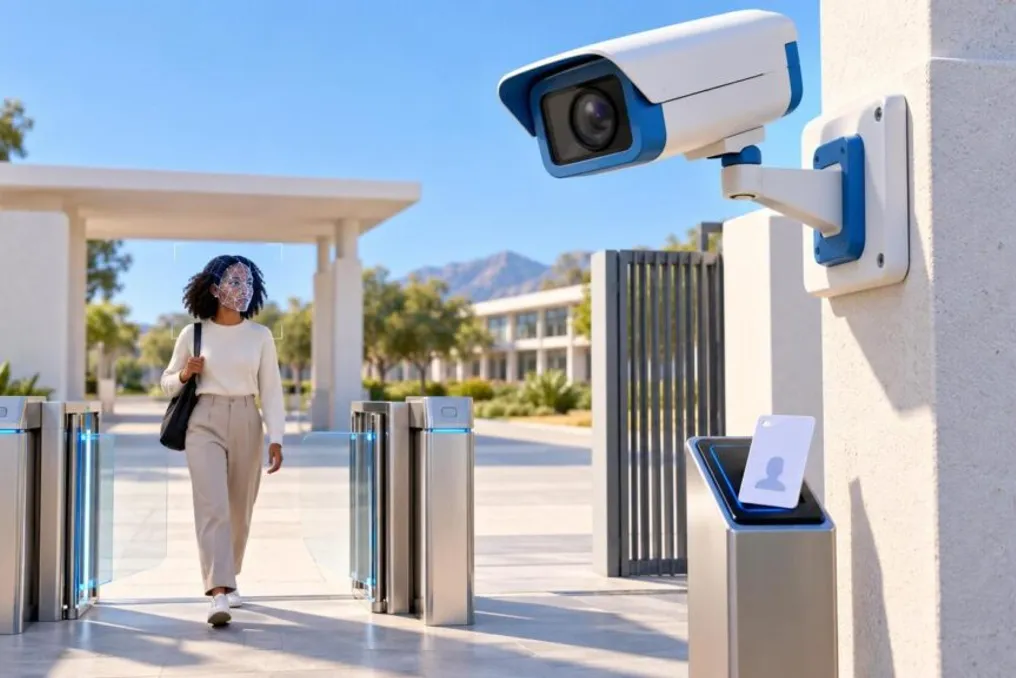
Technology provider SAFEZA AVA-X reported that existing cameras at the entrance of Western Cape University (UWC) were used to test a facial recognition system. Potential future applications discussed included using watchlists for security and access without cards.
In a published case study, the company described a five-day pilot project covering three video streams at the entrances. It was noted that the system was connected to the university's cameras in about two hours, requiring no replacement of the already installed surveillance equipment.
The pilot took place against the backdrop of UWC's student body, which numbers over 23,000 people, but the number of participants in the test itself was not disclosed. The provider mentioned controlled and authorized participants who were aware of the system's implementation.
A broader access control proposal affects approximately 4,000 people, representing a subset of the university community. This figure describes a possible use scenario, not confirmed permanent deployment or the size of the pilot project.
UWC's Director of Risk and Compliance, Bentley Ebrahim Jeftha, highly praised the system's integration with existing cameras in the company's feedback. He noted that 'the facial recognition functionality showed good results during the POC, demonstrating accurate identification and a very low false positive rate.'
The company stated that the test ran from Thursday to Monday, including three working days and weekends. The AVA-X technology, developed in Switzerland, processed video through the Gigabrain infrastructure in Johannesburg, instead of using a foreign cloud service.
Instead of saving a traditional photograph for later comparison, the system converts facial features into a mathematical representation called a face vector. SAFEZA asserts that these vectors remain sensitive biometric information, and converting a face into numbers does not make it anonymous.
The company reported a facial recognition accuracy rate of 98.2% during the live test. This accuracy was achieved even when recognizing individuals wearing glasses, with partial obstructions, and interference from entrance structures. The case study also indicated that the pilot did not reveal error percentages broken down by demographic groups.
The provider emphasized that this percentage requires context, as it differs from the control metrics of laboratory verification conducted under different testing conditions. A single overall accuracy figure does not prove the reliability of recognition for every demographic group in this deployment.
Among the considered applications were identifying individuals on an authorized watchlist, recognizing former employees whose access has been revoked, and logging entries and exits without needing to stop and scan a card.
Implementing a watchlist entails different responsibilities: deciding who is included, who can change it, and what actions security staff must take upon a match. The case study presents watchlist identification as a potential application, but does not confirm the existence of an operational list on campus.
The provider stated that the biometric data created specifically for the evaluation was deleted upon completion of the pilot, and discussions regarding future applications at UWC are ongoing.
Weapon detection and license plate recognition are mentioned in other parts of the company's report as possibilities that could utilize the same video infrastructure, but they were not part of this specific test, according to the case study.