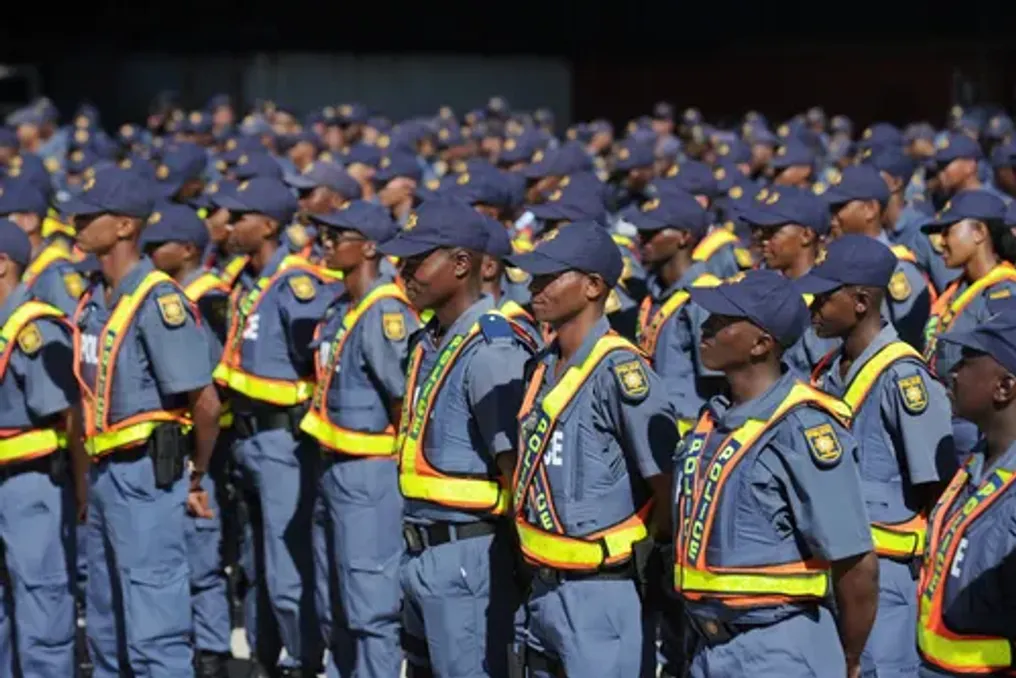
The South African Police Service (SAPS) has announced the start of recruitment for 5500 entry-level police officer candidates for the financial years 2026 and 2027. The application period will close on November 13th.
SAPS National Press Secretary, Colonel Amanda van Wyk, urged young South Africans under the age of 35 to accept the challenge and join the service. The nationwide online recruitment campaign begins on Wednesday, October 21st, and runs until November 13th.
Van Wyk emphasized that this is an opportunity for patriotic and motivated South African citizens aged 18 to 35 to turn their passion for helping into a meaningful career in the police force. She added that if a candidate is disciplined, physically fit, ready to serve their community, and strives to make South Africa safer, this could be their moment.
How to apply for SAPS vacancies
According to Van Wyk, applicants who have no criminal records or current criminal cases can apply through the official SAPS eRecruitment portal. The online application process, implemented in 2025, simplifies access to entry-level positions for youth from various segments of society.
Prospective applicants must create a profile on the portal and verify their accounts using a code sent to their email. After verification, they can follow step-by-step instructions to apply for available trainee positions. Furthermore, a QR code with a direct link to the portal will be posted on SAPS's official social media pages.
Van Wyk noted that SAPS is looking not only for uniformed personnel but also for young professionals who can bring knowledge, skills, fresh ideas, and a drive for excellence to the fight against crime.
Graduates may be considered for specialized units
As part of the SAPS targeted recruitment campaign, suitable candidates with special skills will be identified for consideration in specialized police structures. Graduates in fields such as law, policing, criminology, law enforcement, criminal investigation, and information technology may be considered for placement in the Directorate for Priority Crime Investigation (DPCI), known as Hawks, as well as in Detective and Forensic Services and the Criminal Intelligence Service.
The targeted recruitment process is also aimed at finding suitable young people from underrepresented racial groups who meet the established requirements.
Selection and training process
Van Wyk stated that every applicant will undergo a rigorous selection process, which includes physical fitness testing, psychometric and integrity checks, medical examination, and an interview. These assessments are designed to ensure that selected individuals possess the physical endurance, mental resilience, discipline, and honesty necessary to protect and serve the people of South Africa.
Successfully recruited employees with an NQF Level 6 qualification or higher will undergo six months of training at the SAPS training academy. Those without such qualifications will complete a standard nine-month training program. All police trainees will receive a monthly allowance of 5000 South African Rand during their training.
Joining SAPS is not just choosing a profession; it is a decision to confront crime, protect vulnerable people, support communities, and contribute to a safer future for all residents of South Africa. Interested candidates are advised to apply in advance and ensure they meet all established requirements.
SAPS warns applicants about recruitment scams
The service stressed that applying is free and that no police trainee position is sold. SAPS warns applicants against scammers who may demand money in exchange for employment or promise to influence the recruitment process.
The recruitment campaign takes place amid intense scrutiny of the police's work by the Madlanga Commission, which is investigating allegations of corruption, concealment of criminal syndicates and networks within the police and justice system, as well as political interference in the judicial system.
The Commission was established by President Cyril Ramaphosa following serious allegations made by Lieutenant General Nlankhla Mkhwanazi in a media briefing in July 2025. It is chaired by retired Constitutional Court Judge Mbuiseli Madlanga, with assistance from advocate Sesi Baloyi SC and advocate Sandile Humalo SC. Previously, several high-ranking police officials were implicated in testimony before the commission regarding political interference, syndicate activities, tender irregularities, and corruption.