Delhi Government Launches Project to Reduce Air Pollution in 40 Locations with a Budget of 104 Crore Rupees
Read more
Aaj Tak
www.aajtak.in

Delhi Government Launches Project to Reduce Air Pollution in 40 Locations with a Budget of 104 Crore Rupees

Due to the worsening air quality in Delhi during the winter period caused by road dust, vehicle smoke, and general atmospheric pollution, the Delhi government is preparing to implement new technologies. It is planned that methods for reducing pollution will be tested in 40 different locations across the city with the participation of private companies and startups. The total budget allocated for the implementation of this project is 104 crore rupees.

The main goal of the initiative is to achieve a 20% reduction in PM10 and PM2.5 levels in the selected zones.

The project is being implemented by the Delhi Pollution Control Committee (DPCC). Under this program, air purification technologies will be applied near markets, commercial areas, bus terminals, tourist attractions, and some hospitals. Constant monitoring will be carried out to assess how much the air quality improves due to the methods used.

Public and commercial zones in Delhi were selected for the pilot project where measures to reduce pollution can be tested in open or partially enclosed spaces. Among such locations are Khan Market, Connaught Place, and Defence Colony. Each of the 40 selected points will cover an area of approximately one to one and a half acres. These places are divided into five categories: markets, commercial centers, transport hubs, tourist attractions, hospitals, and educational institutions. Notably, the largest number—29 sites—belongs to commercial areas, accounting for 72.5% of the total.

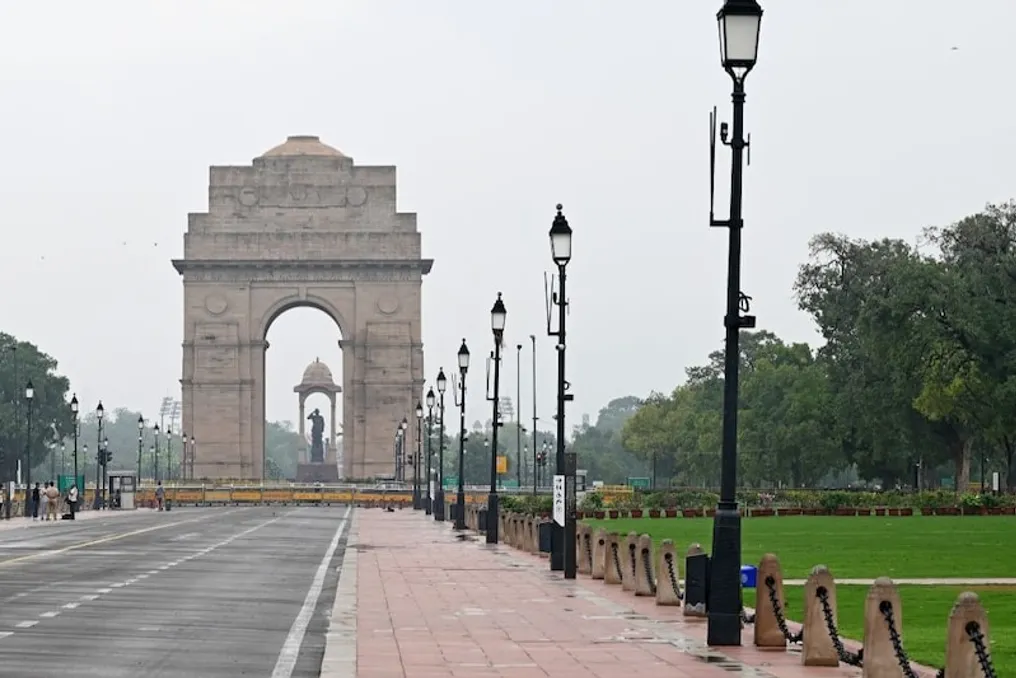
Nineteen such locations were chosen in the central and southern parts of Delhi. Key sites include Connaught Place Central Park, the Children's Park area near India Gate, and the Lotus Temple alley. Intercity bus terminals in Kashmiri Gate, Anand Vihar, and Sarai Kale Khan are also included in the project. Four institutions participate from the hospitals, including GB Pant Hospital and Din Dayal Upadhyaya Hospital. Additionally, one point related to educational institutions was selected near the Faculty of Arts of Delhi University.

The pilot project involves testing pollution control methods on sections of three important streets in Delhi. These include the main shopping street Chandni Chowk, Lotus Temple Road, and Baba Khadak Singh Marg. According to DPCC estimates, the main causes of pollution on these streets are road dust and vehicle exhaust fumes. Therefore, it is planned to check what level of air quality improvement can be achieved at the local level using the applied technologies.

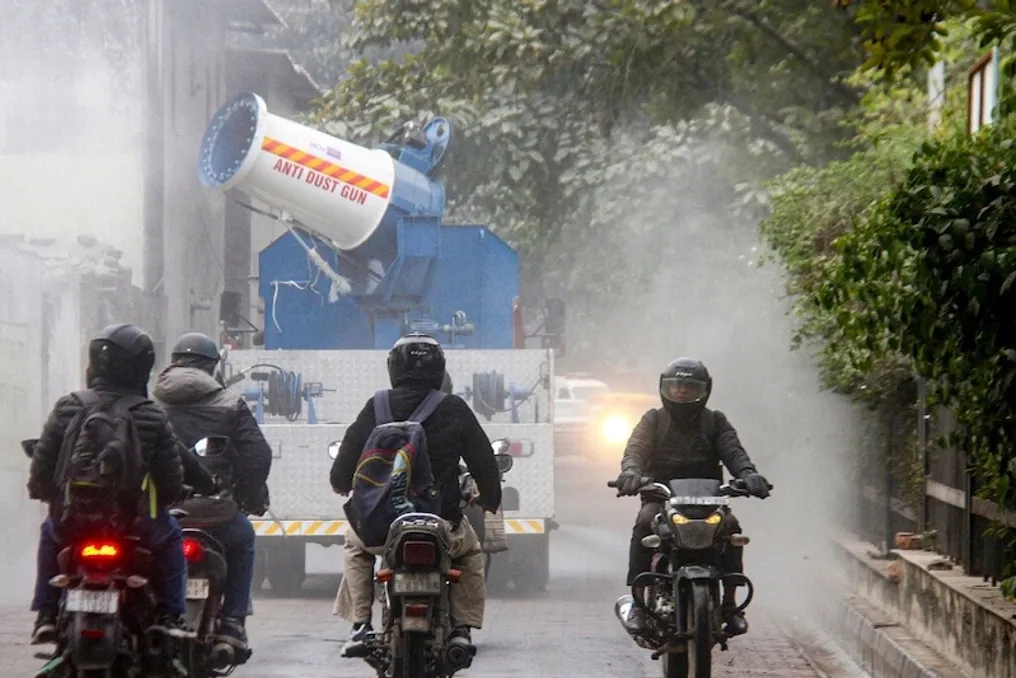
A feature of this project is the lack of a requirement to use any single specific technology. Private companies and startups can aim to achieve the pollution reduction goal using their own developments. Air purifiers, electrostatic precipitators to reduce airborne pollutants, and scrubbers to remove road dust can be used in open spaces. An electrostatic precipitator is a technology that separates dust particles and other pollutants from the air using an electric charge. This technology will be applied in industrial zones and factories in Delhi. However, certain conditions have been set for companies and factories: the electrostatic precipitator devices they use must be certified by a state laboratory and ensure pollution reduction according to established standards. Furthermore, these installations must not create additional problems, such as ozone emissions or excessive noise.

According to the report, the project is designed for an initial period of one year. After the relevant sites are handed over to the companies, they are given four weeks to install and launch their equipment. The plan's implementation began last month, and technical evaluation is currently underway. Sensors will be installed at all selected sites to assess the effectiveness of pollution control measures, recording air quality indicators daily. Monitoring will be conducted by the DPCC, while an independent commission will evaluate how effective the applied technologies are in combating pollution. The main objective of the project is to achieve a 20% reduction in PM10 and PM2.5 levels. PM10 denotes relatively large particles in the air, whereas PM2.5 represents extremely fine particles capable of penetrating the lungs through the respiratory tract. The real effect of this pilot project will become clear after analyzing the data collected over the year.
Similar stories

Smog appeared in Delhi 10 days earlier than planned measures; reasons for the early deterioration of air quality explained
Read more
www.aajtak.in

Smog appeared in Delhi 10 days earlier than planned measures; reasons for the early deterioration of air quality explained

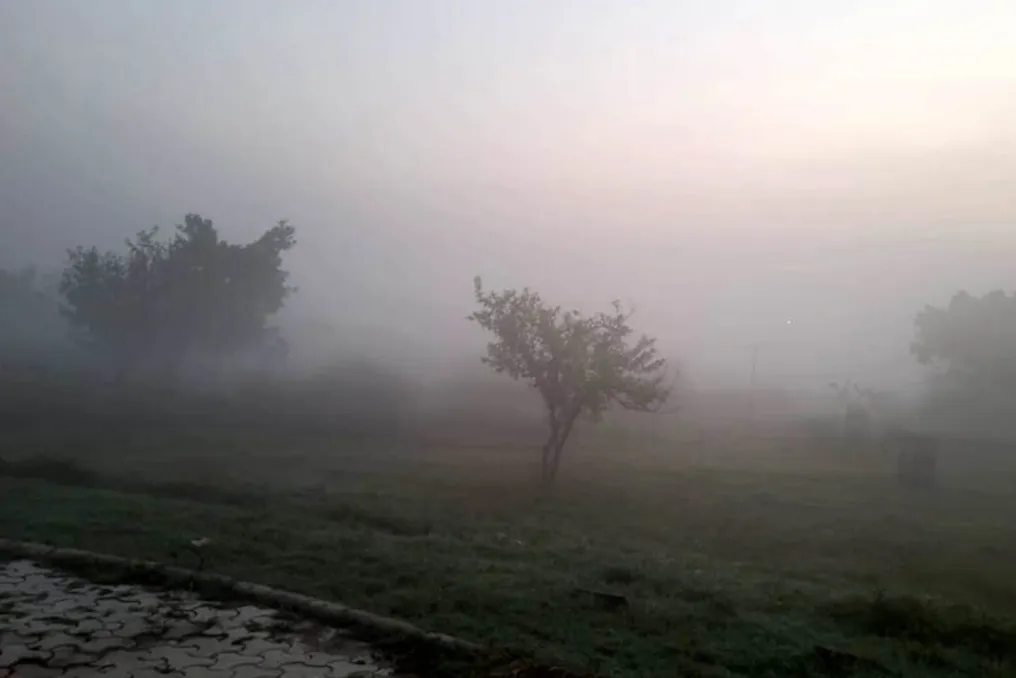
In mid-October, the familiar haze reappeared over the sky of Delhi-NCR. As early as October 20-21, it became visible in many areas that everything around was shrouded in mist. Despite Diwali being far off and fireworks not yet being launched, the air had already become heavy. The Dussehra festival had passed, and effigies of Ravana had been burned.

People are wondering if the act of burning Ravana itself can cause such smog. Although the Graded Response Action Plan (GRAP) will start operating in November, pollution began showing signs about 10-12 days before that. This raises the question of the scientific reasons for such an early appearance of smog.

With the onset of October, nights in Delhi become colder. On normal days, warm air near the ground rises, dispersing pollutants. However, during cold nights, the opposite effect occurs, known as temperature inversion. A layer of warm air forms above, which prevents the cold air from below from rising.

Pollutants remain close to the Earth's surface. This effect is most noticeable in the morning because the pollutants accumulated overnight have not yet dispersed. Furthermore, wind speed significantly decreases. When the wind moves slower than 10 kilometers per hour, pollutants cannot be carried away.

The Delhi air quality early warning system also indicates that low ventilation index and slow winds are factors contributing to increased pollution. This year, after the monsoon season, rainfall was less, and winds remained calm, allowing local pollution to accumulate easily. As a result, the Air Quality Index (AQI) started exceeding the 200 mark in the morning and falling into the 'poor' category.

Smog is not only a result of smoke coming from outside. Local sources in Delhi contribute to pollution annually. Vehicle exhaust contributes about 23%. Dust from construction work, road dust, waste burning, and industrial emissions together account for another 15 percent. According to surveys, people cite construction dust and waste burning as the most serious problems. In October, these sources are already active, and their impact is increasing with the change in weather.

In Punjab, Haryana, and neighboring states, rice harvesting has begun. Hundreds of instances of stubble burning were recorded between mid-September and mid-October this year. Statistics in some districts of Punjab are higher than last year. While the contribution of stubble to PM 2.5 in Delhi was about 4 percent, it could reach 8-13 percent in the coming days. Northwesterly winds can bring this smoke to Delhi. Although it is not the main cause in the initial stages, its share increases rapidly under favorable weather conditions.

During Dussehra, huge effigies of Ravana, Kumbhakarna, and Meghnad, made of bamboo, cloth, plastic, and pyrotechnics, are burned. During combustion, they release PM 2.5, PM 10, sulfur dioxide, and other harmful particles. At a local level, especially where many effigies are burned simultaneously, pollution levels can temporarily rise. Experts call this 'hyperlocal emissions'. However, for the smog of the entire city, this is not the main reason. The haze the day after Dussehra is mainly caused by temperature inversion, weak winds, and already accumulated pollution. Burning Ravana only adds a small additional load.

The Graded Response Action Plan starts operating in November because historically, the peak pollution occurs in November-December, when stubble burning reaches its maximum and winter fully sets in. Nevertheless, according to meteorological data, adverse conditions arise already at the end of October. Therefore, this year, pollution activated 10-12 days earlier. The Delhi government announced a 10-point winter project, starting in November, which includes measures such as banning old vehicles, PUC checks, construction control, and remote work options.

The main scientific reason for the Delhi-NCR problem is that local and regional emissions occur constantly, but in October, the weather begins to trap them. Due to the Himalayas, the Indo-Gangetic plain functions as a basin where pollutant particles cannot easily escape. The mixing height, i.e., the altitude at which pollutants spread, decreases. The drop in temperature at night makes the particles even denser. This is why morning smog becomes visible even before Diwali. Ravana burning is not the sole culprit. The real reason is a combination of changing weather patterns and constant local and regional emissions.

If the winds do not start blowing in the coming weeks and stubble burning increases, the situation could worsen. Therefore, on a personal level, it is important to wear masks and avoid unnecessary outings, while at a collective level, efforts to reduce emissions are necessary. Clean air requires not only government programs; awareness and cooperation play an equally important role.

Air pollution concern grows in Delhi and NCR due to cold weather and weak winds; AQI rises
Read more
www.aajtak.in

Air pollution concern grows in Delhi and NCR due to cold weather and weak winds; AQI rises

As the second period of October begins, various weather phenomena are observed across different parts of the country. Heavy rain is forecast in some regions, while others expect strong winds with thunderstorms. In South India, the rainy season may intensify, while a low-pressure area in the Arabian Sea is activating sea weather.

Conversely, in the northern states of India, including Delhi, the cold has intensified in the morning, evening, and night. On Monday morning, Delhi recorded the coldest night of the month. The minimum temperature at the Safdarjung weather station was 17.1 degrees Celsius, which is 1.3 degrees below the average. Meanwhile, the daytime maximum temperature reached 31.7 degrees Celsius. According to the Meteorological Department (IMD), the minimum temperature recorded in Safdarjung is the lowest for the current month. In Delhi, as in other northern Indian states, light cold has begun to be felt during the morning, evening, and night hours.

The problem of air pollution may increase in the capital region in the coming days. According to the Central Pollution Control Board (CPCB), on Monday at 16:00, the average daily Air Quality Index (AQI) in Delhi was 139, which falls into the moderate category. Out of 58 monitoring stations, two were in the poor air quality category, six in the satisfactory category, and the rest in the moderate category. The worst situation was recorded in Pusa, where the AQI reached 281. Early warning system forecasts show that the air in Delhi may remain in the moderate category on October 20. However, pollution could rise to the poor category on October 21 and 22. There is a possibility of poor air quality persisting for the next six days. Adverse weather conditions can hinder the dispersion of pollutants. Pollution can accumulate in the air when the ventilation index is below 6000 square meters per second and the average wind speed is less than 10 kilometers per hour.

Amid concerns about air quality in Delhi, instances of stubble burning are also being recorded. Satellite data from the CREAMS laboratory of the Indian Council of Agricultural Research (ICAR-IARI) registered 98 cases of stubble burning in six states on October 19. Among these, there were 27 cases in Uttar Pradesh, 25 in Punjab, 24 in Rajasthan, 18 in Uttarakhand, and four cases in Madhya Pradesh. On Monday, no cases of stubble burning were registered in Haryana and Delhi. From September 15 to October 19, the total number of incidents was 1171. These incidents included 370 in Madhya Pradesh, 368 in Punjab, 197 in Rajasthan, 175 in Uttar Pradesh, 51 in Uttarakhand, 9 in Haryana, and 1 case in Delhi. CPCB classifies AQI categories as follows: good - 0-50, satisfactory - 51-100, moderate - 101-200, poor - 201-300, very poor - 301-400, and hazardous - 401-500.

In the northwestern part of Uttar Pradesh and surrounding areas, there is cyclonic rotation in the upper layers of the atmosphere at an altitude of about 1.5 kilometers above sea level. Nevertheless, the meteorological department does not predict major weather changes in North India different from the forecasts given for various states this week. A cyclonic rotation has formed over Himachal Pradesh and adjacent Punjab, associated with a western disturbance, at an altitude of about 3.1 kilometers above sea level. The corresponding trough line extends to an altitude of about 5.8 kilometers in the middle troposphere. Cyclonic rotation is also present in southern Rajasthan and surrounding areas. The trough line originated from southwestern Rajasthan to northeastern Arabian Sea. Despite these weather systems, the meteorological department does not forecast large-scale weather activity for North India.

Weather in some parts of central and western India may change after North India. In Madhya Pradesh, winds of 30-40 kilometers per hour with thunderstorms are expected in some places on October 20, with gusts potentially reaching 50 kilometers per hour. In Konkan and Goa, winds of 40-50 kilometers per hour with thunderstorms are possible on Tuesday, with gusts potentially reaching 60 kilometers per hour. Similar weather may be observed in central Maharashtra.

An increase in rainfall activity is expected in South India. IMD warned of heavy and very heavy rainfall in some areas of Tamil Nadu, Puducherry, and Karaikal on October 20. Heavy rains may also lash Kerala, Maharashtra, and coastal Andhra Pradesh. K.A. Sangothaiyan, Minister of Revenue and Disaster Management of Tamil Nadu, reported that an orange alert has been issued in six districts: Tiruvur, Mayiladuthurai, Thanjavur, Pudukkottai, Coimbatore, and Nilgiris. The minister told journalists at the emergency control center in Ajilagam, Chennai, that the district administration has been instructed to be prepared for heavy rains. District directors and officials from relevant departments are monitoring the situation and are ready to take immediate action if necessary. In Tamil Nadu, Puducherry, and Karaikal on October 20-25...

Popular