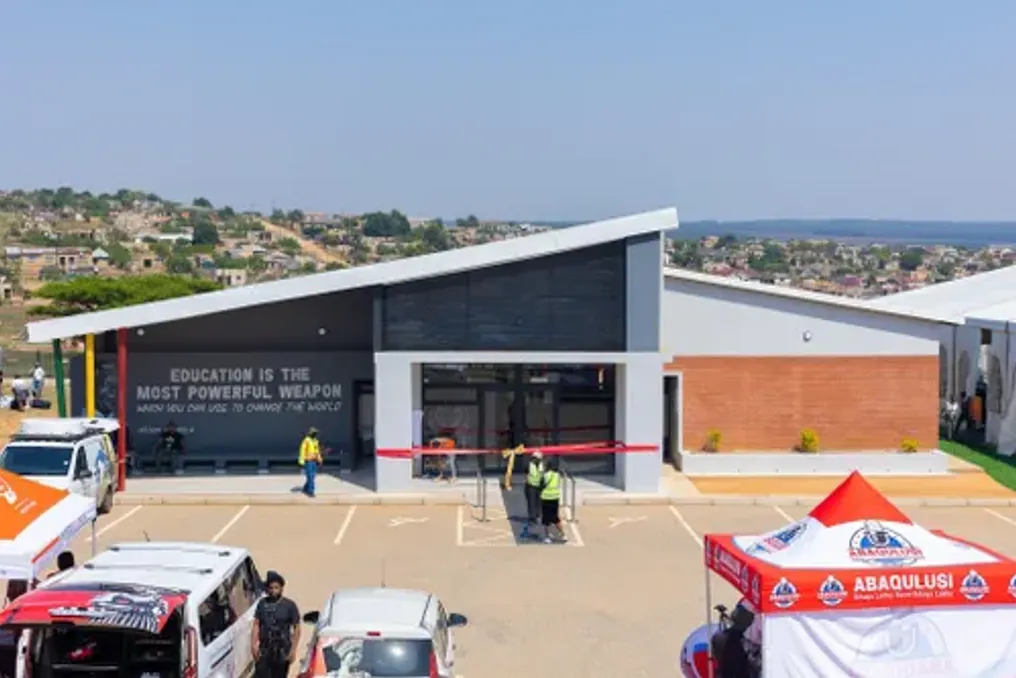
On Friday, October 16, 2026, the Dan Nkosi Skills Development Centre was officially opened in Paulpietersburg, KwaZulu-Natal. This opening was regarded as a significant investment in rural communities, with government leaders urging youth to utilize the facility for acquiring practical skills and creating sustainable income sources.
The centre was built through investments of approximately 14.6 million rand provided by the Services Education and Training Authority (Services SETA), in partnership with the Department of Higher Education and Training, the provincial government, and the municipality. The project implementation process took nearly two decades.
The Minister of Higher Education and Training, Buti Manamela, noted that the project completion took about 20 years, as the initial request was made in 2009, the commitment secured in 2012, and construction finished in 2024. He emphasized that this is a major investment contributed to by Services SETA amounting to about 14.6 million rand, as well as the provincial government and the municipality.
Manamela stressed that the centre belongs to the community and must be used to expand access to skills training for both youth and adults wishing to acquire new competencies. He stated: 'Although Services SETA transfers this investment, we are transferring it to the community. This is not a Services SETA project, Mtashana; it is a project for the community and students.'
He encouraged young people to enroll in training for trades such as plumbing, electrical work, and welding, adding that communities bear the responsibility for protecting this infrastructure.
The Minister of Public Works and Administration, Nkosi Mzamo Butelezi, reported that this centre provides an opportunity to address the socio-economic challenges facing Edumbe while equipping youth with skills for self-sufficiency and assisting their families. Butelezi thanked the government for the work done for the residents of Edumbe, noting the importance of the gathering as it reflects the most pressing needs of people—skills capable of supporting a family.
He recalled the historical hardships of the region, including the impact of HIV/AIDS, and suggested that the centre could help restore hope among the youth. Butelezi stated that 'this centre will restore hope among our youth and tell them that they have talent, and the government is not hesitant to invest in their talent.'
Butelezi also strongly urged traditional leaders and councillors to recognize the long-term value of the centre, citing opportunities such as mobile phone repair available through practical training.
Speaking on behalf of the CEO of Services SETA, Lehlognololo Masogi, Dr. Bongani Ndamase reported that the centre has become a timely intervention for rural communities struggling with unemployment. He specified that the investment allowed the facility to be built from scratch, and emphasized that the government, community leaders, and other social partners share responsibility for maintaining the facility's operation.
Ndamase informed that about 30 people have already been trained in residential construction as part of a 12-month program, and another 30 in mobile phone repair. Additionally, 20 people are undergoing entrepreneurship training, which will conclude on October 30.
Manamela added that the government continues to invest in educational infrastructure, including Technical and Vocational Education and Training (TVET) colleges, universities, and community colleges. He mentioned the development of a new campus and engineering centre in Vrihidi as part of these efforts.
Furthermore, he reminded potential students that applications for National Student Financial Aid Scheme (NSFAS) will close on October 31. The opening of the Dan Nkosi centre marks an important step in expanding access to vocational training in rural areas, but its long-term success will depend on the youth's ability to receive quality education and transform new skills into employment and economic opportunities.