Amazon Bets on Agentic AI for Enterprise Operations; Experts Discuss Marketing AI Effectiveness
Read more
YourStory [india, en]
yourstory.com

Amazon Bets on Agentic AI for Enterprise Operations; Experts Discuss Marketing AI Effectiveness

The future of technology points towards the development of agentic artificial intelligence, and the adoption of this technology is gaining momentum. As part of the expanded partnership between Cognizant and Google Cloud, the 'Gemini Frontier Capability Group' has been formed. This group combines Google's ready-to-use AI platform with Cognizant's industry and engineering expertise as an AI developer.

This group is supported by over 18,000 Cognizant employees and significant joint investments. Concurrently, ahead of its Initial Public Offering (IPO), the anchor package of Jio Platforms attracted bids totaling 2.5 lakh rupees. The company allocated 7.24 million shares at a price of 1,119 rupees to anchor shareholders, with LIC receiving the largest stake.

Furthermore, the startup Hunar.AI raised 40 crore rupees in a Series A funding round led by Blume Ventures. Hyderabad Angels Fund, Together Fund, Seedstars, AVNM Ventures, co-founders Prateek Maheshwari and Alakh Pandey of PhysicsWallah, and co-founder Aditya Wuchi of MediaMint also participated in the round. This startup, which develops specialized AI technologies for front-line intensive industries, plans to use the funds to build AI infrastructure, develop products, and expand sales channels.

According to a Redseer report, the country's online retail market is expected to exceed $90 billion this year, with grocery products surpassing mobile devices. E-commerce volume grew by approximately 25% year-over-year, reaching about $38 billion in the first half of 2026, marking the strongest first-half performance in four years.

This briefing examines Amazon's bet on agentic AI for enterprise operations, as well as the question of marketing AI tool effectiveness: do they truly increase profit or are they just noise?

Technology Event Overview

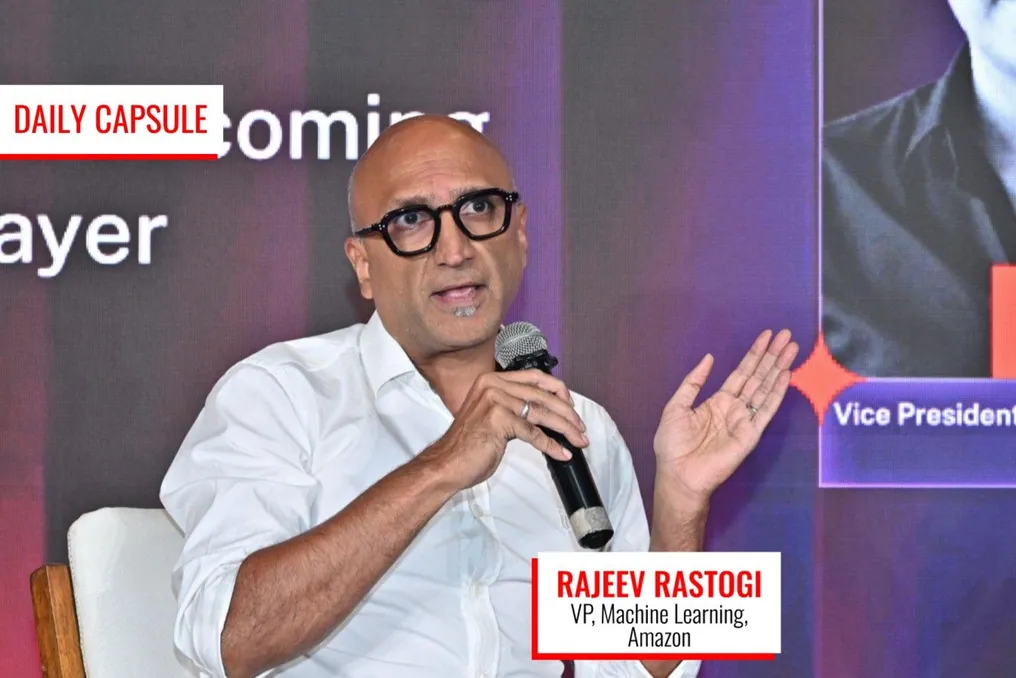
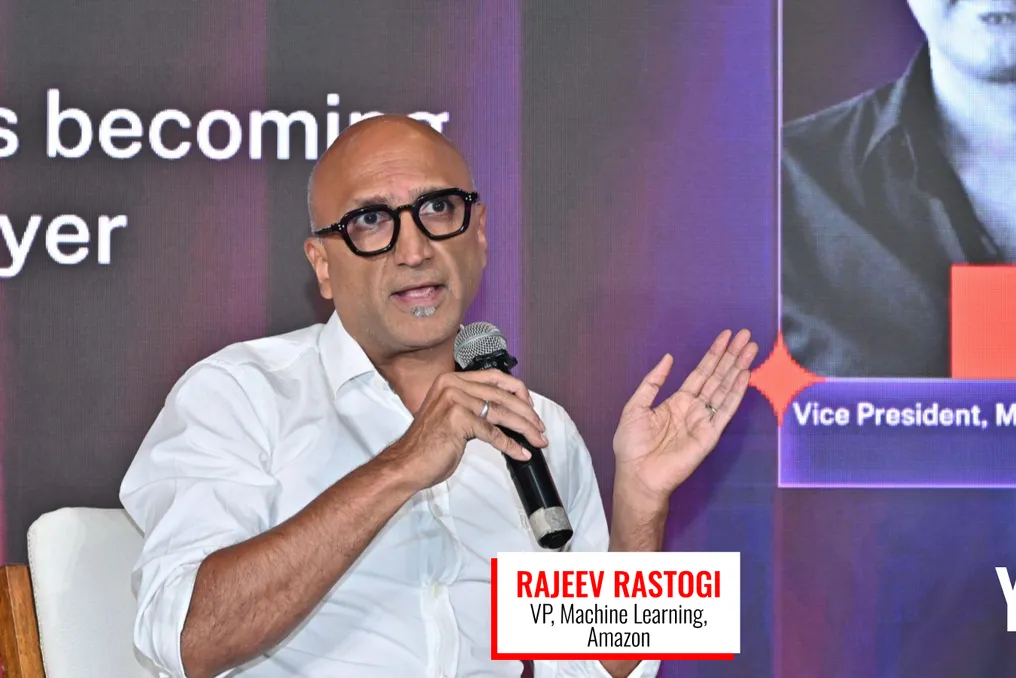
At the TechSparks 2026 event, Rajiv Rastogi, Vice President of Machine Learning at Amazon, emphasized the growing role of agentic AI across all layers of enterprise operations. He noted the shift from static software to autonomous systems capable of understanding natural language instructions.

Rastogi explained during a fireside chat at the 17th edition of the flagship tech startup event YourStory that 'agents dynamically prepare plans to solve problems and invoke relevant tools.'

Driving Force of Transformation

These autonomous agents can evaluate requests, formulate a sequence of actions, and call upon specialized digital tools to complete complex tasks end-to-end, rather than relying on human intervention at every stage. Within Amazon, this operational layer functions in systems like Rufus—a conversational shopping assistant that analyzes customer queries, applies price filters, calls search engines, and guides users through product comparison and checkout.

Similarly, autonomous seller assistants pre-fill product descriptions, monitor inventory, and help small businesses comply with international export requirements.

In Rastogi's view, the industry will ultimately move towards true global models that possess an intrinsic understanding of physical spaces and environmental behavior, creating a practical and economically viable foundation for business automation.

Marketing and Decision Making

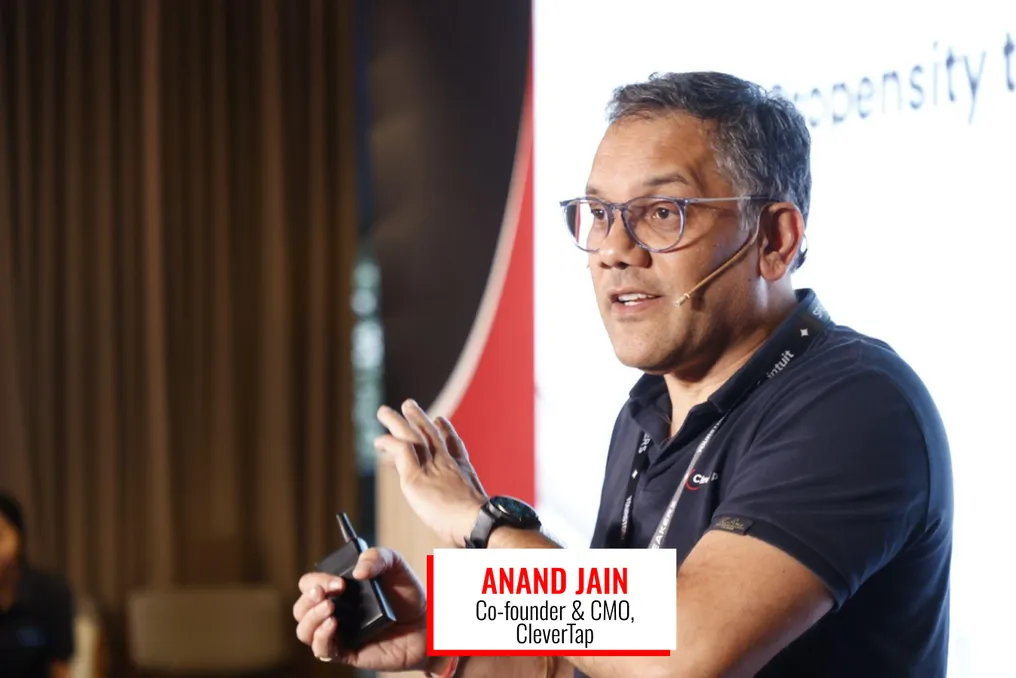
At TechSparks 2026, Anand Jain, Co-founder and CMO of CleverTap, a marketing automation and customer engagement platform, elaborated on why marketing teams must move beyond basic generative AI productivity tools and transition to real-time autonomous decision-making systems that deliver tangible business profit.

During a marketing strategy masterclass, Jain urged leaders not to limit themselves to simple gimmicks but to move from using AI for entertainment to achieving actual business outcomes. He questioned whether AI-generated content creation truly contributes to growth, asking, 'Will this actually impact business results, or is it just the same thing?'

Instead of broadcasting generic promotional offers to wide audiences, modern marketing mechanisms must interpret customer actions in real time to meet individual needs. This approach signifies a transition to the highest level of AI maturity, known as 'real-time decision-making.'

The news and updates section noted the entry into force of a free trade agreement between India and New Zealand, which grants duty-free access to a range of Indian goods, including products from labor-intensive sectors such as textiles and leather. It was also reported that OYO's parent company, PRISM, plans to nearly halve the size of the new offering in the proposed IPO, reducing it from almost 6,650 crore to 3,350 crore rupees, due to strong cash generation and balance sheet improvement. Furthermore, US Secretary of State Marco Rubio arrived in India after President Donald Trump postponed US tariffs on imports from India, as both countries work to finalize a trade agreement. During his two-day visit to Mumbai and Jamnagar, Rubio will meet with government and business leaders.
Similar stories

Rajiv Rastogi from Amazon advocates for agentic AI to boost corporate efficiency over excessive focus on generative AI
Read more
yourstory.com

Rajiv Rastogi from Amazon advocates for agentic AI to boost corporate efficiency over excessive focus on generative AI

Rajiv Rastogi, Vice President of Machine Learning at Amazon, stated that there is a profound transformation in business technologies, noting that the entire operational layer is becoming agentic.

This signifies a shift from static software to autonomous systems capable of interpreting instructions in natural language. Unlike traditional software, which follows rigid, predefined scripts, agentic systems possess dynamic execution paths.

During a discussion at the TechSparks event, Rastogi explained that agents independently develop plans to solve tasks and activate relevant tools. Instead of constant human intervention, these autonomous agents analyze requests, formulate sequences of actions, and use specialized digital tools to complete complex processes from start to finish.

Within Amazon, this operational layer is used in systems like Rufus, a shopping assistant that can parse customer requests, apply price filters, call search engines, and guide users through product comparison and checkout. Similarly, autonomous seller assistants help fill out product listings, manage inventory, and advise small businesses on international export compliance.

Despite the market's huge enthusiasm for Generative AI (Gen AI), Rastogi emphasized that generative models are not a universal solution for all computational problems. Generative AI excels in complex argumentation, text summarization, review analysis, and creative tasks, such as editing product image backgrounds. However, it struggles in applications requiring high throughput and low latency.

Rastogi noted that for certain tasks, the performance of traditional machine learning models can never compare to that of generative models. Classic algorithms, such as gradient boosting decision trees or standard neural networks, process structured numerical data with exceptional speed.

For large-scale operational needs, such as product search in e-commerce, where tens or hundreds of billions of items must be processed, generative models face prohibitive computational costs and slow response times. Therefore, high-performance architectures utilize agent-type orchestrators to understand human intent while relying on basic search engines for lightning-fast data retrieval.

When generative capabilities are truly required, enterprises do not necessarily have to rely solely on massive foundational systems. Frontier models, representing the largest and most resource-intensive AI architectures, carry significant operational expenses. Rastogi proposed a more economical alternative, stating that 'fine-tuning some open base models... can give you models that perform much better than some of those big models... at one-fifth or one-tenth the cost.'

Fine-tuning involves taking a smaller, publicly available open model, such as Qwen, and training it on specific proprietary application data. By adopting open fine-tuned models, companies can achieve equal or superior accuracy for specialized classification or forecasting tasks compared to giant closed models like Claude or ChatGPT, while significantly reducing their computational overhead.

For tech entrepreneurs and enterprise architects, the most promising opportunities lie in automating vertical workflows, rather than attempting to build foundational models. Developing new frontier models requires unsustainable financial capital and computational infrastructure. Instead, Rastogi advises: 'building on top of frontier models, using agentic AI to automate workflows in domains... is definitely promising.'

Drawing inspiration from coding tools like Cursor, great potential exists in specialized fields, including law, finance, healthcare, agriculture, and human resources. A particularly valuable untapped area is the automation of standard operating procedures—natural language documents detailing step-by-step instructions for employees to solve complex operational problems.

An agentic automation platform is capable of refining poorly written instructions using internal knowledge bases, breaking down long procedures into manageable subtasks, and delegating them to networks of specialized sub-agents that automatically browse internal tools, extract data from documents, analyze images, and solve problems.

Looking ahead, the fundamental structure of AI models needs to evolve to maintain sustainability. Current frontier models face serious physical and financial limitations. Rastogi noted: 'Frontier models today are enormous, computationally very expensive, consume a lot of energy and resources... and I don't think that is sustainable.'

Furthermore, today's monolithic models function primarily as mechanisms for statistical prediction of the next token, guessing the most probable next word in a sequence, without genuine understanding of the laws of physics, three-dimensional geometry, or causality. In Rastogi's view, to overcome these boundaries, the future landscape will transition to networks of small, domain-specific models managed by central routing orchestrators. Instead of storing vast amounts of world knowledge in the parameters of a giant model, future AI architectures will separate core reasoning capabilities from data storage, relying on external high-speed search engines for information retrieval. Ultimately, the industry will advance toward true world models possessing an intrinsic understanding of physical spaces and environmental behavior, creating a practical and economically viable foundation for corporate automation.

CleverTap Co-founder Anand Jain discusses whether marketing AI generates profit or is just noise
Read more
yourstory.com

CleverTap Co-founder Anand Jain discusses whether marketing AI generates profit or is just noise

Most modern marketing teams use artificial intelligence to save time on tasks such as drafting emails, creating image variations, and summarizing long documents. However, Anand Jain, co-founder and CMO of CleverTap, a platform for marketing automation and customer engagement, argues that basic tools performing these functions rarely contribute to increased company profit.

During a marketing strategy masterclass at the TechSparks 2026 event, Jain urged leaders to look beyond simple ways to speed up work. He emphasized the need to shift from using AI for entertainment to applying it for real business results.

While AI-powered content creation speeds up work and saves time, Jain questioned whether this truly contributes to growth, asking: 'Will this actually impact business outcomes, or is it just the same thing?'

Traditional digital campaigns usually operate on a 'push' model, where companies decide what they want to sell instead of understanding what consumers want to buy. In contrast, an offline consultant remembers a client's personal preferences, notices instant reactions, and suggests products matching their budget and style. Digital marketing must adopt a similar approach.

Jain stated: 'Not what I want to sell, but what my customer wants to buy. That's how it needs to be flipped.' Instead of blasting general promotions to wide audiences, modern marketing systems should analyze customer actions in real time to match individual needs.

This method marks a transition to the highest level of AI maturity, known as 'real-time decision making.' Marketing technologies typically evolve through three stages. The first level focuses on basic time-saving tasks, the second covers experiments like A/B testing (comparing two ad versions to determine the best), and the third achieves true automated decision-making.

Jain noted: 'You start with productivity, then you run experiments, and the hardest part is decision-making. When you are actually building an entire system for one group of people, and that one person could be one of several millions appearing in your app or on your website.'

Instead of bombarding users with promo codes, a decision-making system first offers soft, helpful steps, such as building brand trust or explaining product benefits. Real-time decision-making relies on a single data hub that combines the historical customer profile with their recent real-time actions. Traditional A/B testing usually stops after selecting one fixed winner, whereas a decision-making system uses reinforcement learning—a smart system that continuously learns from user responses and adjusts offers on the fly.

Furthermore, instead of relying solely on propensity scoring (calculating the probability of purchase), a decision-making system uses uplift modeling. This method identifies the specific nudge, message, or channel needed to prompt an individual user to take the next positive step.

As automated systems manage campaign delivery across thousands of message variations, the marketer's role shifts from execution to strategic guidance. Instead of manually creating creative variations, marketers define high-level goals and set strict operational constraints. Jain emphasized: 'Your job is to create budget constraints, brand constraints, regulatory constraints. Do not use the word 'free' if you are offering something, if you are a bank.'

By setting clear boundaries, marketing leaders allow intelligent decision-making systems to operate autonomously, maintaining the safety of brand messaging while simultaneously ensuring genuine commercial profitability, he added.

Popular