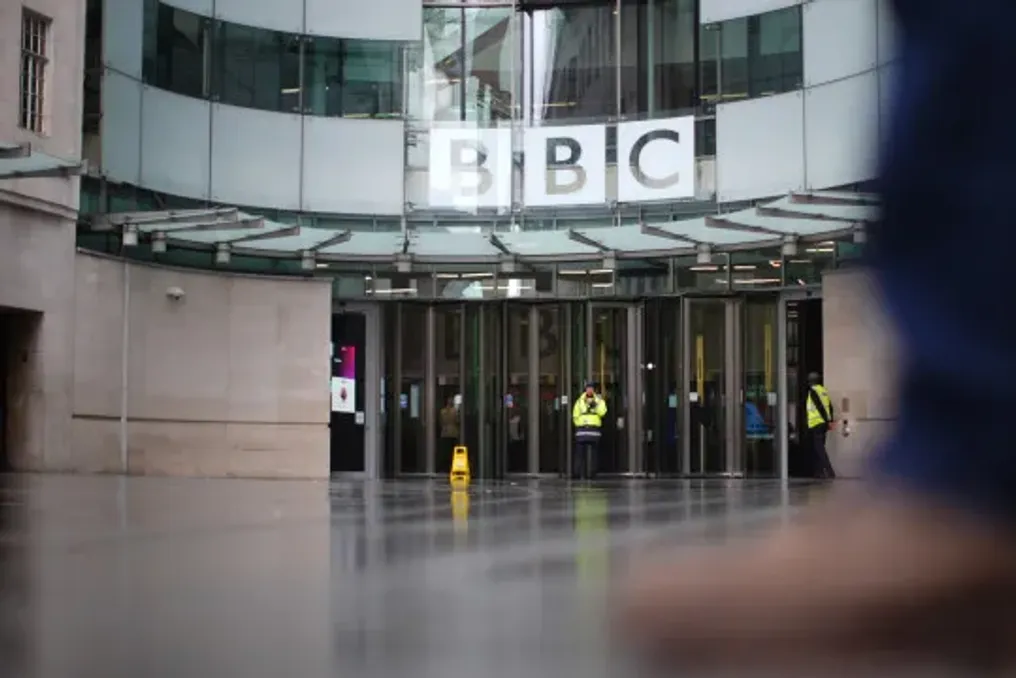
The British television giant BBC announced that it will reduce approximately one hundred positions in its news service, BBC News, and close two channels, one of which is BBC Scotland, effective in the spring of 2027.
This move comes as the group deals with a decrease in its revenues. Previously, in April, the organization had set a target to save £500 million (equivalent to €595 million) in annual costs by 2028, which involved eliminating up to 2,000 jobs, corresponding to about 10% of its staff.
In the context of this restructuring plan, Rachel Jupp, the new director of BBC News, informed employees via email about the 'net elimination of just over 100 jobs.' This measure is expected to generate savings of approximately £5.5 million.
Matt Brittin, head of internal communications, stated in a memo to teams that it is necessary to ensure that every pound is used more efficiently for the public, while the BBC adapts to a scenario of rising costs and reinvents itself for a changing world, referring to these decisions as 'difficult choices.'
The closure of BBC Scotland and BBC Three, a channel aimed at young audiences, will also imply the extinction of related positions, although content produced by these channels will remain accessible on the BBC iPlayer streaming platform.
Mairi McAllan, the Scottish Culture Minister, expressed strong disagreement with the end of BBC Scotland's broadcast, labeling it 'totally unacceptable.'
Additionally, the radio station Radio 4 Extra will be discontinued, but its programs will remain available online. The BBC had already notified in June about the removal of about 550 vacancies by March 2027, focusing especially on regional areas and the news division, as part of its cut plan. These actions aim to generate savings of £160 million (€185 million) by the end of the company's fiscal year, which faces difficulties primarily due to the drop in revenue generated by the license fee.
Rachel Jupp also commented in her message that the way the public consumes information is changing rapidly, and that many groups, particularly younger ones, are not finding the BBC.