Review: 10 Samsung TV models recommended for purchase in 2026
Read more
Tecnoblog
tecnoblog.net

Review: 10 Samsung TV models recommended for purchase in 2026

Choosing a Samsung television in 2026 requires comparing various models that incorporate different image technologies, such as Crystal UHD, QLED, Neo QLED, OLED, and Micro RGB. Furthermore, it is essential to consider specific features dedicated to gaming, movies, and series, as each line caters to different priorities, impacting both the user experience and the investment made.

Based on this, Tecnoblog compiled a list of ten brand televisions available in the market, detailing the pros and cons of each device.

Samsung S95H

The Samsung S95H is a smart TV that offers high visual quality and advanced functionalities for gamers. Its OLED screen uses self-illuminating pixels, allowing individual control over light emission, which results in very deep blacks and sharp contrasts. This line has versions starting from 55 inches.

In terms of gaming, the S95H features a panel with an update rate of up to 165 Hz, in addition to supporting VRR and technologies like FreeSync Premium Pro and G-Sync, optimizing fluidity when used with compatible consoles and computers. However, one aspect to note is the absence of Dolby Vision support, which might disappoint certain gamer users.

Samsung's Tizen operating system integrates streaming applications, the Gaming Hub, four HDMI ports, Wi-Fi 6E, and Bluetooth 5.3. Its integrated sound, with 70W power, elevates the model above TVs with more basic audio systems.

Samsung QN90F

The Samsung QN90F combines Mini LED backlighting with a high refresh rate, making it ideal for those who consume varied content in well-lit environments and also play games regularly. Unlike the OLED S95H, this model uses an LCD panel equipped with quantum dots and backlighting.

Mini LEDs allow for more segmented light control, aiding in contrast and reducing light dispersion in certain scenes, although the phenomenon known as 'blooming' can still occur during high-contrast moments. The line is available in several sizes, including 43 inches and 50 inches.

For gaming, the native frequency of 120 Hz can reach 165 Hz, depending on the size and configuration. The TV has four HDMI inputs, VRR, ALLM, and support for FreeSync Premium Pro, valuable features for devices that support high refresh rates and variable synchronization.

Samsung S85H

The S85H brings OLED technology to consumers who prioritize image quality and contrast in movies and series without needing the most sophisticated features of the S95H. Like autonomous pixels, the screen can display black without relying on a backlight source, which benefits dark scenes and overall contrast.

This line includes options of 48, 55, and 65 inches. Image processing is managed by NQ4 AI Gen 2, which uses artificial intelligence to improve image quality and adapt lower-resolution content to the 4K screen. The 120 Hz screen with VRR support also serves those who connect consoles or computers through the four HDMI inputs. In terms of audio, its 20W, two-channel configuration is simpler compared to the S95H.

Samsung QN85F

The Samsung QN85F combines quantum dots and Mini LED backlighting, making it an option for those looking for a 4K TV with more refined lighting control and advanced gaming features. This technological combination helps enhance contrast and detail sharpness in both bright and dark scenes.

The NQ4 AI Gen 2 processor performs 4K upscaling and offers image processing functionalities, while Neo Quantum HDR+ and HDR10+ assist in adjusting brightness and contrast in compatible content. This model can be found in sizes ranging from 55 inches to 85 inches.

The native refresh rate is 120 Hz, potentially reaching 144 Hz, depending on the specific version. The four HDMI 2.1 ports and dedicated gaming features allow for the use of high-frequency signals with appropriate equipment.

The 40W, 2.2-channel sound configuration, with Dolby Atmos support, also presents higher power than found in entry-level models.

Samsung Q7F

The Samsung Q7F establishes itself as a 4K QLED TV alternative focused on daily use, prioritizing color fidelity and access to various entertainment applications. It is available in sizes of 50″, 55″, 65″, 75″, and 85″, using quantum dot technology combined with LCD backlighting to expand the color gamut.

Its Q4 AI processor works on refining the image and upscaling to 4K, while Quantum HDR and HDR10+ compatibility allow for the display of these content formats. The panel operates at a native frequency of 60 Hz, a characteristic suitable for watching television programs, movies, and series.

The Tizen system provides streaming applications and Samsung services, including Samsung TV Plus, in addition to offering mirroring and HDMI connection functions (three ports). The integrated audio has 20W of power and two channels, and features like ALLM and VRR can assist in compatible gaming.
Similar stories

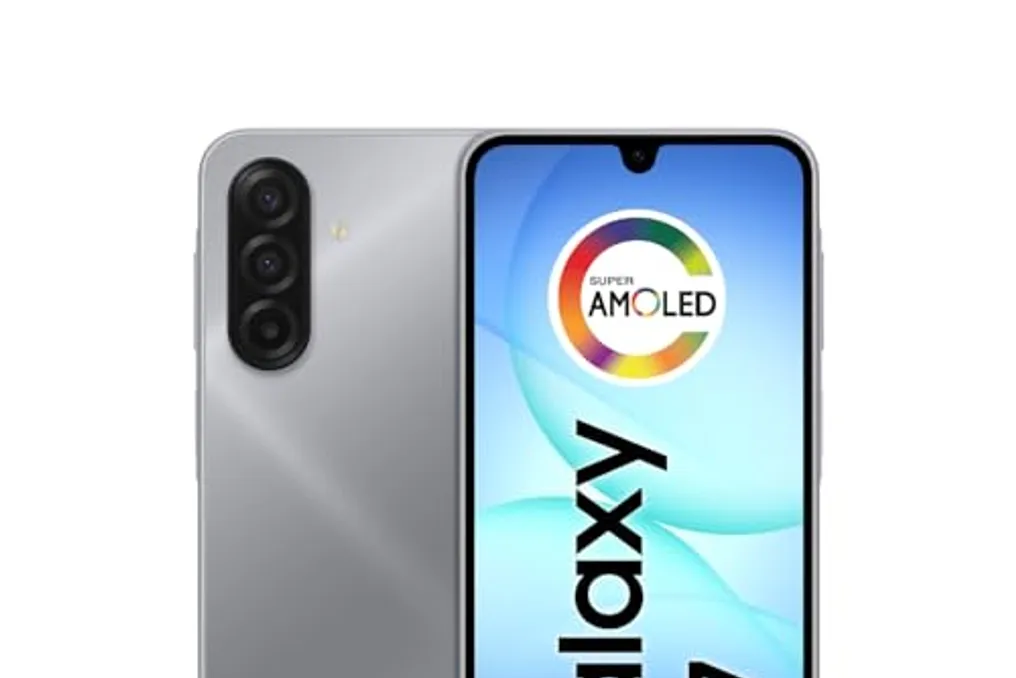
Selection of the best Samsung smartphones on sale, including the Galaxy A17
Read more
olhardigital.com.br

Selection of the best Samsung smartphones on sale, including the Galaxy A17

For those looking for a Samsung device with good features and performance, this is a good time to check out some of the best options available in the market. Three offers from the Galaxy line have been gathered that deserve attention, standing out for having large screens, 50MP cameras, and enough memory for daily use.

The Galaxy A17 presents itself as one of Samsung's most complete proposals in the mid-range category. It features 256GB of internal storage, 8GB of RAM, and a 50MP main camera, allowing it to easily handle photography, video, and multitasking tasks. Furthermore, its 6.7-inch screen ensures a great experience for watching videos and gaming, and the IP54 certification offers protection against dust and splashes, which is a positive point for daily use. This model is available in Gray.

The Samsung Galaxy A07, in the 128GB, 4GB RAM, and 50MP camera versions, with a 6.7-inch Black screen, is a solid alternative for those who want a reliable Samsung smartphone while maintaining essential features. It offers good performance for social media, communication, and capturing daily moments, and its large screen provides a pleasant visual experience for heavy content consumers on their phones.

There is also the Black version of the Galaxy A17, which maintains the robust specifications of the Gray model: 256GB internal storage, 8GB of RAM, 50MP camera, and IP54 resistance against splashes and dust. This combination of durability and performance capacity makes it a good mid-range choice, with a more elegant and discreet look. The 6.7-inch screen complements the set, offering plenty of space for browsing, gaming, and videos.

It is important to note that these promotions may end at any moment, so it is advisable to access the links immediately to secure the desired product. Users can check availability by clicking on the button for each item directly on Amazon.

Analysis of 8 32-inch Smart TV models ideal for small spaces in 2026
Read more
tecnoblog.net

Analysis of 8 32-inch Smart TV models ideal for small spaces in 2026

When selecting the best 32-inch television, it is essential to consider both the physical dimensions and the hardware specifications of the device. For example, the LG LR60 has a thickness of 9 cm, requiring more space, while the Samsung The Frame 32LS03C features less than 3 cm of depth and can function as a piece of art.

Furthermore, it is recommended to prioritize higher resolutions and technologies that enhance color quality and image contrast, while also opting for models with greater energy efficiency. Tecnoblog compiled a list of eight 32-inch Smart TV models, presenting pros and cons from brands such as TCL, Samsung, LG, AOC, Aiwa, and Philco.

Smart TV Models Reviewed

The TCL S5400 is an entry-level Smart TV with a 32-inch screen and thin metal bezels. It uses an LCD panel with DLED backlighting and Full HD resolution (1920 x 1080 pixels) to display high-definition content. However, its declared maximum brightness of only 220 nits limits visibility in environments with solar reflections.

Although it supports HDR10, providing 10-bit color depth, colors may appear saturated in darker scenes due to fixed brightness metadata. The Dolby Audio system aims to improve sound clarity for a more balanced auditory experience. The TCL S5400 operates with the Android TV operating system, allowing voice commands for content search, app streaming, or music playback, with an estimated energy consumption of 5 kWh per month.

The Samsung HD H5000F is designed for less demanding uses. Its 32-inch LED screen has HD resolution (1366 x 768 pixels), resulting in fewer visual details compared to a Full HD TV, which reduces image texture and contours. Conversely, PurColor technology ensures more vibrant colors, and HDR10+ support automatically enhances contrast. The sound also adjusts automatically according to ambient noise. This Smart TV runs on the Tizen system and consumes about 3.6 kWh monthly, in addition to integrating the Knox security system to protect data and passwords.

The LG LR60 is another entry-level Smart TV, equipped with a 32-inch LED screen. Its Alpha 5 AI Gen6 processor performs upscaling, but only for content with a resolution lower than the native screen resolution, which is 1366 x 768 pixels. HDR10 provides 10-bit color depth, and an AI feature adjusts brightness according to the room lighting. The sound experience is enriched by virtual 5.1 surround sound. The TV uses the webOS system and includes a game panel that displays metrics, such as FPS, without interrupting the game. Its estimated monthly consumption is 5.06 kWh.

The AOC 32S5135 is also positioned as a basic Smart TV focused on offering good cost-benefit. This model features a 32-inch DLED screen with extremely thin bezels, giving it a more refined look. However, its resolution is limited to the HD standard. The TV does not support HDR and has a brightness restricted to 200 nits, which makes viewing difficult in very bright locations. For audio, it has a two-channel stereo system with Dolby Digital technology. The operating system is Roku OS, compatible with Alexa, Apple Home, and Apple AirPlay, with an approximate energy expenditure of 5.69 kWh per month.

The The Frame 32LS03C is ideal for those seeking elegance and a minimalist look. With only 2.5 cm thickness, this 32-inch TV features customizable frames and anti-reflection technology, making it look like a painting when mounted on the wall. Its QLED screen offers a wider range of colors and contrast than traditional LCD screens. It has native Full HD resolution and HDR10+ support for adjusting brightness mapping in each scene. A differential feature is the motion sensor, capable of turning off the device if no presence is detected. Energy consumption is around 5.4 kWh/month.

The Aiwa Android HD is a simple 32-inch Smart TV with DLED backlighting, limited to playing HD videos and content. Despite being elegant and having ultra-thin bezels of only 1.4 mm, it supports HDR10 to optimize colors and contrast. The IPS panel improves viewing at wider angles, and the Dolby Audio sound system promises richer and more immersive sound. Estimated consumption is 4.81 kWh per month, and it operates with Android TV, integrating voice commands via Google Assistant.

The Philco PTV32G70RCH focuses on providing a basic image experience. This 32-inch television uses an LED backlit LCD panel with a maximum resolution of 1366 x 768 pixels (HD). It includes Dolby Audio to balance sounds but does not support image optimization features like HDR or Dolby Vision, making it a good alternative for secondary use, such as in the kitchen or office. The Smart TV runs on Roku OS and comes pre-installed with Netflix, YouTube, and Globoplay, consuming an average of 3.86 kWh per month.

A slightly better value-for-money model is the Philco PTV32K34RKGB. Also with a 32-inch LED screen and HD resolution, this device stands out for its infinity bezel design, giving it a more sophisticated look. Image quality is enhanced by HDR10, which expands color depth to 10 bits. The sound system features the Dolby Audio badge and 20 WRMs of power for greater immersion. Consuming about 3.3 kWh monthly, it uses the Roku OS system for accessing streaming applications, although it does not have Bluetooth support.

Final Considerations on Choice

When deciding which 32-inch TV to purchase, it is crucial to analyze the physical and technical characteristics of the device. It is important to note that the AOC 32S5135 is the most economical option on the list, costing less than R$ 900. Although limited to HD resolution, it offers the Roku OS system and thin bezels for a modern design.

32-inch TVs are suitable for smaller rooms because they take up less space and provide comfort at short viewing distances. Furthermore, they have more accessible prices than larger models (above 40 inches), fitting into tighter budgets.

Determining the ideal TV size depends on the distance between the sofa and the device. A common industry reference suggests dividing this distance (in centimeters) by three. Following this rule, a 40-inch TV would be appropriate for a distance of 1.2 meters between the sofa and the TV. However, personal preferences should complement this formula.

A 32-inch TV has a diagonal of 81.28 cm (considering 1 inch = 2.54 cm). Generally, these TVs measure between 40 cm and 45 cm in height and between 70 cm and 80 cm in width, varying depending on the model. Although 20-inch TVs are rare and often limited to open broadcast signals, the current industry works with models of at least 24 inches.

It is possible to use a 32-inch Smart TV as a PC monitor through an HDMI cable, allowing dual use without needing a separate monitor. However, it must be noted that a 32-inch TV requires significant space on the desk and can cause discomfort due to excessive proximity to the screen. Additionally, TVs usually have higher input lag compared to monitors, which can cause a slight delay between mouse or keyboard commands and the action displayed on the screen.

Popular