On Tuesday, rain and hail fell over parts of the United Arab Emirates (UAE), leading to a sharp change in the appearance of the sky over Dubai and Sharjah. The arrival of dark clouds was accompanied by a mix of heavy downpours, thunder, and flashes of lightning, transforming familiar streets and desert landscapes into a scene demonstrating the power of nature.
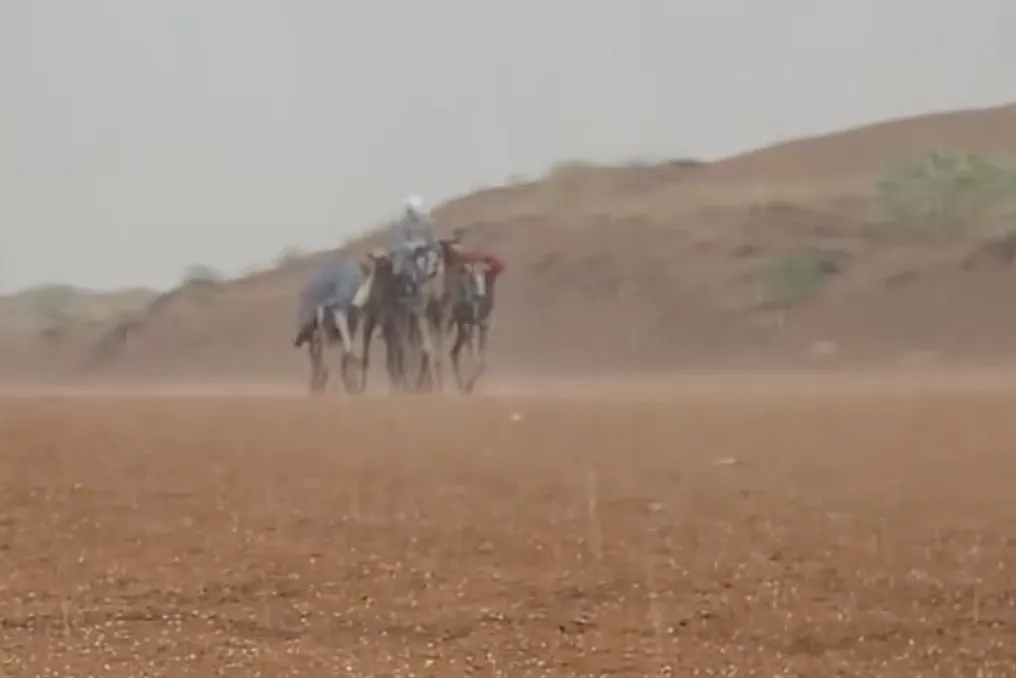
In some areas, hail struck the ground, adding an icy element to the downpour and allowing residents to see a more dramatic side of winter weather in the UAE. A video published by Storm AE shows hailstones falling on camels in Sharjah, scattering across the sandy ground around the animals during the rain.
The camels remain standing as tiny ice balls fall around them, their distinct sound cutting through the noise of the rain. Against the backdrop of the desert, this unusual sight creates a striking picture, reflecting the unexpected contrasts of a rainy day in the UAE.
Another video captures the sound of hail hitting the surface in the Al Hayab area of Dubai, and this constant tapping creates a characteristic sound while the rain continues. This brief shower once again showed the weather instability affecting parts of the UAE.
Hail was also reported in the Al Madam areas of Sharjah, where small ice particles fell onto the sandy landscape, creating an unusual sight against the desert backdrop. Cars continued to move along the highway while the hailstones scattered on the road, and the downpours brought long-awaited relief from the heat.
This winter shower against the UAE desert provided a vivid illustration of the unstable weather affecting the country. In another video posted by Storm Centre, heavy rain streams down the terrain while thunder rumbles overhead and lightning flashes across the sky.
Earlier this year, meteorologist NCM Ahmed Habib told Khaleej Times that the influence of El Niño on the UAE could become more noticeable in autumn, especially in October and November. Habib noted: 'From autumn, especially in October and November, the influence of El Niño will be felt in our region. Currently, during the summer season, its influence is stronger in East Asia than in West Asia.'
The recent series of changeable weather in the UAE occurs against the backdrop of an expected increase in the influence of this phenomenon. The National Center of Meteorology (NCM) warned that the UAE may experience above-average precipitation in the coming months, as El Niño is expected to persist until early 2027.
The peak of the phenomenon is forecast for October and November 2026, when the Niño 3.4 index will reach approximately +3°C, indicating a very strong event. However, El Niño does not guarantee extreme rainfall, thunderstorms, or flooding in the UAE; its impact varies depending on the region and season and depends on other local weather systems.
NCM also refuted viral claims on social media directly linking El Niño to severe flooding and unusually heavy rainfall, strongly urging residents to rely on official weather forecasts and warnings.