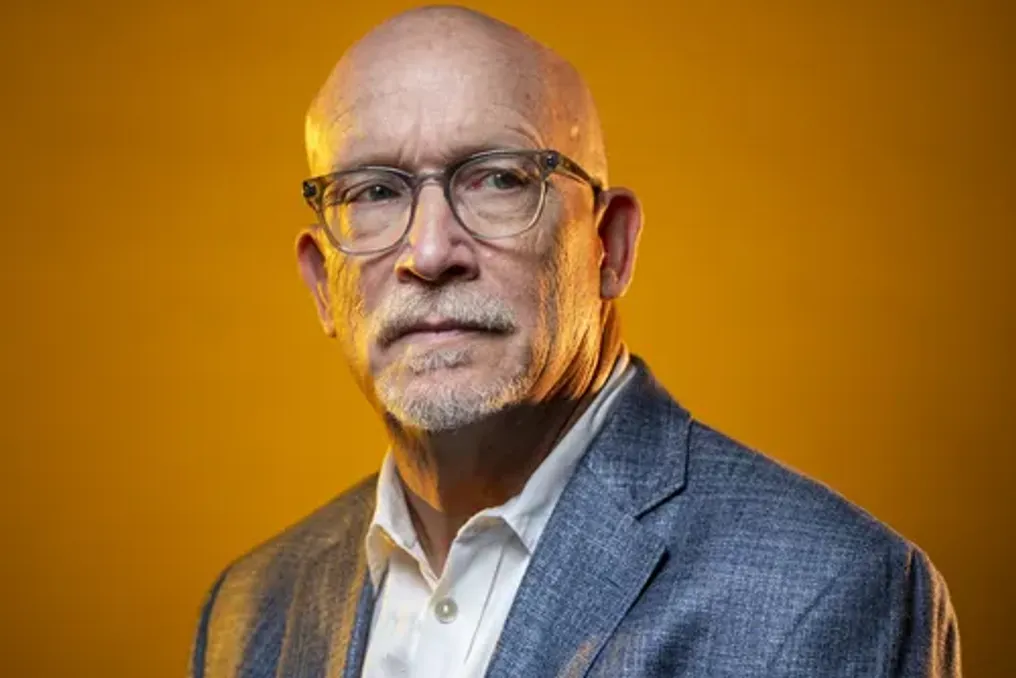
Documentarian Alex Gibney dedicated years to researching Elon Musk, and as a result of his film, he concluded that Musk possesses sociopathic traits. This film, simply titled 'Musk,' was released nationwide on Friday after The Washington Post reported on Elon Musk's plans to co-lead a Pentagon initiative.
Gibney compared the situation to 'putting the Joker in charge of the Manhattan Project.' He previously received recognition from Esquire as 'the most important documentarian of our time' for studying influential figures and institutions such as Enron, Elliot Spitzer, Vladimir Putin, and Elizabeth Holmes.
The topic of Musk proved complex, as Elon Musk himself was extremely reluctant to discuss participation in the film, even tweeting 'Gibney is a douche' before the director could contact him for an interview. Ultimately, Musk did not participate in the filming; instead, a computer avatar of the tech giant appeared in the film, voicing Musk's statements from past interviews.
Thanks to deep journalistic work, interviews with dozens of former colleagues, romantic partners, and even Musk's father, as well as an analysis of all of Musk's public statements on his path to becoming the world's richest man, Gibney concluded that Musk's ultimate goal is: 'There is no real goal except to play this game. This is the most disturbing moment I included at the end, during an interview where he was asked: 'Why have you accumulated all this power?''. Musk could not answer this question.
Initially, Gibney's impression of Musk was positive. He owned a Tesla Powerwall home battery, Tesla solar panels for his house, and considered buying a Tesla car. Although he knew about Musk's tendency to 'pretend until you succeed,' he almost admired his activities because they seemed aimed at improving the world. Gibney noted: 'He was doing what he had to do to get where he needed to go.'
When Gibney began working on the film, Musk had already become the richest person in history. One of Gibney's main interests in his documentaries is the theme of power: how it accumulates, how it is used, and how it corrupts. 'I thought: 'Well, he represents the power of the 21st century,' said Gibney. 'And given that, I delved into the topic.' He read Edward Niedermeyer's book 'Ludicrous' about Tesla, which portrays Musk more as a fraud than as the ambitious genius presented in Walter Isaacson's authorized biography 'Elon Musk.' This made him wonder: 'Is this guy Oz?'
Gibney discovered a person who 'changed over time as he accumulated more power,' he reported. 'It made him more reckless, and it fueled his worst instincts.' Gibney is unsure whether nature or nurture caused Musk's worst traits, or if power corrupted him. However, according to Gibney, as his influence grew, he became 'more egocentric, more sociopathic, more spoiled.'
The film alternates between scenes from the 1937 movie 'The Man Who Could Do Anything,' based on a story by H.G. Wells, where an ordinary person gains the ability to change reality at will and ultimately destroys the world by making the Earth stop spinning. Gibney noted that this is not a new story but 'an old story in a new package,' as he said about the film and Musk.
One segment of the film shows how Musk's interests changed. A long time passed since he worried about the successful launch of SpaceX, right after buying Twitter. He is at the Super Bowl and furious because one of his tweets was not the most popular on the platform. Immediately after the game, he flies to the Twitter headquarters, calls all the engineers, and forces them to work all night so that the platform's algorithm would prioritize his own tweets. Gibney commented: 'This is so insignificant compared to the engineering achievements they were trying to work on at SpaceX'... 'He became less serious as he became more powerful.'
Gibney showed particular interest in Musk's worldview and where it came from: science fiction and comics. He asked himself: 'Even science fiction he misunderstands. He is inspired by science fiction. He says: 'I want to make science fiction real.' This phrase is quite mysterious because much of the science fiction that interests him is cautionary. They say: 'Let's hope this doesn't happen.' They are not inspiring. Does he see Saruman as a force for good?' - asks Gibney, referencing a character from 'The Lord of the Rings.' He continued: 'The most significant was 'The Hitchhiker's Guide to the Galaxy,' where the reason for starting is the literal destruction of planet Earth to make way for a superhighway, which seems to be the ethic of all these techno-bros. The only thing that matters is that they are phenomenally successful in economic terms. And for the rest of us—it's extinction.'
Another Chapter
In the spring of 2024, Gibney was nearly finished with the documentary. Initially, it was primarily a business story, estimated to be about two hours long, with a strong focus on Twitter and 'the beginning of the platform's transformation from a kind of public square into a propaganda machine.' The film also paid close attention to Musk's statements that the Tesla Autopilot function is so powerful that drivers can doze off or play video games while the cars drive themselves. This turned out to be untrue.
Not only was this a lie, but Tesla used cameras instead of advanced lidar sensors (as Waymo does)—a cost-cutting decision that, according to the film, led to more than 60 fatal accidents. Some of these are shown in detail in the film.
However, most of this version of the film eventually became only the first half of the documentary. Gibney admitted: 'I wasn't ready for him to latch onto Trump.'
There was still a lot of work to do. More history needed to be revealed before he could finish. What happened next—the elections, the DOGE service in the US, the destruction of USAID, and the entire global collapse that followed—suddenly seemed like a natural conclusion to what Gibney had already learned. This is the focus of the second half of the documentary.
Gibney referred to 'Chekhov's gun'—a narrative rule stating that if a weapon appears in the first act of a story, it must fire in the third. He noted: 'We realized that some early things we did were guns on mantelpieces.' To properly understand DOGE and, specifically, USAID's disregard for human life, one must understand what happened with Autopilot.
A Hopeless Cause
'Corruption of a noble cause' is a complex term to describe the idea that the ends justify the means. It is usually applied to law enforcement: a police officer plants a drug package on a murderer if he lacks enough evidence to convict him of a real crime.
According to Gibney, what often happens with the corruption of a noble cause is that a person circumventing the rules begins to feel 'free, and you cheat more and more until you become just a crook, and the noble cause remains in the rearview mirror.'
He has researched this phenomenon repeatedly in his films, from attempts by Holmes to revolutionize the medical industry to attempts by people from Enron to redesign capitalism, but both ultimately deceived everyone. 'A classic example of this is Musk, who presented himself as a climate savior, helping to choose Donald Trump as president, whose central slogan was 'Stormy, baby, stormy',' stated Gibney. 'He is literally trying to destroy the planet for money.'
Of course, Musk's ambitions are no longer limited to Earth, as the final part of the documentary explores this. He said he wants to die on Mars, 'just without landing.' He claims he wants to help humanity spread into the stars before Earth becomes uninhabitable. However, the film hints that Musk contributes to its unsuitability, pointing to Grok data centers emitting pollution, Tesla accidents, and the consequences of closing USAID affecting children around the world.
Gibney concluded: 'He created this alternative universe in which he is the planet's savior, while literally destroying the planet.'