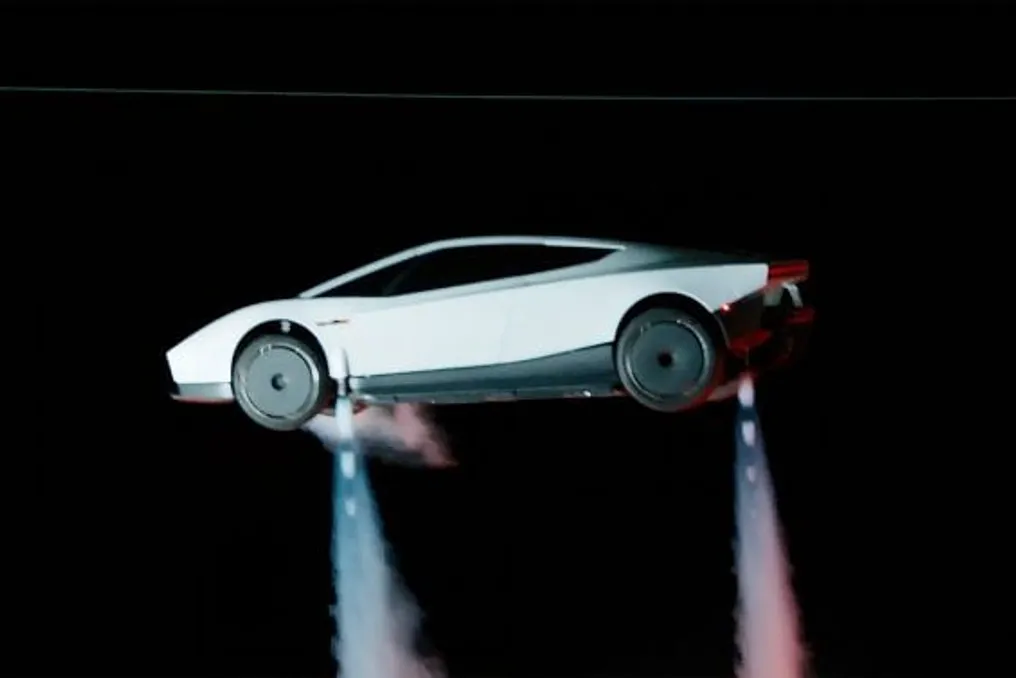
Experts analyze Tesla Roadster demonstration: limitations and technical features not shown in the video
Read more
AutoPapo
autopapo.com.br

Experts analyze Tesla Roadster demonstration: limitations and technical features not shown in the video

After the new Tesla Roadster demonstrated acrobatic stunts, including jumps and aerial rotations, on October 15th, engineers, scientists, and specialized press began to question its technical feasibility. Although the sports electric vehicle performed maneuvers that attracted worldwide attention, there are serious drawbacks that make repeating these actions on roads extremely difficult.

It was also noted that the presentation was conducted using a remotely controlled prototype, which may be significantly lighter than the final version of the car.

One of the most criticized aspects is the range: in 2017, Tesla promised a range of 998 km using a 200 kWh battery. However, the current figure is slightly over 483 km, and the manufacturer has not disclosed the full capacity of the battery system.

According to information published on Torque News' website, the company reduced the battery size to lower weight and free up space for fans that ensure the car's grip on the surface, as well as for fuel tanks.

These tanks compete for space with passengers. As reported by Lars Moravy, Tesla's Vice President of Engineering, the 200-liter cylinder in the Thrust version is located behind the seats, while in the flying Rocket version, the passenger seat is replaced by another with a volume of 400 liters.

Moravy also told Top Gear that each charge provides about five seconds of thrust, and the refueling process takes between two and six hours.

Scientist Ian LeCun, a professor at New York University and Turing Award laureate, called this demonstration a marketing stunt. He suggested that even if half the car's weight consisted of compressed gas, the powerful thrust required to lift it would last less than ten seconds, likely around five. This figure matches what Moravy himself admitted.

The reason for this is the low efficiency of cold gas jets: without burning fuel, they provide less than a quarter of the impulse of a kerosene rocket engine, according to a comparison conducted by Jalopnik.

For comparison, according to The Verge, the tanks in the Rocket hold about 250 kg of gas, whereas Tesla aims to keep the car's weight below 1700 kg.

Based on this, LeCun concluded that the car presented in the video is a light shell filled with tanks and is far from a road model. He compared the Roadster to the private spacecraft SpaceShipOne from 2004, which completed three record flights before being retired.

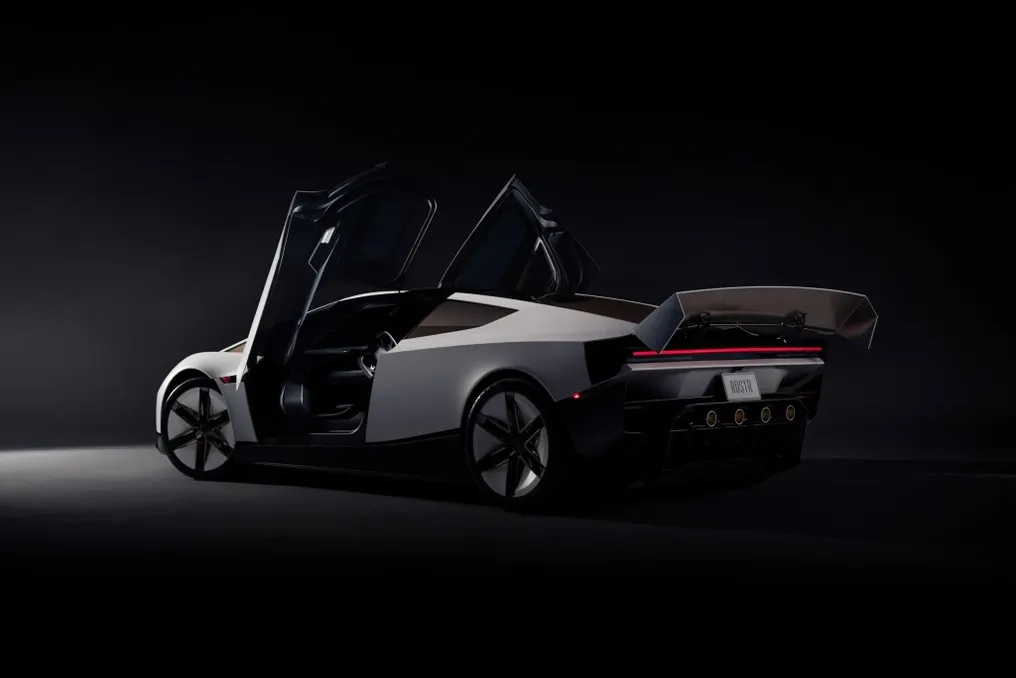
The visual appearance has also undergone radical changes: the rounded four-seater coupe from 2017 with a removable glass roof has transformed into an angular wedge two-seater model equipped with scissor doors and inspired by military aircraft SR-71 and F-35.

Despite this, Tesla has reopened pre-orders, priced at approximately 252 thousand reales (50 thousand US dollars). The final price has not yet been determined—it was equivalent to 1 million reales (200 thousand US dollars) in 2017, and production is planned for 2028.

The Rocket version is not permitted to drive on public roads, and Musk himself admitted on stage that it was not designed with safety as a priority.
Similar stories

Tesla unveiled flying sports car Roadster with rocket engines
Read more
podrobno.uz

Tesla unveiled flying sports car Roadster with rocket engines

Tesla has demonstrated a new version of the electric sports car Roadster, which was able to lift off the ground during the presentation thanks to the use of special engines. In addition to innovative technologies, the manufacturer states that the car is capable of accelerating up to 97 kilometers per hour in approximately one second and reaching a top speed of about 370 kilometers per hour. However, mass production of this model has not yet started, and the full technical specifications remain undefined.

The Roadster is intended to be one of Tesla's most unique projects. The car is equipped with cold gas thrusters, which, according to the company's design, will provide the ability to control its position in the air. This feature made the presentation memorable, as it is not just about a new electric sports car, but an attempt to expand the boundaries of ground vehicle capabilities.

Despite the impressive trick shown at the event, this does not guarantee that the Roadster can function as a full-fledged flying apparatus under standard conditions. Tesla has not provided all information on how this system works and has not confirmed that such functions will be available in series versions.

Performance and Technical Specifications

The company also emphasizes classic sports car parameters. Elon Musk stated that the car is capable of reaching 60 miles per hour (equivalent to approximately 97 kilometers per hour) in one second or even faster; the presentation cited a figure of 0.81 seconds. The maximum speed of the new Roadster is estimated at 230 miles per hour (about 370 kilometers per hour). It is worth noting that at the initial unveiling of the model in 2017, Tesla promised a speed exceeding 250 miles per hour (approximately 402 kilometers per hour). The manufacturer has not yet disclosed the full list of specifications for the updated version.

The Roadster is also equipped with a system that draws air from underneath the chassis, creating additional downforce. According to Tesla, this should improve the car's grip on the road and enhance its stability when taking corners. The exterior of the Roadster retains the profile of a two-seater sports car but includes updated elements: hidden headlights, a rear light bar spanning the entire width of the body, and an automatically adjustable spoiler. Among the declared engineering solutions is electronic steering, which transmits commands from the steering wheel to the wheels without using a traditional mechanical connection.

The first version of the new Roadster was presented by Musk back in 2017, but the release dates have been repeatedly adjusted. Tesla now plans to begin production in 2028. The company also announced the integration of additional technologies from SpaceX, although it has not specified exactly which functions will be included in the car's equipment. The cost and final specifications of the series Roadster have not been announced at this time.

Popular