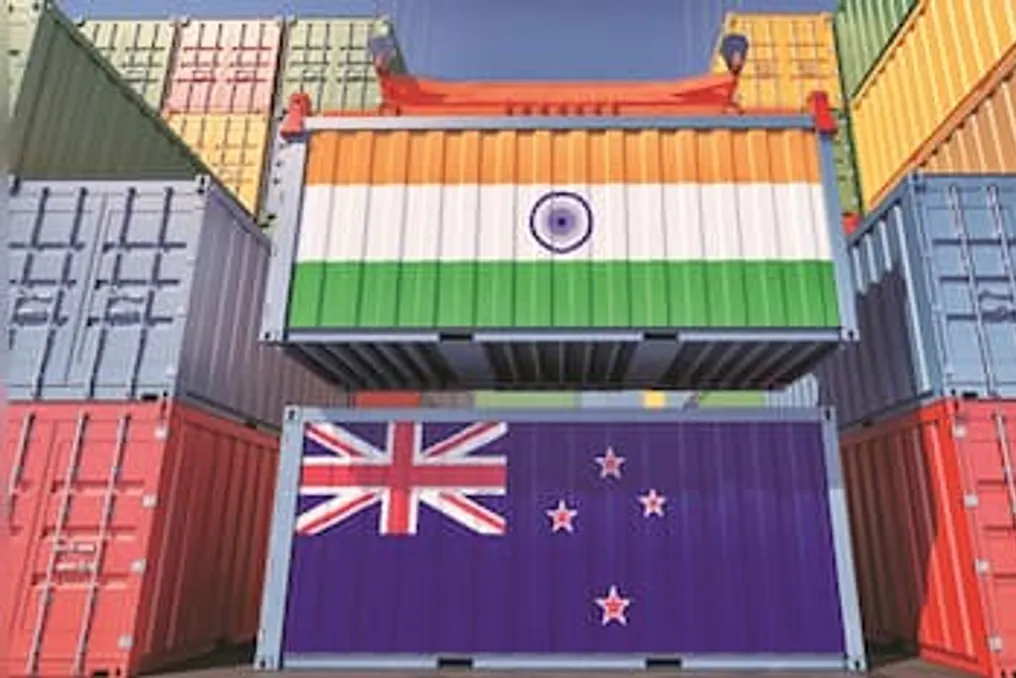
India-New Zealand Free Trade Agreement Enters into Force: Key Changes
Read more
Business Standard
business-standard.com

India-New Zealand Free Trade Agreement Enters into Force: Key Changes

The Free Trade Agreement (FTA) between India and New Zealand came into effect on Tuesday, which provides for the elimination of customs duties on goods from India exported to New Zealand, as well as tariff concessions on certain imported goods from New Zealand into India. Furthermore, this agreement opens up new opportunities for temporary work visas for qualified specialists from India.

Although Indian exports will receive duty-free access to all product lines in New Zealand, India's tariff concessions will depend on the specific product; some reductions take effect immediately, while others will be implemented gradually.

Indian Exports Gain Duty-Free Access to New Zealand

Under this agreement, India has begun providing a preferential tariff regime for a range of products from New Zealand. These concessions include duty-free entry for certain types of mutton, wool, and timber, while duties on other goods will be reduced according to the agreed schedule.

Tariffs on wine will be determined by the value of each 750ml bottle. In the first year, the rate will be 150 percent for wine valued under $5, 95 percent for wine valued between $5 and less than $15, and 70 percent for wine valued at $15 or more, based on CIF value.

The agreement also provides preferential access for selected agricultural products through tariff-based quotas. Qualified New Zealand kiwifruit valued at no less than $1.80 per kg will receive a zero-duty quota of 6,250 tonnes in the first year. Regarding apples, the quota will start in the second year, allowing 35,000 tonnes to be imported at a 25 percent rate, compared to the existing 50 percent rate.

Certified Manuka honey will receive lower tariffs under the quota agreement. For the remainder of 2026, the established quota is 40 tonnes, with a reduced rate for corresponding imports priced between $20 and less than $30 per kg. The annual quota under the agreement is 200 tonnes, with tariffs further decreasing over five years.

Dairy Products Remain Protected

India has excluded sensitive goods from its tariff concessions, including dairy products, sugar, vegetable oils, and certain agricultural commodities. Animal meat is also excluded, except for mutton, which is covered by the agreement.

New Pathways Open for Temporary Work for Indian Citizens

As of October 20, two types of temporary employment visas become available for eligible Indian citizens. The total limit is 5,000 visa holders simultaneously, and these visas are valid for three years without a direct path to permanent residency.

Applicants must meet New Zealand's immigration requirements, including having a job offer from an accredited employer and meeting relevant qualification, language, medical, and moral standards.

Further changes will follow later. Starting November 16, graduates from India holding PhDs from New Zealand can apply for post-study work visas for up to four years. Within two years, a working holiday program for Indian citizens aged 18 to 30 is planned, with the possibility of up to 1,000 participants annually.

Further Tariff Reductions and Visa Policy Changes Ahead

Several provisions of the agreement will come into effect in the coming years. New Zealand's tariff concessions will expand over time, and relevant Indian graduates will gain expanded opportunities for post-study work in accordance with the agreement's provisions.

Both countries also intend to introduce a working holiday program for Indian citizens aged 18 to 30, offering up to 1,000 spots annually and allowing stays of up to 12 months. This program is scheduled to launch within two years of the agreement's entry into force.

New Zealand has also committed to facilitating $20 billion in investment into India over 15 years. The goal of the agreement is to double bilateral trade in goods and services to NZD 7 billion by 2030.
Similar stories

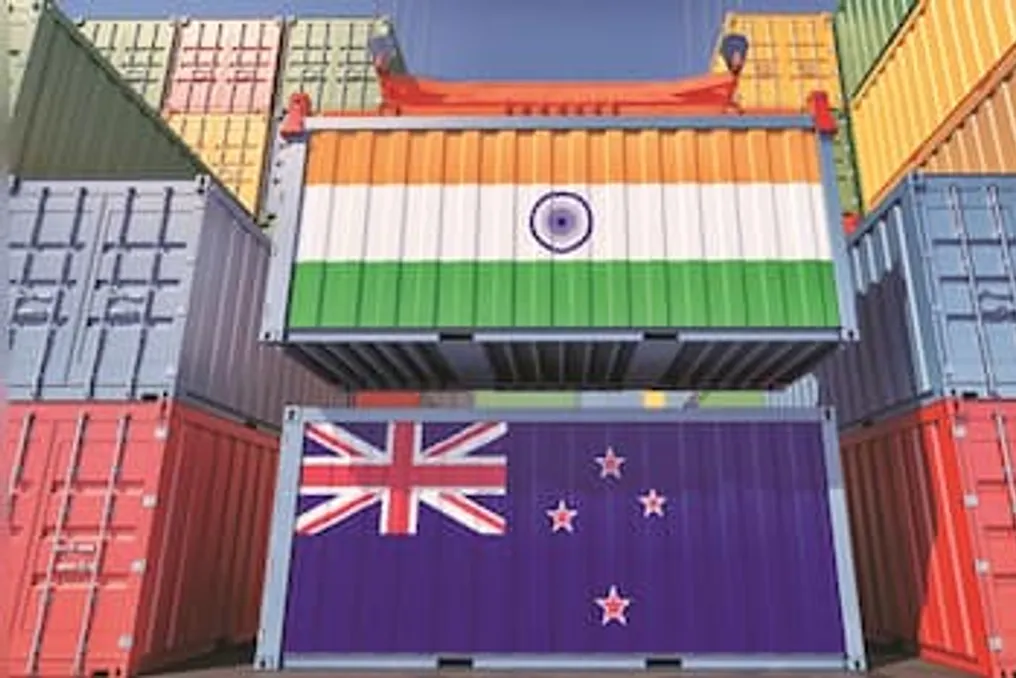
Free Trade Agreement between India and New Zealand aims to diversify Delhi's trade
Read more
business-standard.com

Free Trade Agreement between India and New Zealand aims to diversify Delhi's trade

The Free Trade Agreement (FTA) between India and New Zealand, which comes into effect on Tuesday, is intended to expand bilateral trade and support New Delhi's diversification strategy amid geopolitical uncertainty. This pact is India's second trade agreement in the Oceania region following the deal with Australia.

Previously, the annual trade turnover between the two countries remained modest, at around $1.2 billion. Thanks to tariff concessions under the agreement, an expansion of the product basket is expected, as both nations have set a goal to double bilateral trade by 2030.

Negotiations for this pact began between India and New Zealand in March 2025 and concluded in December, making it one of New Delhi's fastest negotiated trade deals. The parties signed the agreement in April of this year.

The agreement grants Indian exports duty-free access to all product lines in New Zealand, covering one hundred percent of export value. New Zealand has provided a zero import regime for Indian pharmaceuticals, marine products, textiles, chemicals, leather and footwear, precious stones and jewelry, as well as electronics. Furthermore, it agreed to abolish duties on engineering goods, plastic articles, and agricultural products.

These concessions come against a backdrop of declining Indian exports to New Zealand for two consecutive financial years. According to the latest data from the Department of Commerce, supplies fell by almost 3 percentage points year-on-year to $192.53 million from April to July.

Additionally, the agreement includes investment commitments from New Zealand amounting to $20 billion over 15 years. In return, India offered customs benefits on 70 percent of product lines, covering 95 percent of the value of New Zealand's exports to India, while sensitive domestic industries are excluded from tariff liberalization. Goods excluded include precious stones and jewelry, copper products, dairy products, vegetables, sugar, and artificial honey.

India also granted conditional concessions on manuka honey, wine, kiwifruit, and milk albumin within Tariff Rate Quotas (TRQs). On Saturday, the Ministry of Finance published the first batch of tariff concessions for goods from New Zealand under the FTA. Preferential rates applicable to products such as wine, manuka honey, kiwifruit, and lamb will take effect on Tuesday.

According to the notification, batches of kiwifruit valued at $2.50 per kilogram or more will be subject to a Basic Customs Duty (BCD) of 15 percent. Milk albumin received a TRQ quota of 200 metric tons with a reduced rate within the quota of 10 percent. Manuka honey valued at $30 per kilogram or more will be subject to a concessional BCD of 51 percent, subject to certification by the New Zealand Ministry of Primary Industries. Corresponding batches were granted a TRQ of 40 metric tons.

New Zealand announces ODI squad for matches against India; one key player returns
Read more
www.aajtak.in

New Zealand announces ODI squad for matches against India; one key player returns

New Zealand has announced the squads for its five-match ODI series against India, which begins on November 4th. The New Zealand Cricket (NZC) organization presented the player lists, featuring athletes such as Finn Allen, Loki Ferguson, Rachin Ravindra, and Tim Seifert. However, it should be noted that these four players will not be available for the entire series.

NZC formed two separate squads for the five ODIs, meaning there will be changes in the team composition throughout the series. The reason for this decision is also preparation for the upcoming two-match Test series, which will start shortly after the conclusion of the ODI tournament. The New Zealand team management aims to prepare some players for the Test matches in advance by withdrawing them from the ODI squad.

A squad of 14 players was selected for the first three ODIs. In addition to captain Michael Santner, this squad included Michael Bresshaw, Mark Chapman, Devon Conway, Jacob Df, Matt Henry, Kyle Jamieson, Tom Latham, Daryl Mitchell, Glenn Phillips, Rachin Ravindra, Nathan Smith, Blair Tickner, and Will Young.

Rachin Ravindra, who previously could not participate in the T20 International series against India due to a shoulder injury, will now return to the ODI squad and can play in the first three matches. He is expected to contribute in both batting and bowling. For the fourth and fifth ODIs, NZC chose a different team, which will feature Finn Allen and Tim Seifert, known for their aggressive style in T20. Allen and Loki Ferguson played for New Zealand in the last ODI of 2023, and Seifert last played in 50 overs in the home series against Pakistan about eighteen months ago.

The team selected for the last two matches also includes Santner, Bresshaw, Chapman, Jacob Df, Blair Tickner, and Will Young. Additionally, Christian Clark, Matt Fisher, Mitch Heap, and Nick Kelly were included, giving the team an opportunity to test the depth of its squad in the final two ODIs.

The series between India and New Zealand extends beyond just bilateral encounters, as both teams will also consider preparations for the upcoming Cricket World Cup 2027, which will take place in South Africa, Zimbabwe, and Namibia. Consequently, defining player roles and forming a strong squad is extremely important for the team management.

New Zealand coach Rob Walter noted that playing at home against such a strong team as India presents a great opportunity. He emphasized that with the World Cup being about a year away, this series will be very significant for preparation. According to Walter, including seven additional players in the squad for the last two ODIs is aimed at assessing the depth of the team to understand how these players perform against a world-class team and how many options are available for the major tournament.

Three players recovering from injuries—Jacari Foulkes (iliopsoas muscle), Will O'Rourke (calf), and Ben Sears (ankle)—were not included in the selection list for the ODI series against India.

Popular