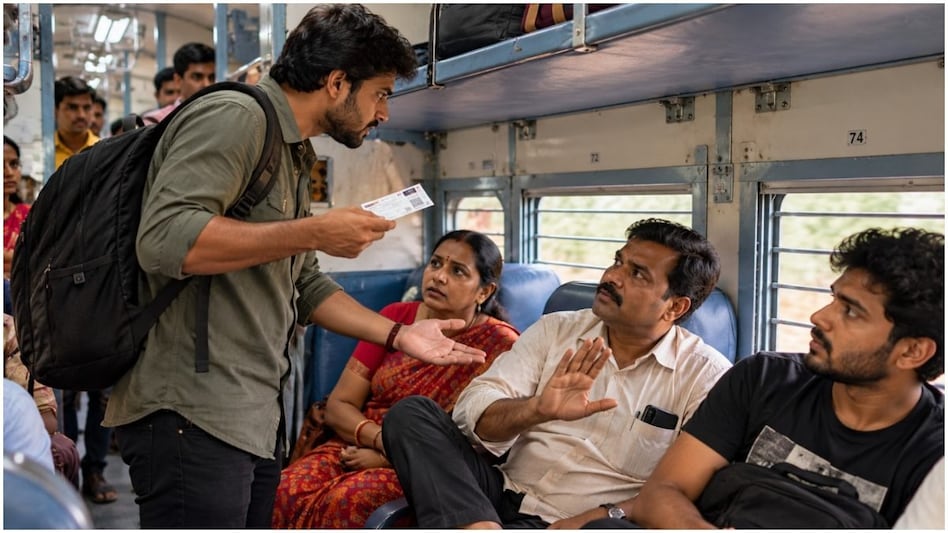
Passengers May Not Receive Seats on Trains Even With Confirmed Tickets: Reasons and Compensation
Read more
Aaj Tak
www.aajtak.in

Passengers May Not Receive Seats on Trains Even With Confirmed Tickets: Reasons and Compensation

When purchasing train tickets, everyone aims to receive a confirmed ticket on time, as this guarantees a seat for a comfortable journey. However, sometimes passengers encounter a situation where they are not provided with a seat despite having a confirmed ticket. Such cases have occurred repeatedly, and in some instances, the railway has been forced to pay compensation.

There are several reasons why passengers might not receive their seats. One of them is the occupation of the seat by other people. Although this happens rarely, someone sometimes occupies your seat and refuses to vacate it. If the police do not assist, the passenger remains without a seat.

Several months ago, in May 2026, the Consumer Protection Commission of Bhojpur district in Bihar ruled that the railway must compensate passengers in such cases. According to media reports, the incident occurred on the LTT-Patana express traveling from Mumbai Lokmanya Tilak Terminus to Patna. Four passengers purchased confirmed tickets in Third AC class for a trip from Vindhyachal to Ara. Upon boarding, they discovered that people who allegedly identified themselves as railway employees were sitting in their reserved seats.

The passengers tried to ask them to vacate their seats but were unsuccessful. According to the complaint, they were not assisted on the train and ultimately had to travel standing up. The commission found the railway responsible for inadequate service and ordered the refund of ticket costs with interest, as well as compensation of 20 thousand rupees and 15 thousand rupees to cover legal expenses.

Another scenario arises during holidays when there is an excessive crowd. Due to the huge number of passengers, confirmed tickets may become useless as passengers cannot reach their seats. In another case, which happened in July 2026, the Consumer Protection Commission of Pallackad district in Kerala held the railway responsible for inadequate service due to overcrowding in the reserved carriage and the inability of passengers to reach their confirmed seats on the Kanyakumari-Pune express.

In this case, the commission ruled to pay 50 thousand rupees in compensation and 25 thousand rupees to cover legal costs.

It also happens that one of the train carriages has to be detached due to technical reasons. In such a situation, even with a confirmed ticket, a passenger may be left without a seat. The railway must arrange alternative accommodation for the passengers of that carriage. If sufficient space is not provided, passengers may face difficulties. In 2012, a case was registered where an RAC ticket was converted to waiting list, after which the court granted compensation.

It is important to note that such situations occur quite rarely. As a rule, the railway provides seats for passengers with confirmed tickets. If such a situation occurs due to the fault of the railway, the passenger can file a complaint. First, they should contact the conductor, presenting their ticket, carriage number, and seat number. A complaint can also be filed through the official railway hotline number 139 or via the RailMadad platform. In the event of no seat, reimbursement of the travel cost may be possible.
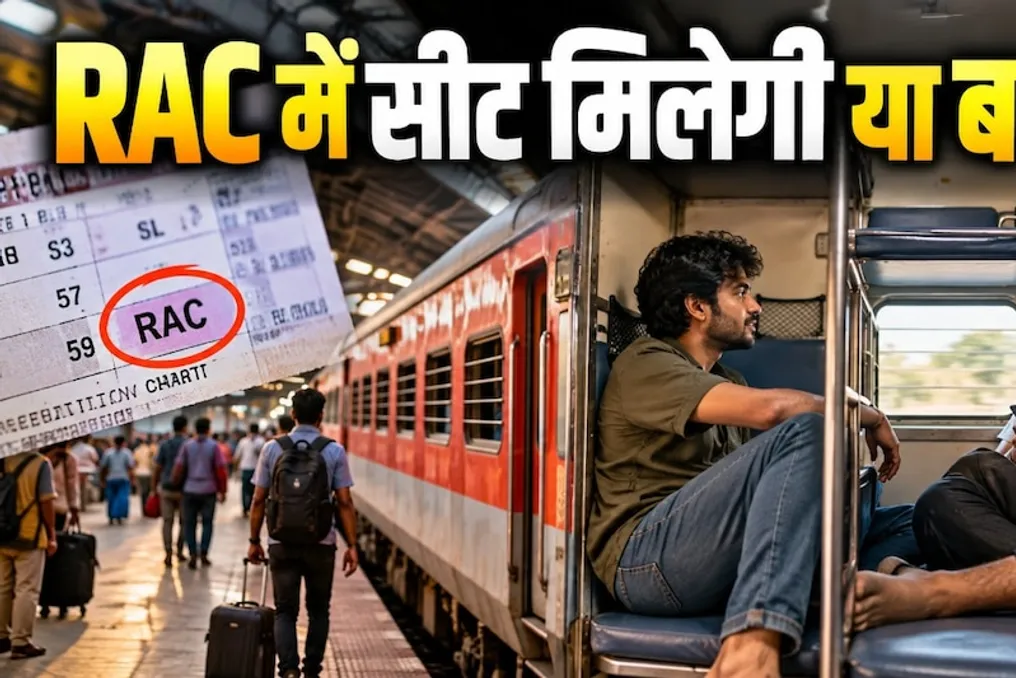
Similar stories

RZD Rules Explained: What Does an RAC Ticket Mean and What Are the Conditions for Getting a Seat on the Train
Read more
www.aajtak.in

RZD Rules Explained: What Does an RAC Ticket Mean and What Are the Conditions for Getting a Seat on the Train

Passengers traveling by train often encounter the designation RAC when booking tickets. A natural question arises: can one travel with such a ticket, and will the passenger be provided with a full berth?

In simple terms, RAC stands for Reservation Against Cancellation. This status differs from being on a waiting list. A passenger with an RAC ticket is allowed to travel, and a seat is guaranteed. However, they are not necessarily provided with a full berth initially.

If your ticket has RAC status and remains so after the final timetable is formed, you have the right to be on the train. Passengers with RAC tickets are not prevented from boarding. On the contrary, if the ticket remains entirely on the waiting list and was purchased online, it may be automatically canceled after the final schedule is compiled, and in that case, travel is impossible. This is why RAC is considered a more favorable position than being on the waiting list.

With an RAC ticket, a seat is reserved for the passenger, but there is no guarantee of being provided with a full sleeping berth at the start of the journey. Typically, a passenger with an RAC ticket is allocated a side lower bunk. Two passengers can sit on this bunk, meaning you get a place to move around on the train, but not necessarily an individual full berth.

If any passenger with a confirmed ticket cancels their trip, the freed-up berth may be given to the passenger with an RAC ticket. Similarly, as seats become available, the probability that the passenger with an RAC ticket will be provided with a full berth increases. Consequently, even if your ticket initially has RAC status, its status may change before the final schedule is prepared, and it may transition from RAC to CNF (Confirmed).

Even if the ticket retains RAC status after the final schedule is formed, the passenger can still travel. In this situation, they will be provided with a seat according to the rules established by the railway. Thus, the ticket does not become useless, and you can take your trip. Nevertheless, whether it will be a full berth or if you will have to share a seat with another passenger depends on the currently available seats.

An RAC ticket allows travel and guarantees a seat, and also gives a chance to receive a full berth if seats become available later. A waiting list ticket, however, will not allow the passenger to travel if it remains on the list after the final schedule is compiled. Therefore, if your ticket moves from the waiting list to RAC status, it is an improvement in your ticket purchase situation.

The railway company uses the RAC system for efficient seat allocation because passengers sometimes cancel their trips, and some seats may remain empty between stations. Thanks to the RAC system, a larger number of passengers gets the opportunity to set off, and the passenger receives greater certainty of travel compared to remaining on the full waiting list.

Popular