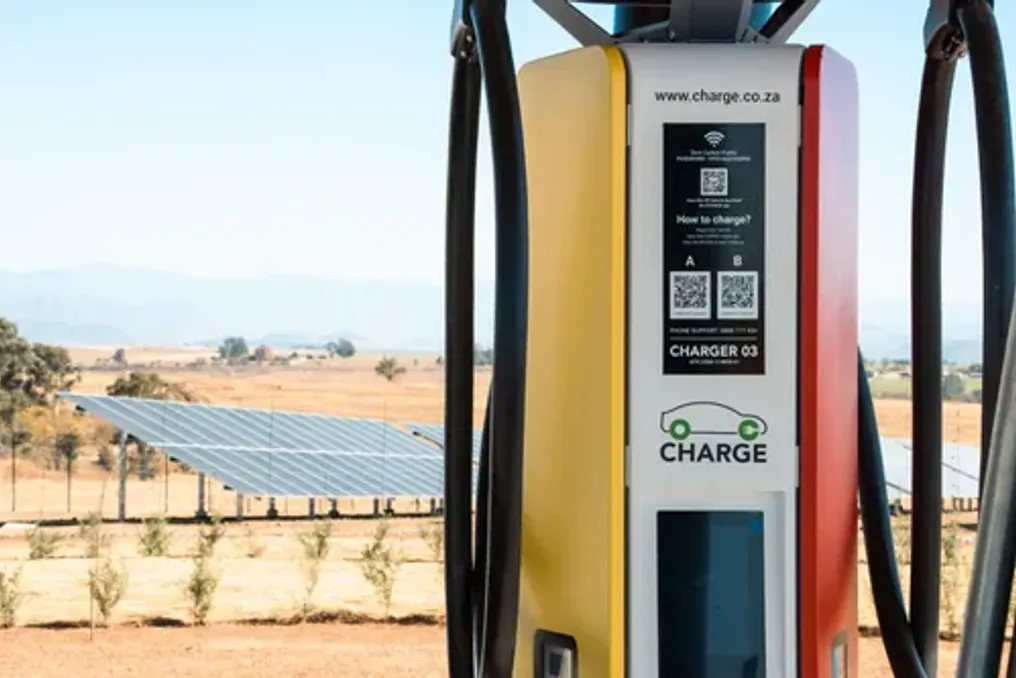
CHARGE intends to increase the power of two existing electric vehicle charging hubs on the N3 highway from 360 kW to 720 kW each. This decision was made in response to growing demand from both passenger and commercial vehicle drivers.
These upgrades, announced in August and scheduled for completion by the end of 2026, could facilitate the adoption of electric trucks along the Durban-Gauteng corridor. Furthermore, specialized facilities for truck charging and battery replacement are being proposed for this route.
The specified hubs were opened in May at the Reitz intersection in the Free State province and at the Colenso-Winterton intersection in KwaZulu-Natal. Both facilities operate on solar energy with battery storage support, requiring no connection to Eskom or municipal grids.
Co-founder and Chairman of CHARGE, Joubert Roux, noted that the rise in demand prompted the company to accelerate its expansion plan. He stated in August that the needs of customers operating both passenger and commercial vehicles clearly demonstrated the necessity of pushing this growth forward.
CHARGE reported that the expansion will allow more vehicles to charge simultaneously. The company calculated that a truck receiving a constant power of 500 kW can increase its range by approximately 75 km in 15 minutes, although the actual result depends on the truck itself, its battery, and charging conditions.
The Chief Executive Officer of Trade and Investment KwaZulu-Natal, Sihlwe Ngakamu, reported that the proposed network for freight transport is linked to CHARGE's promise to invest 9.4 billion rand in off-grid charging infrastructure in the province, given at the KwaZulu-Natal Investment Conference in 2024. The provincial plan also includes 17 solar-powered charging stations for passenger cars. Although one of the existing hubs on the N3 is in KwaZulu-Natal, the date for opening specialized truck battery replacement facilities has not yet been announced.
Ngakamu emphasized that electrifying the N3 highway is crucial for freight transport, as it is the country's vital logistics route, and the truck charging and battery replacement route leads to cleaner road freight transport between Durban and Gauteng. He added that the province's existing logistics infrastructure can attract businesses providing equipment and services to support electric freight transport.
Ngakamu also cited the operational station on the N3 as an example of fulfilling investment commitments made at the provincial conference, which led to the creation of real infrastructure.
In March, CHARGE Holdings signed a three-year contract with fleet maintenance company Zimi to support electric delivery operations along this corridor. According to company statements, this agreement reserves up to 500 kWh of energy daily at each station for vehicles operated by Zimi.
Roux stressed that reliable charging is critical for fleet operators aiming to meet delivery schedules. He noted that for operators running regular routes, charging must be predictable and stable; they need to know where they can charge, whether sufficient power will be available, and how charging stops fit into the delivery schedule.
Operators will also need to consider the distance trucks can cover between stops when transporting standard commercial goods. Battery replacement can reduce downtime for compatible vehicles, but this requires specialized facilities and suitable trucks.
CHARGE plans to install solar panels and battery storage at the hubs as capacity increases. Roux explained that the off-grid approach requires significant investment but allows for supplementary charging without burdening local power grids. He added that replacing diesel trucks with electric vehicles on suitable routes can reduce transport emissions. Currently, an increase in charging capacity is planned, while the timeline and final scope of the specialized truck network remain uncertain.