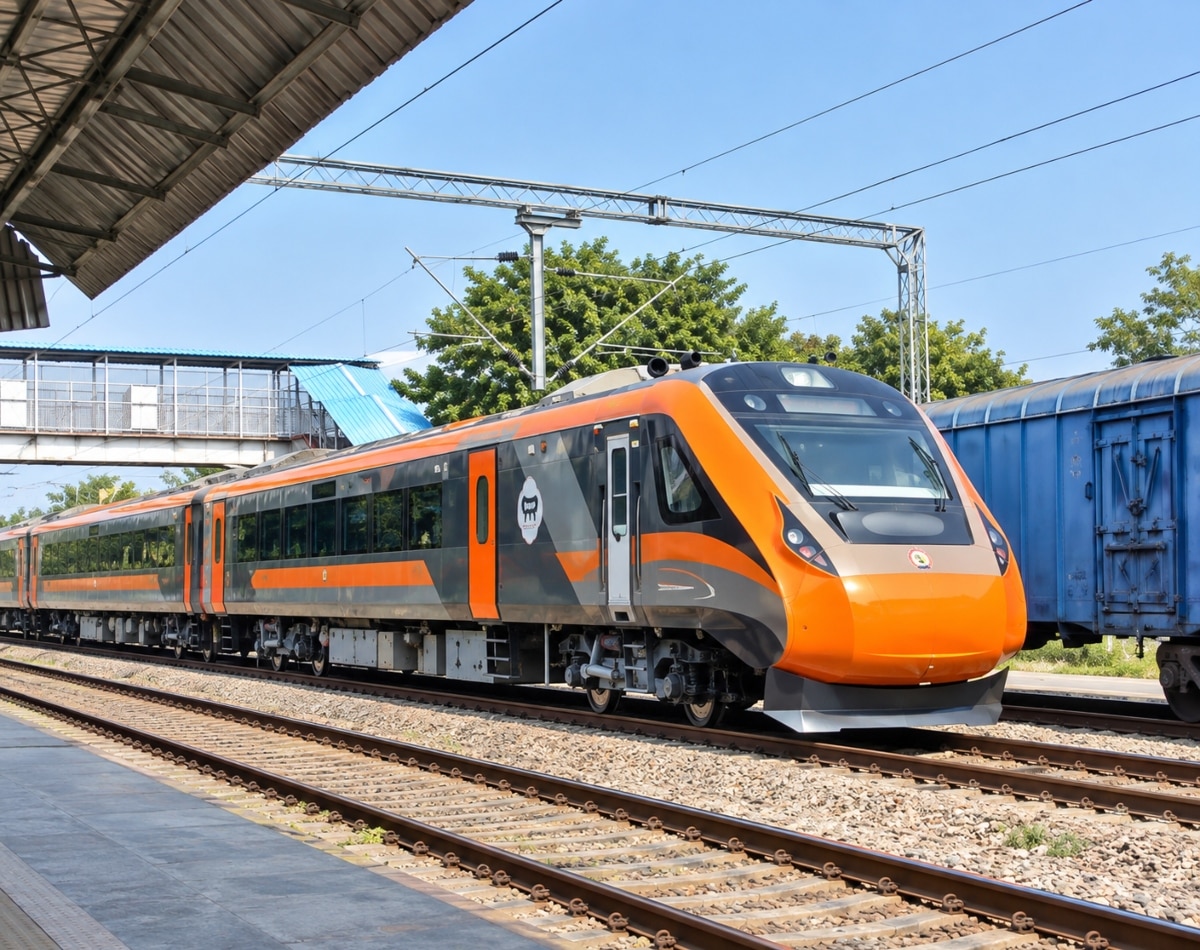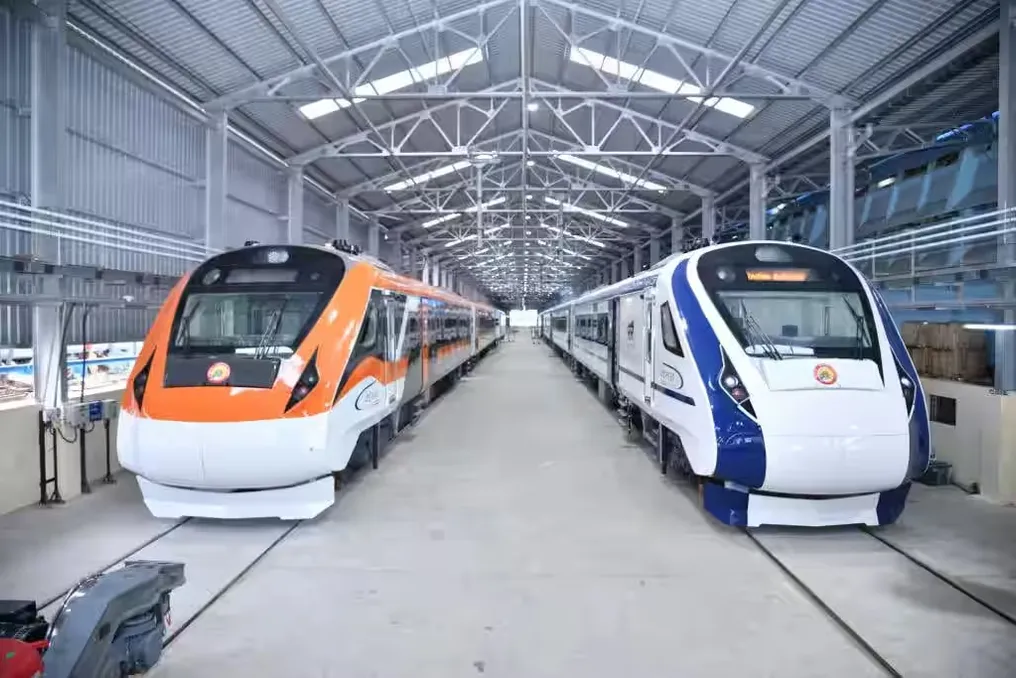
Soon, the Vande Bharat Sleeper high-speed train service will begin operating on the route between two major cities in the country, one of which is the financial capital and the other is an IT hub. This concerns the Mumbai-Bengaluru route. Currently, the journey between these cities on regular trains takes about 24 hours, but soon this trip will be reduced to 15–16 hours.
According to information received from sources associated with the railways, the launch of this train is planned for November 1st. This route will be the first service of Vande Bharat Sleeper departing from Mumbai. However, final confirmation of the route, fares, and schedule awaits an official announcement from the railways.
According to the proposed plan, the Vande Bharat Sleeper will run from Chhatrapati Shivaji Maharaj Terminus (CSMT) in Mumbai to Sar M. Visvesvaraya Terminal (SMVT) in Bengaluru. There is a possibility that the train will pass through the Guntakal route. Possible stops include Kalyan, Solapur, Pune, Anantapur, Guntakal, Raichur, Kalaburga, and Bengaluru. Currently, this is only a preliminary route, and its final confirmation is possible only after the railways announce the final stops and official path.
The Mumbai-Bengaluru Vande Bharat Sleeper service may operate six days a week. The travel is planned so that passengers start their journey at night from Mumbai and arrive in Bengaluru by noon the next day. According to the proposed schedule, the train will depart from Mumbai CSMT station at 20:10 and arrive at Bengaluru SMVT station at 11:55 the next day. The return journey is planned so that the train departs from Bengaluru SMVT at 19:50 and arrives at Mumbai CSMT station at 11:55 the following day.
Preliminary estimates for ticket prices on the Vande Bharat Sleeper Mumbai-Bengaluru are presented for various air conditioning categories. According to these estimates, the cost in AC 3-Tier with meals may be around 2300 rupees, in AC 2-Tier—around 3000 rupees, and in AC First Class—around 3600 rupees. These prices are approximate, and exact information on fares and additional charges will only become clear after the official announcement by the railways.
The proposed train composition will consist of 16 coaches and can accommodate 823 passengers. Eleven coaches in the AC 3-Tier class will have a certain number of seats. 188 seats will be located in 4 coaches of the AC 2-Tier class. Additionally, there will be one coach of the AC First Class, designed for 24 passengers. This train is designed for overnight journeys.
The Vande Bharat Sleeper cockpit will be equipped with comfortable and soft seats, wood-paneled panels, eye-friendly LED lighting, and carpeted flooring. The cabin design aims to provide passengers with maximum comfort during a long journey. Additional amenities include new ladders for accessing upper berths, storage spaces for mobile phones and books, reading lamps, USB charging ports, and dining tables. The First AC coach will have a hot shower facility.
The train is planned to be equipped with vacuum toilets and contactless sensors, which are intended to improve cleanliness and simplify use for passengers. A modern dining hall will be available on board for meals. The proposed menu may include popular dishes from Maharashtra and South India, such as Misal Pav, Thalipet, Bisi Bele Bath, and Mysore Pak. There is also information about negotiations with hotel chefs, cloud kitchens, and catering partners to maintain high food quality.
The Vande Bharat Sleeper is designed to travel at speeds of up to 180 kilometers per hour, but it will operate at a speed of up to 160 kilometers per hour. The actual speed of the train will depend on the condition of the tracks, safety standards, and railway permits. The train will be equipped with the domestic automatic safety system Kavach, which reduces the risk of accidents under certain conditions. In addition, the train has fire safety and emergency communication systems. Each coach is equipped with video surveillance cameras, fireproof doors, and the ability to contact the train manager or driver in case of an emergency. Thanks to semi-permanent couplers, the train will have virtually no jolts, and the coaches will be securely connected to each other. The regenerative braking technology, which uses energy generated during braking to produce electricity, will also be implemented in this train, helping to save energy.