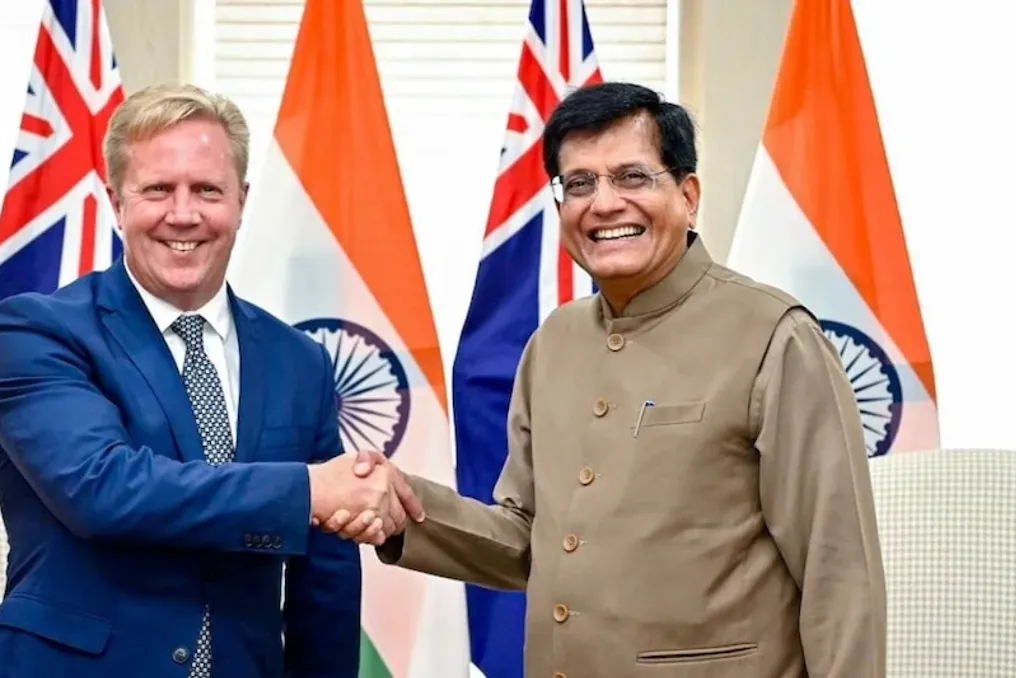
A new trade route has opened up between India and New Zealand. The Free Trade Agreement (FTA) between the two countries will come into effect on October 20, 2026. Under the terms of this agreement, New Zealand will abolish import duties on Indian goods. This will make items such as clothing, footwear, leather goods, medicines, and engineering products manufactured in India cheaper in New Zealand compared to the previous period.
In turn, India will also provide preferential treatment on import duties for a range of goods from New Zealand. It is expected that this agreement will promote an increase in trade turnover between the two nations. The significance of this treaty extends beyond just companies and traders; it also includes provisions on employment opportunities for Indian specialists in New Zealand, visas for skilled labor, and cooperation in the agricultural sector.
Indian exporters are expected to benefit the most from this agreement. Previously, an import duty of up to 10% was levied on some Indian goods sold in New Zealand. After the free trade agreement comes into force, products marked 'Made in India' will gain access to the New Zealand market without paying tariffs.
Thus, most goods exported from India after the agreement takes effect will be able to enter New Zealand without customs charges. This will simplify the process of selling products by Indian companies in New Zealand. Furthermore, they may gain a price advantage over exporters from other countries whose products are subject to various levies.
India's Minister of Commerce and Industry, Piyush Goyal, stated that thanks to the free trade agreement, zero import duty will be applied in New Zealand to products from labor-intensive industries such as leather, footwear, clothing, and textiles. He also specified that sensitive sectors, including dairy products, onions, chickpeas, peas, corn, almonds, artificial honey, and sugar, are excluded from the scope of this trade agreement.
Clothing and Textiles: Indian apparel and finished goods can be sold in New Zealand at more competitive prices.
Leather and Footwear: Tariff elimination may reduce production costs for Indian enterprises.
Medicines and Engineering Goods: Export opportunities in pharmaceuticals, mechanical engineering, and engineering products may increase.
Food Products: Products such as fruits and vegetables, tea, coffee, spices, grains, and processed foods may also gain better market access.
Seafood, Plastics, and Rubber: Exporters from these sectors are also expected to benefit from tariff-free market access.
The government aims to achieve a trade volume of approximately 7 billion New Zealand dollars, equivalent to about 35,000 crore rupees, between India and New Zealand by 2030. Currently, the trade turnover between the two countries is about 2.4 billion US dollars.
Under this agreement, India will also provide preferential treatment on import duties for a range of goods from New Zealand. This could lead to a reduction in import costs for certain goods from New Zealand in India. However, this does not mean that prices for all goods will immediately drop. New Zealand will also provide special import regimes for certain products, such as apples, kiwis, manuka honey, and albumin, for India. These goods will be subject to quota conditions based on tariffs, as well as other restrictions, including minimum import prices and protective measures.
Apples and kiwis are major products from New Zealand entering India. While tariff reductions may decrease import costs, the actual price reduction will depend on import volume, quotas, transportation costs, demand, and retailer margins.
Manuka honey from New Zealand is also included in this agreement. Tariff reductions may lower its import costs, which in turn could lead to a decrease in the price of this product in the Indian market compared to the past.
India has not fully opened its doors to all goods from New Zealand. Under the agreement, India provides tariff concessions on approximately 70% of categories, accounting for about 95% of current bilateral trade. Meanwhile, about 29.97% of tariff lines remain outside the scope of the FTA. According to New Zealand's Minister of Trade and Investment, Todd McClay, upon full entry into force of the agreement, about 95% of New Zealand's current exports could benefit from the abolition or significant reduction of tariffs. India's large consumer market could create new opportunities for New Zealand businesses.
One of the issues that arises when concluding free trade agreements with any country is the risk of harming local producers due to the cheapening of imported goods. Considering this, India has excluded its sensitive sectors from the scope of the free trade agreement with New Zealand. These sectors include dairy products such as milk, cream, whey, yogurt, and cheese. Agricultural crops such as onions, chickpeas, peas, corn, and almonds, as well as sugar, artificial honey, various animal products, fats, and oils, are also excluded from the list.