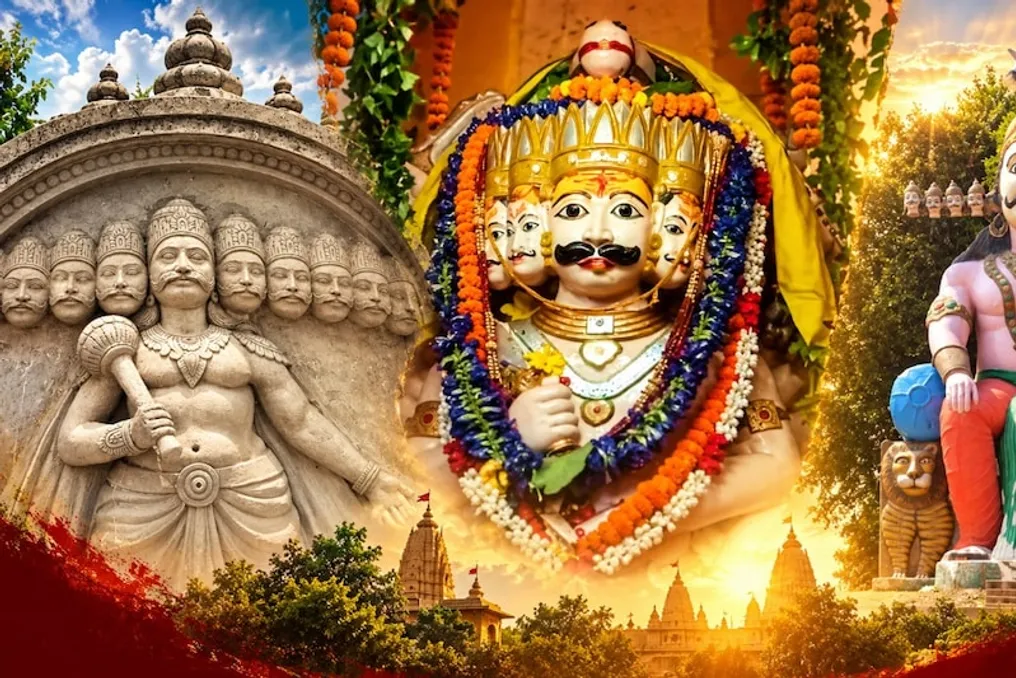
In seven places in India, Ravana is worshipped instead of being burned
Read more
Aaj Tak
www.aajtak.in

In seven places in India, Ravana is worshipped instead of being burned

Vijayadashami is currently being celebrated across the country, during which effigies of Ravana, Kumbhakarna, and Meghnada are burned in various regions of India. However, there are places in India where special worship rituals are conducted instead of burning Ravana, due to local historical peculiarities, religious beliefs, and long-standing traditions.

In the village of Bisrah, located in Greater Noida, Uttar Pradesh, the name of the village is associated with Ravana. According to local legends, this place belongs to Ravana's father, Rishi Vishrava. Therefore, the villagers show special reverence to Ravana, and on the day of Dashahara, his veneration takes place instead of burning an effigy. The village also has a temple dedicated to Ravana, where devotees pray according to their faith.

Another such place is Mandsaur in Madhya Pradesh. There is a belief that Ravana's wife, Mandodari, was originally from this region, which is why Mandsaur is called Ravana's mother-in-law. Due to the tradition of honoring the son-in-law, in some areas here, Ravana is worshipped instead of his effigy being burned during Vijayadashami.

In Ravangrama, located about 50 kilometers from Vidisha in Madhya Pradesh, the burning of Ravana effigies is also not practiced; the tradition of worshipping Ravana is maintained there. Local residents attribute special significance to Ravana, and it is said that he has a huge statue in this village. The traditions of Ravangrama demonstrate that religious perceptions of the characters from the Ramayana vary across different regions.

In the city of Kanpur, Uttar Pradesh, the Deshanan Mandir, dedicated to the worship of Ravana, is famous. It is said that the history of this temple spans about 135 years. The temple is not open year-round, and its doors are opened to pilgrims only on the day of Dashahara. On other days, the statue of Ravana remains closed. On this day, followers visit the temple, offer prayers, and light oil lamps, praying to Ravana for wisdom, knowledge, and strength.

In Jodhpur, Rajasthan, some communities consider Ravana to be their ancestor. In their beliefs, Ravana is connected to the lineage, so during the period of Dashahara, they worship Ravana instead of burning his effigy. This belief, prevalent among local communities, differs from the generally accepted tradition of burning Ravana effigies and is part of their cultural identity.

In Kakinada, Andhra Pradesh, there is a temple dedicated to Ravana. Here, he is revered as a powerful ruler and a devoted follower of Lord Shiva. The temple has a tradition of joint worship of Ravana and Shiva. Local beliefs emphasize Shiva's devotion and Ravana's power, distinguishing the view of him from those places where his effigy is burned during Vijayadashami.

In Kangra, Himachal Pradesh district, special religious views on Ravana are also common. In some places, he is revered as a great devotee of Lord Shiva. According to beliefs, Ravana gained Shiva's favor through severe asceticism and received his grace. Some local customs also claim that Ravana attained liberation. Because of this belief, some people worship Ravana instead of burning him on the Day of Dashahara.
Similar stories

Ancestral remembrance ceremonies held in Haridwar on Pitru Visharjani Amavasya day
Read more
www.aajtak.in

Ancestral remembrance ceremonies held in Haridwar on Pitru Visharjani Amavasya day

Haridwar, known as the 'Gateway to Har', is a pilgrimage site where people come to take holy dips in the Ganges for merit. They also come here to ensure the liberation of their ancestors. While Haridwar is considered a sacred place for earning merit and achieving liberation, it also serves as a place for ancestral release.

People bid farewell to their ancestors with deep reverence on this day. It is believed that if a person does not know the date of their ancestors' death, they can take a dip in the Ganges or perform a worship ritual at the Shri Narayan Shila temple on the last day of Pitr Paksha, which is Pitru Visharjani Amavasya. This brings liberation and moksha to the ancestors.

The period from the full moon of Bhadrapada to the new moon of Ashvina is called the 'Two Weeks of Ancestors'. Performing pindadana and Sharaddha Tarpana for ancestors during these days brings them liberation. When ancestors are pleased, happiness, peace, and prosperity reign in the home. Scriptures state that anyone who could not perform Sharaddha for any reason during the Sharaddha period can perform pindadana and Sharaddha on the last day of this period—Pitru Visharjani Amavasya, which brings supreme well-being to the ancestors.

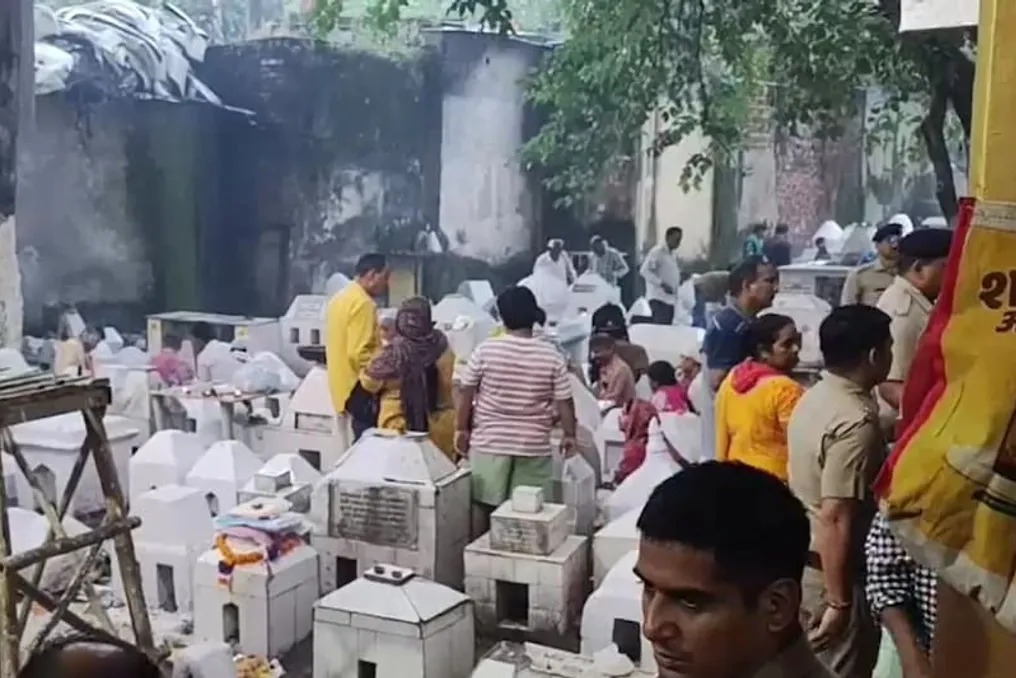
A large number of devotees gathered at the Shri Narayan Shila temple in Haridwar on Pitru Visharjani Amavasya. People started arriving early in the morning, and in the temple, they stood in long queues to bid farewell to their ancestors. Given the large gathering of pilgrims, the police organized extensive measures, allocating a significant number of police personnel.

Jyotishacharya Pandit Manoj Tripathi notes that Pitru Visharjani Amavasya is a time of farewell to ancestors who have been in homes for 16 days. He says that if there was a mistake, an oversight, or if a person forgot about Sharaddha or could not perform it for any reason, they can seek forgiveness and perform the 16-day Sharaddha on this day. Those who do not know the date can also perform Tarpana.

This place, which is located from the throat to the navel of Lord Narayana, where performing Sharaddha brings moksha to the ancestor. If a person performs Sharaddha here with devotion, or simply visits this place today, or just offers water, the ancestor is granted eternal sustenance. Pleased ancestors bestow blessings.

On Pitru Visharjani Amavasya, one should perform Sharaddha and feed a cow. The ancestors should be bid farewell in the evening. The farewell can be performed by offering 16 types of sweets, 16 portions of sweets with offerings, and lighting 16 lamps made of pure ghee from dough. Many make a round lamp from dough, which is also somewhat acceptable.

Sio City Haridwar Shishupal Singh Negi stated that today is Pitru Amavasya. All people are coming for worship and viewing. As seen since the morning, there are long queues. A sufficient number of police forces are present. Crowd pressure is very high, but the police are smoothly managing the movement of people. Adequate organization has been provided for crowd control. Entry of any four-wheeled vehicles is prohibited from Tulsi Chowk to Devapura, and enough duty staff has been assigned to this purpose.

Popular