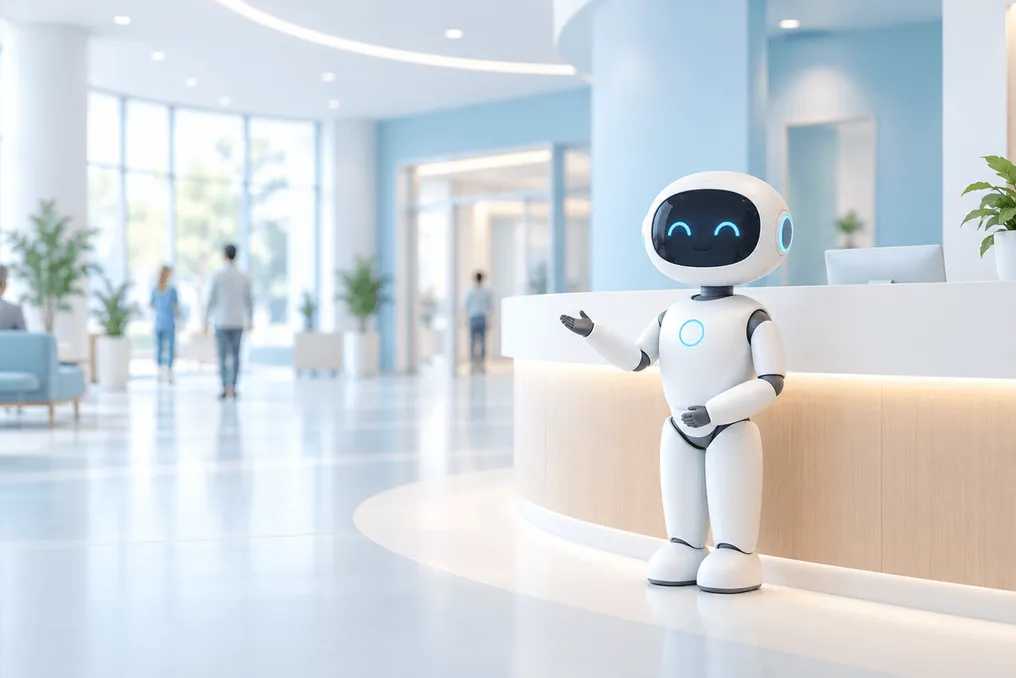
The Lingxi X2 robot from AgiBot has become a permanent staff member at the 안내 desk of Peking University Hospital in Beijing. This project was implemented in collaboration with Ant Group's health application, Afu.
At this desk, Lingxi X2 utilizes a medical assistant based on the Afu application, which runs on Ant Group's large medical model. The robot answers standard questions using a humanoid voice and gestures, taking over frequently repeated inquiries that typically burden staff working at the busy hospital lobby desks.
According to company data, as of September 30th, the robot operated for 66 working days at the outpatient navigation desk, conducting 46,686 interactions. This equates to approximately 707 interactions per day, with a peak of 1,420 interactions on a single day.
The robot's functionality includes directing patients to the correct department, explaining visit procedures, answering questions about health insurance policies, and providing indoor directions within the hospital. The system is also integrated with the hospital's private knowledge base, allowing it to provide standardized answers based on the institution's internal information rather than general data.
It is important to note that the robot's role is navigation, not medical treatment. It supports desk staff with basic questions but does not engage in patient diagnosis or treatment. The companies describe this implementation as a joint research into intelligent medical services, planning to use the acquired interaction and operational experience in a hospital setting to create a scalable model.
Lingxi X2 is a semi-sized humanoid from AgiBot, designed for high-interaction environments where a compact and accessible appearance is more important than heavy manipulation. The hospital lobby fits this profile: it features high visitor traffic, many repetitive questions, and requires quick, consistent responses.
The deployment of the robot in the hospital complements AgiBot's efforts to enter public service roles, following previous programs in campuses and theme parks. For Afu, this means transitioning Ant Group's medical assistant from a phone screen to a physical presence at the patient's first point of contact.