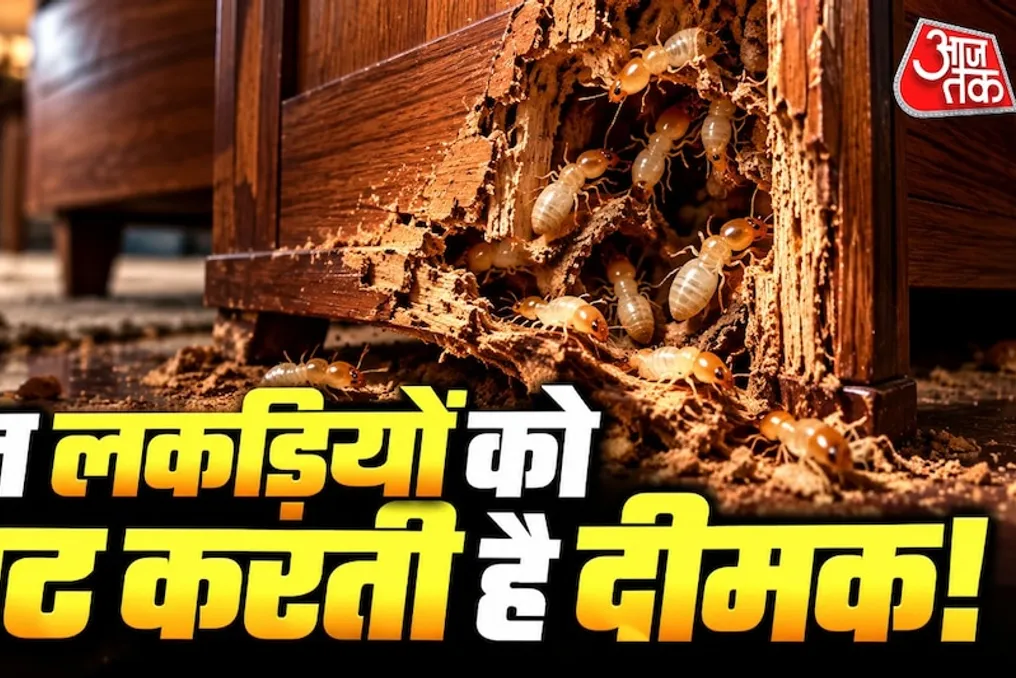
When purchasing new home furniture, such as a bed, sofa, wardrobe, or dining table, most people focus on design, color, and price. Some buy furniture based solely on its durability. However, there is a risk that a small mistake during purchase can lead to the loss of thousands of rupees. The fact is that certain types of wood are very susceptible to termite attack. Once infected, termites gradually destroy the wood from the inside, making furniture that looks intact on the outside fragile inside.
It is important to understand that termites do not only damage old or cheap wood. The type of wood, humidity level, and placement of the furniture can also increase the risk of termite attack. If you plan to buy furniture for your home, you need to find out in advance which of the five types of wood pose the greatest threat of termite infestation and what points to pay attention to during purchases.
Firstly, furniture made of pine. Pine is a light and soft wood used in furniture production. Termites can attack it, especially if the wood contains moisture. Therefore, when buying pine furniture, you should carefully examine its quality and ensure that it has been treated for insect protection.
Secondly, termites can also affect fir wood. Fir is also considered a category of soft woods, and termites are capable of damaging it. The risk increases if such furniture is placed in damp or humid areas. When purchasing, you must clarify information about the wood treatment and keep it away from wet walls.
Thirdly, spruce wood may be under threat. Spruce is a light and soft species used to make various items. Termites can also damage this wood. Consequently, when choosing furniture, you should not rely only on shine and polish; you need to find out whether the wood has been treated to prevent termite damage.
The fourth type is furniture made of particleboard (particle-plastic board). Although particleboard furniture is affordable, it is also vulnerable to termites. Particleboard furniture is made by joining many layers of board, and termites can damage it. The risk of damage increases due to the strength of the wood, the extent of treatment, and the presence of moisture nearby. Therefore, when buying beds, wardrobes, or kitchen sets, always ask about the particleboard class and termite protection measures.
The fifth item is furniture made of particleboard (Particle Board). This board is created by gluing together fine wooden particles and is often used for budget furniture. If moisture penetrates its edges, the board can weaken, and termites can also harm it. Therefore, when buying, pay attention to the quality of edge treatment and moisture protection.
As for teak wood (sagan), it is considered strong, and the risk of termite infestation in it may be somewhat lower. Nevertheless, this does not mean that termites can never affect it. Therefore, when buying teak furniture, it is extremely important to check whether the wood is genuine and to find out if it has been treated for termite protection.