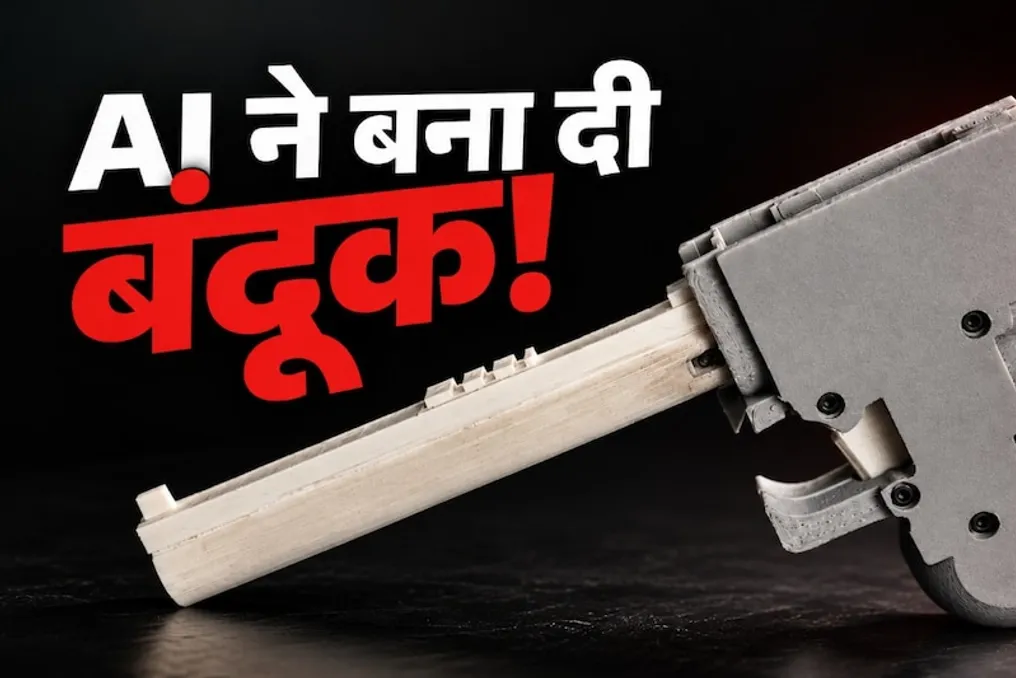
Previously, artificial intelligence was used to create images, videos, and write software code. However, a recent news item from the USA showed that AI is capable of developing blueprints for firearms. The main concern is that AI technologies could simplify access to information on how to create weapons.
Kode Wilson, a specialist in 3D-printed weapons in the USA, presented an AI model called GatGPT. He stated that this model was able to design a weapon named WASP, which is manufactured using 3D printing. Wilson considers this example the first case of weapon creation using AI.
WASP is a compact, single-shot pistol capable of firing only once per shot. It is being discussed due to the involvement of AI in the design development. GatGPT is presented not as a regular chatbot answering general questions, but as a specialized model working with weapon information and blueprints.
According to a report by The Verge, this model was trained on an extensive database of digital firearm designs. Wilson's team tasked it with creating a new design, after which the AI proposed a concept that was then refined by a human group. Thus, it was not a completely autonomous creation by AI, as the process included human guidance, analysis of existing models, and technical verification.
Therefore, this event is viewed not just as the emergence of a new type of weapon, but as a turning point in the application of AI. Previously, generative AI was used to accelerate the creation of images, articles, videos, and software. But when this technology is used in weapon design, it directly affects human safety.
The other side of this story is also important. According to The Verge, during the demonstration, three attempts were made to fire the WASP. Two shots were fired, while the first attempt was unsuccessful. Experts also identified several flaws in the design.
This means that although AI was able to prepare a blueprint, it does not prove that it can create more reliable or advanced weapons than humans. At this moment, it is only an initial experiment, and questions remain open regarding its reliability, safety, and long-term functionality.
The main reason for concern is precisely this. Traditional weapon manufacturing requires significant technical knowledge and many resources. However, if AI begins to easily provide information related to design, some obstacles in the weapon production process may disappear.
The organization Everytown, which deals with gun safety issues, expressed its concern in an interview with The Verge, noting that such models could facilitate the creation of weapons even for people who lack the necessary technical knowledge or do not meet the legal requirements for owning a firearm.
In this context, the term 'Ghost Gun' is actively discussed. It is usually applied to pistols made at home or assembled from individual parts without a serial number, like standard weapons. This makes them difficult to identify and track.
Nevertheless, not every 3D-printed object is a weapon, and not every homemade weapon is illegal. Legislation can vary depending on the country and region. However, the possibility of manufacturing such weapons without identification data could complicate law enforcement efforts to identify the manufacturer or user.