It is not enough to simply sleep for a certain number of hours to ensure complete recovery. Although we often focus on the 'eight hours' metric, the duration itself does not tell the whole story; the depth of sleep is equally important. Deep sleep is the phase when the body performs the most intensive work: repairing tissues, consolidating memory, and regulating hormones responsible for appetite and stress. Nevertheless, deep sleep disappears first in a growing number of people, even if the total sleep time appears normal.
Sleep is not a single state but a cycle that passes through various stages approximately every 90 minutes, each performing its function. Light sleep (N1 and N2) serves as a transitional zone where bodily activity slows down, heart rate decreases, and brain activity shifts to slower rhythms. This stage constitutes the majority of the night, but it is primarily preparatory.
The real restorative work happens during deep sleep, or stage N3 (also known as slow-wave sleep). During this period, brain waves slow down sharply, blood pressure and breathing reach their minimum, and the body directs energy toward physical restoration, muscle regeneration, immune system strengthening, and clearing metabolic waste from the brain. It is in this phase that growth hormone release peaks, which is why it is often called the body's 'recovery phase.'
This is followed by the rapid eye movement (REM) stage, which is more related to thought processes and dreaming than to physical recovery. It is important to note that deep sleep predominantly occurs in the first half of the night. If a person goes to bed late, shortens their sleep, or experiences microarousals during the night, they disproportionately lose stage N3, even if the total number of hours remains roughly the same.
With chronic sleep deprivation, symptoms may not appear immediately, as many signs are considered common and ignored, such as morning sluggishness, fatigue, and decreased productivity. However, this 'sleep debt' accumulates and negatively affects physical recovery, causing muscle aches, joint stiffness, and constant tiredness. Furthermore, it weakens the overall immune system, as most of the body's defense and recovery processes occur specifically in stage N3.
A lack of stage N3 in each sleep cycle hinders hormone regulation, including the balance of cortisol and growth hormone, which affects stress resilience, appetite, and long-term metabolic health. Cognitive abilities also suffer because deep sleep (stage N3) is involved in clearing metabolic byproducts from the brain at night. Discomfort from heat, incorrect spinal positioning, and microarousals can prevent the body from entering and staying in stage N3, even with a full eight hours of sleep.
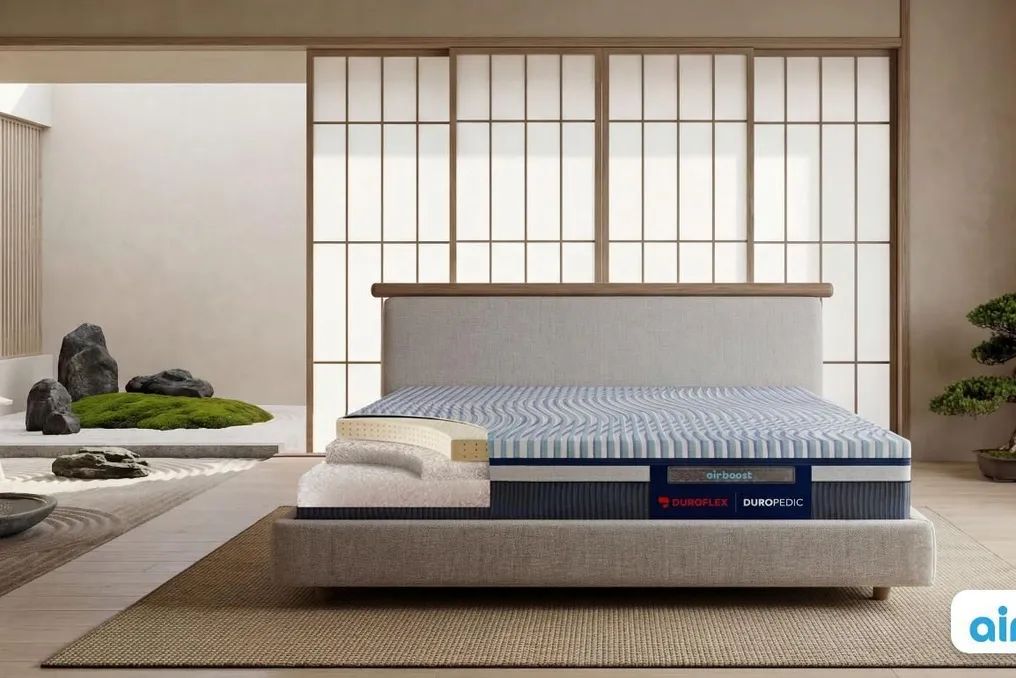
Many people do not realize that the problem is not always the quantity of sleep hours, but what kind of sleep they are getting. Duroflex Airboost was specifically designed to support faster falling asleep and deeper sleep, positioning itself as the latest sleep technology in India created to solve this problem.
Airboost is a patented open-matrix mattress technology from Duroflex, consisting of over one hundred thousand independently responsive fibers designed to improve air circulation, responsiveness to movement, and posture support. This technology, trusted by athletes worldwide, is being introduced to India for the first time by Duroflex. Airboost is accredited by the Indian Society for Sleep Research (ISSR) and recommended by doctors at the National Health Academy (NHA).
Instead of providing uniform support across the entire body, the mattress uses localized support created from over one hundred thousand AirKnit fibers, distributing pressure according to the actual contours of the body. Because individual fibers easily support every small point of pressure, the user achieves the correct body alignment for all sleeping types.
Incorrect positioning and pressure buildup in the shoulders and hips are frequent causes of waking up or changing position before completing a full deep sleep cycle; this type of medium-firm support solves this problem fundamentally, rather than masking it with extra foam.
Airboost features a three-dimensional open-pore matrix composed of approximately 90% air, ensuring a continuous flow of air throughout the mattress, helping to dissipate heat and sweat more effectively, thereby bringing sleepers closer to a thermoneutral zone for cooler and deeper sleep. Airboost is three times more breathable than traditional mattresses on the market.
Since achieving and maintaining deep sleep naturally requires a drop in body temperature, a surface that actively promotes heat dissipation eliminates one of the most common and least discussed obstacles to N3 sleep. Every Airboost fiber instantly responds to applied pressure, providing maximum rebound, which makes turning and changing positions easy. Thus, the body's energy is conserved for nighttime recovery, allowing for complete sleep cycles without microarousals.
Frequent and tense changes in position are a silent disruptor of deep sleep; every restless turn is a small deviation from stage N3. By minimizing such shifts and microarousals, this mattress helps the body remain in deep sleep for longer, in uninterrupted periods.
Airboost is accredited by the Indian Society for Sleep Research (ISSR) for providing 30% more deep sleep (stage N3) and is also recommended by doctors at the National Health Academy (NHA). Instead of viewing sleep as one undefined block of hours, its design is specifically aimed at enhancing N3 sleep—the stage most crucial for physical recovery, immune strengthening, and stress recovery.
The conversation about sleep is shifting: from counting hours to increasing sleep stages. Deep sleep is not a luxury metric but a mechanism underlying physical recovery, immune resilience, and hormonal balance. As awareness grows, so does the close attention paid to products claiming to support this process. Duroflex Airboost, combining engineered airflow, responsive motion support, and clinically proven improvement in deep sleep, reflects a broader shift in the mattress category where design solutions increasingly demand measurability, not just marketing.