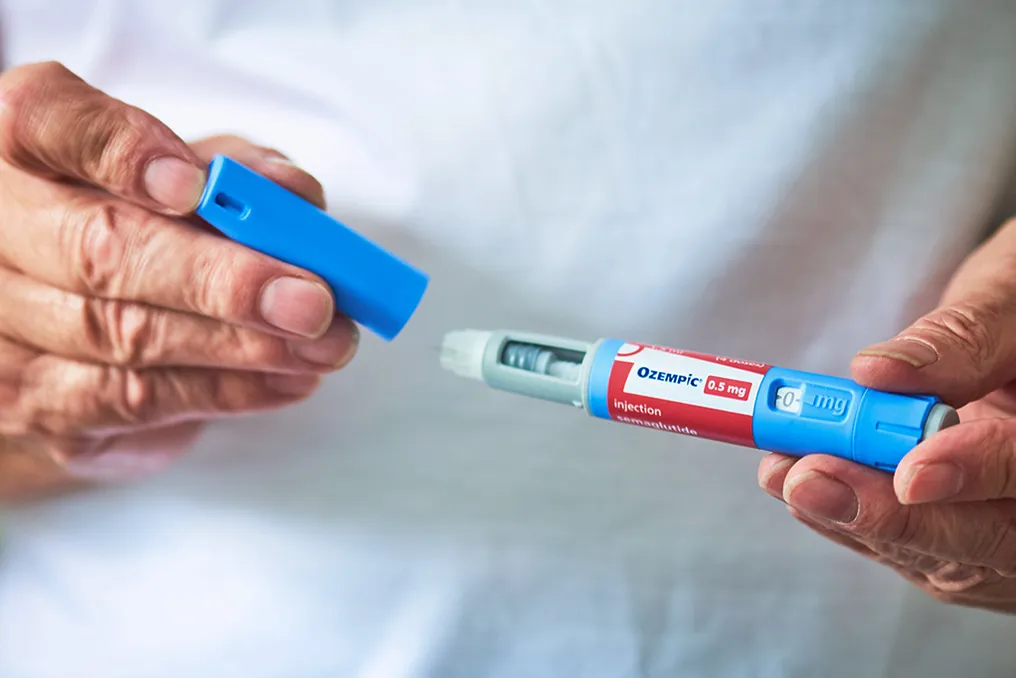
Fat-reducing injections, initially developed to treat diabetes and popularized as a powerful tool against obesity and excess weight, are now being studied by scientists as a potential treatment for a range of diseases, including heart, kidney, autoimmune, neurological, and even cancer. Although many of these studies are in early stages, some results already look promising.
A bolder hypothesis gaining momentum is whether GLP-1 analogues (the name of this drug class) can slow down the body's aging process and extend users' lives. While this sounds like a wild idea, serious research is being conducted in this area, and the first findings suggest that this hypothesis is quite plausible, although far from definitive confirmation.
A recent article analyzed over 80 participants with HIV and lipohypertrophy—a condition characterized by abnormal fat accumulation in specific parts of the body. Over eight months, half of the patients received injections of semaglutide, the active ingredient in drugs like Ozempic and Wegovy, while the other half received a placebo.
Researchers conducted blood tests looking for biological markers that measure patients' 'biological age.' 'Biological age' reflects the health status of the body and can be influenced by diseases, lifestyle, and aging-accelerating factors. People with HIV are prone to faster biological aging due to the infection itself, making them a particularly interesting group for aging studies.
The results, published in the journal Nature Communications, showed that patients taking semaglutide exhibited fewer signs of aging compared to those receiving a placebo. Nevertheless, this clinical trial is preliminary because it only measured specific blood markers, not the long-term health dynamics of these individuals. Despite this, the study helped strengthen the hypothesis regarding the potential of these drugs in combating aging.
GLP-1 agonists mimic the action of a natural hormone produced by our body that stimulates insulin release and induces feelings of satiety. Thus, they control blood sugar levels and help combat obesity, which in itself has a positive impact on life expectancy, as both diabetes and excess weight negatively affect overall health and can lead to various additional problems.
But do the benefits of these injections extend beyond weight loss in terms of aging? There is a growing assumption in the scientific community that these drugs may have other mechanisms of action in the body, including possible anti-inflammatory effects.
A recent study on mice attempted to investigate this idea. These rodents live for about two years, which allows for relatively easy analysis of their aging. Scientists at the University of California studied mice aged 20 months (which is already considered an advanced age for this species). Some of them received semaglutide injections, while others received a placebo. At the start of the experiment, all animals weighed the same. However, the animals receiving semaglutide lost weight during the experiment and lived longer (median 834 days) compared to the animals receiving placebo (median 742 days).
The question arose: was this effect caused by the drug itself or by weight loss? To test this, scientists repeated the experiment but reduced calorie intake in the control group by 25% (the same reduction observed spontaneously in the semaglutide group). This time, the mice not taking the drug also lost weight and lived longer. Nevertheless, differences still existed between the groups. In cognitive ability and intelligence tests (such as maze navigation attempts), the animals taking the drug showed better results. Furthermore, their blood sugar levels were more controlled than those of the diet-induced weight loss group. These results were published in the journal Nature.
It is emphasized once again that this study is preliminary and does not prove anything on its own—especially since mice are not humans. Nevertheless, it serves to generate hypotheses. Some clinical trials are currently underway to investigate this issue, and there are research directions dedicated to these drugs for various conditions. However, at present, all doctors and specialists agree: there are no recommendations for using these injections to slow aging. Without observation, they can cause side effects, including serious ones such as pancreatitis.