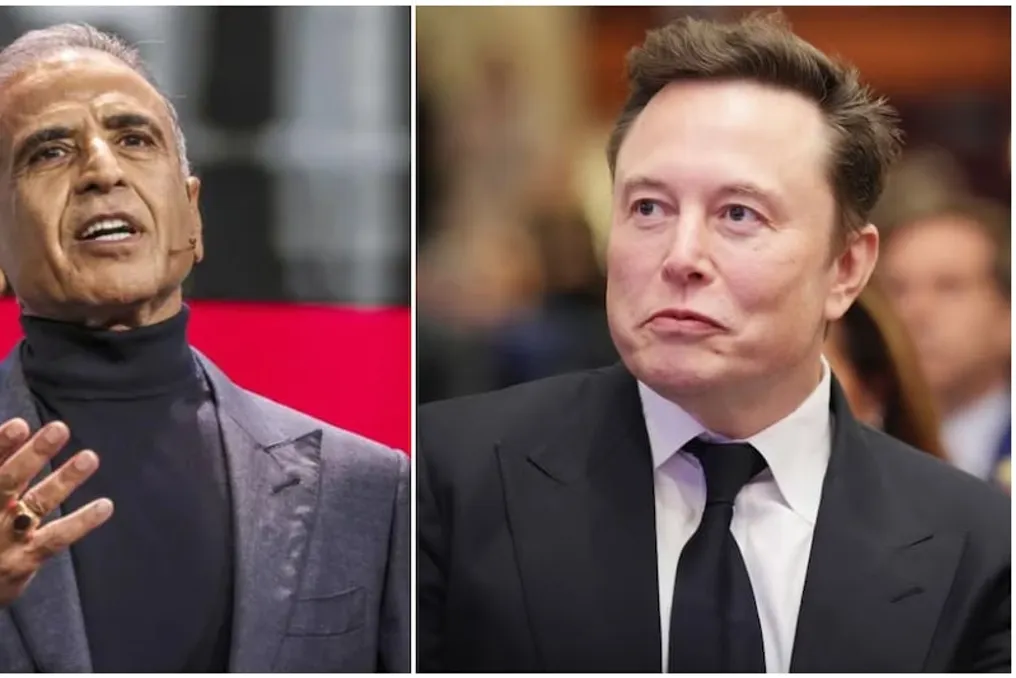
American industrialist Elon Musk raised questions with the Indian government regarding delays in the launch of Starlink in the country, citing the dominance of companies like Jio. On social media platform X, he questioned whether Mukesh Ambani is the true leader of India, asserting that his satellite internet service is not receiving approval due to the dominance of companies such as Jio.
Rahul Gandhi, the opposition leader in Lok Sabha, reacted to this post, supporting Musk's stance. However, amidst this dispute, Sunil Bharti Mittal, Chairman of Bharti Enterprises, presented information about his company's preparations, effectively refuting Musk's accusations.
Sunil Bharti Mittal made this statement at the 'Bloomberg New Economy Forum 2026'. He reported that Airtel applied for the launch of the satellite-based service five years ago, and its terrestrial network has been ready for three years. His statement indicated that it is not only Starlink but also Indian corporations awaiting permission to launch satellite internet in India.
Mittal emphasized: 'Airtel applied for this five years ago. Our terrestrial network has been ready for three years. We are all waiting for approvals, and I believe I am much further ahead in line than Elon Musk.' He added that his company's satellites have been over India for the last five years, but services cannot be launched due to lack of permission, and he would be glad if his company were granted permission days before Starlink.
Mittal's statement added a new dimension to the ongoing debate over the delay in Starlink approval. While Musk questions the possibility of launching his service in India, Mittal points out that his company has also been waiting a long time for the necessary permissions.
The conflict surrounding the commencement of Starlink operations in India intensified when Elon Musk stated on X that the interests of some big businessmen were hindering his company's work. He called it an attempt to monopolize the market. Musk then directly addressed Mukesh Ambani, asking if he was the real boss of India. Rahul Gandhi responded to this post, writing: 'Welcome to India, Elon. Wait for news about this other person.' Musk replied to Rahul's reaction: 'Thank you, Rahul. This is truly concerning.'
The reason for Musk's dissatisfaction was that Starlink has long tried to start operations in India but has yet to receive final approvals. The company states that it has been working for years to comply with Indian regulations. Nevertheless, the government rejected these allegations, stating that the process for approving satellite communication in India is impartial. According to the government, besides Starlink, Jio Satcom and Eutelsat OneWeb, supported by Bharti Airtel, have also applied and must undergo necessary security and spectrum verification procedures.
The Bharatiya Janata Party (BJP) accused Rahul Gandhi, the opposition leader in Lok Sabha, of supporting Elon Musk's position regarding the delay in licensing Starlink satellite internet in India. BJP Vice President Ram Madhav stated that the spectrum allocation process will be transparent and non-discriminatory. Responding to Musk, he said: 'You must show respect to this country and its leadership. There is a proper system here for spectrum allocation that is not discriminatory. Jio and Airtel are also waiting along with Starlink. The Government of India will make a decision in a completely transparent and non-discriminatory manner in due course.'
Satellite internet can become a means of delivering connectivity to areas where laying mobile towers or fiber-optic networks is difficult. This technology could be useful in mountainous regions, remote villages, and parts of the country with limited Internet access.
In this market, besides Starlink, there are Eutelsat OneWeb from the Bharti Airtel group and Jio Satcom from Reliance. Thus, the rules related to approval apply not only to Musk's company Starlink but also to Indian companies with the same impartiality. Eutelsat OneWeb from the Bharti Airtel group is also collaborating with various companies to launch satellite services in Africa.
In addition to telecommunications and satellite internet, Airtel is actively expanding its presence in digital infrastructure. The company plans to increase its data center capacity from approximately 300 megawatts to one gigawatt. This involves expansion in the outskirts of South India, Mumbai, and Delhi. The company is also focusing on sovereign cloud services to provide such services to Indian companies, government agencies, and armed forces, where data...