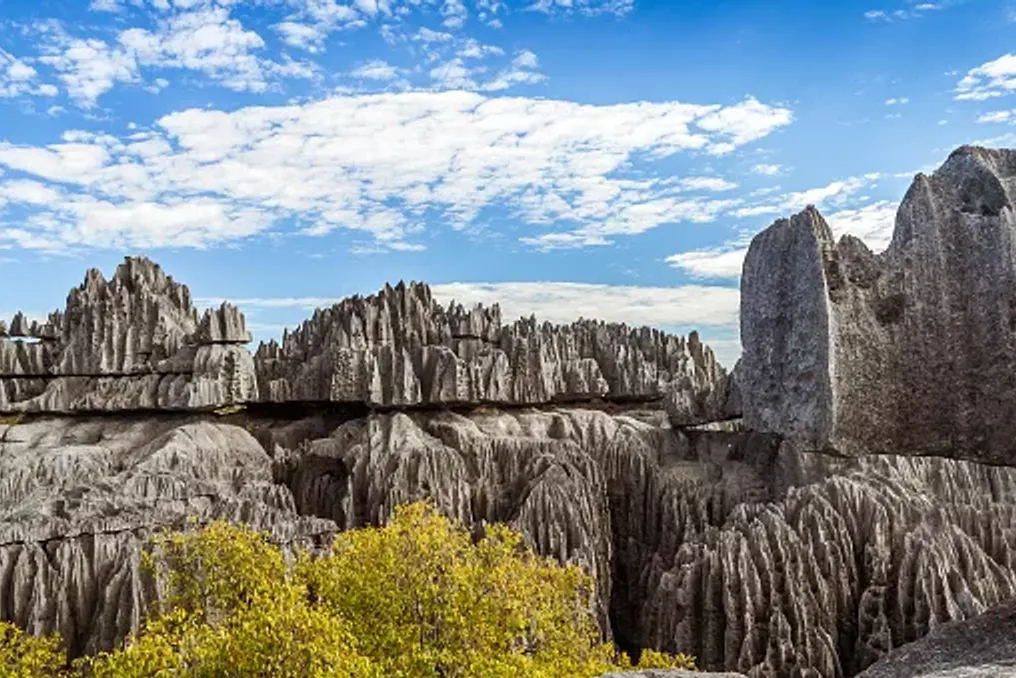
Tsingy de Bemaraha: Madagascar's stone forest shaped by erosion
Read more
Getaway
getaway.co.za

Tsingy de Bemaraha: Madagascar's stone forest shaped by erosion

In the western part of Madagascar, millions of years of erosion have created a surreal landscape consisting of sharp limestone pinnacles, hidden canyons, and unique fauna. Thousands of sharp stone blades rise above the ground, forming a natural labyrinth that is extremely rare on the planet. This is Tsingy de Bemaraha—a remarkable landscape where ancient limestone has been carved into high peaks, narrow passages, and deep fissures.

This region is known for its geological beauty and biodiversity and is part of the UNESCO World Heritage site of Andrefanana Dry Forest. The secret of Tsingy de Bemaraha lies in a geological process known as karstification. Weakly acidic rainwater gradually dissolves the limestone along cracks and faults. Over vast periods of time, these openings expand, turning into channels, crevices, caves, and deep fissures.

In the Bemaraha area, this process has formed an impressive limestone massif, divided into narrow ridges and towering pinnacles. Some of these reach heights of 100 meters and resemble natural cathedrals. The landscape developed not as a result of a single dramatic event, but through the cumulative effect of erosion and water flowing through the rock. Rain gradually wore away the exposed surfaces, leaving the complex network of blades and ridges visible today.

The formations resemble a vast field of gray needles. Upon closer inspection, the landscape displays narrow passages, protruding rocks, hidden cavities, and sharp cliffs. Patches of green vegetation contrast with the exposed limestone, creating a striking pattern of stone and forest. An additional dimension to the area is provided by the Manambolo River gorge, whose steep walls and caves show how water shaped the wider region, creating habitats different from the exposed rock above.

The result is not just a collection of unusual rock formations, but a complex landscape where plant growth and animal survival are determined by shade, humidity, height, and access to water. Although Tsingy de Bemaraha may seem unlikely for wildlife at first glance, the gaps between the stones hide protected habitats, including wooded ravines, caves, and shaded crevices.

Similar stories

Poisonous Plants of South Africa That May Look Harmless
Read more
getaway.co.za

Poisonous Plants of South Africa That May Look Harmless

South Africa is home to numerous plants that may appear completely harmless, blooming in the sunlight near walking trails, yet they contain chemical defenses strong enough to pose a danger to humans and animals.

These toxic species are found among grassy thickets, clinging to rocky slopes, and some grow in gardens where their attractive flowers are easily overlooked.

October is considered a suitable time to explore the darker side of the region's botanical diversity. While the veld awakens with new green growth and bright colors, beneath this beauty lie plants with a rather sinister reputation.

One such example is the poisonous euphorbia (Euphorbia virosa). This thorny succulent growth, found in the arid landscapes of South Africa, Namibia, and southern Angola, has thick, angular branches curving upwards from a partially buried stem. Although its sculptural form can look striking in a desert garden, its appearance is deceptive.

The plant exudes milky latex, which is extremely toxic and capable of causing severe irritation. Contact with the sap can damage the eyes and, in severe cases, lead to blindness. Historically, hunters from the San tribe used this latex as a component of arrow poison, although its irritating action made handling it dangerous.

Euphorbia serves as a reminder that even in areas with water scarcity and sparse vegetation, survival requires inherent defense mechanisms; its chemical protection performs this function autonomously.

Not all dangerous plants look menacing. The poisonous bulb (Boophone disticha), also known as the hyball or bushman's bulb, is widespread in many parts of South Africa and is characterized by a distinctive fan of grey-green leaves. Its unusual flower head can develop into a round structure that then dries and detaches, allowing the wind to disperse seeds.

However, underground lies a toxic bulb containing compounds that can cause serious poisoning if ingested. This species has a long history of use in traditional medicine. The popularity of this plant in herbal markets has also raised concerns about species conservation in certain areas of South Africa, as harvesting can put pressure on wild populations.

Here there is a worrying contrast: the plant may hold cultural significance and a long history of traditional use while posing real health risks. The poisonous bulb is an example of where botanical knowledge is important for both human safety and the survival of the species itself.

The name Acokanthera oppositifolia sounds like it should remain in a botany textbook, but its common name, bushman's poison, is far more ominous. This evergreen shrub or small tree is found in parts of South Africa and produces clusters of small, pale flowers followed by fleshy fruits.

The plant is highly toxic because toxic compounds are present in many of its parts. Historically, its sap was used by hunters from the San tribe in arrow poison preparations. The same chemical properties that made the plant useful in hunting create a serious risk of accidental exposure.

The history of this plant reveals another aspect of poisonous flora: toxicity is not merely a botanical curiosity. Over generations, people have accumulated detailed knowledge of local flora, including which species can heal, which can harm, and which require extreme caution. This knowledge deserves understanding within its cultural context, rather than being reduced to a collection of frightening plant names.

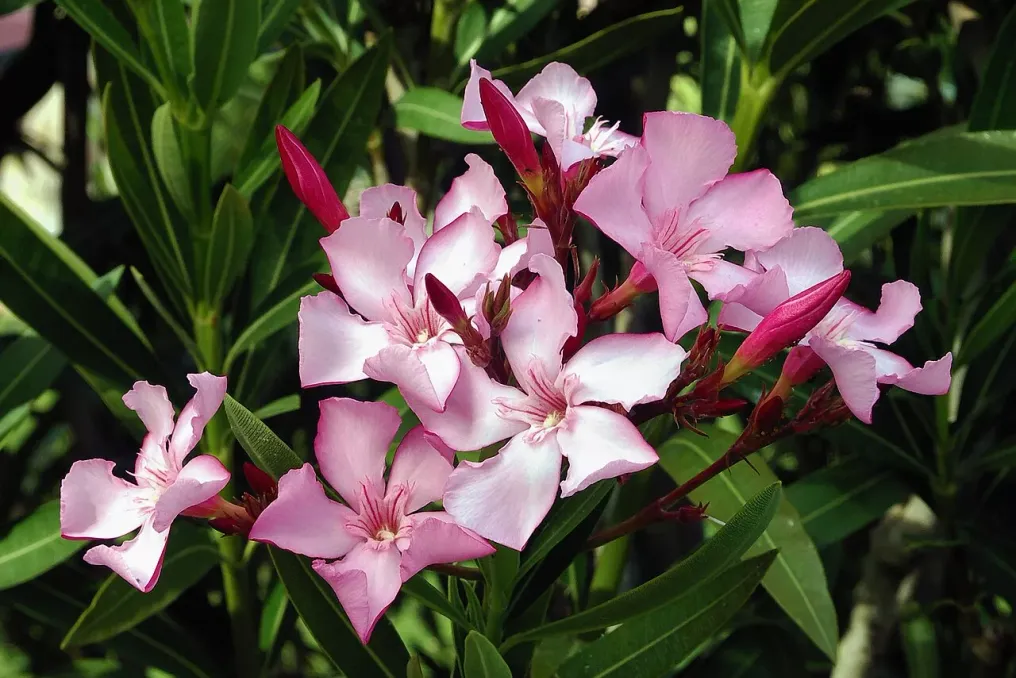
Some of the most dangerous plants are familiar garden residents. Oleander (Nerium oleander) is widely cultivated for its colorful flowers and ability to tolerate hot, dry climates. It looks quite cheerful next to a driveway or pool, yet every part of this plant is considered poisonous.

Oleander contains cardiac glycosides—compounds that disrupt normal heart function. Ingestion can cause serious illness in humans and animals, and its toxicity persists even after the plant material dries. Its popularity as an ornamental shrub serves as a reminder that poisonous plants do not always warn themselves with thorns, strange shapes, or alarming names.

The poisonous plants of South Africa are not villains in the conventional sense. Their toxic compounds evolved as part of survival strategies, helping them repel herbivores and defend against other threats. Some have influenced human history, while others remain vital elements of their natural ecosystems.

A sensible approach is to admire them without touching or tasting unknown plants. One should not assume that a colorful fruit is edible, that a familiar garden shrub is harmless, or that traditional use automatically makes a plant safe. If exposure or ingestion is suspected, immediate medical attention should be sought, rather than relying on online identification or home remedies.

The veld is full of wonders, but it does not always come with warning signs. Sometimes the most beautiful things growing near a path deserve the greatest respect.
Geology of Rainbow Mountain in Peru: Explaining the Unusual Colors
Read more
getaway.co.za

Geology of Rainbow Mountain in Peru: Explaining the Unusual Colors

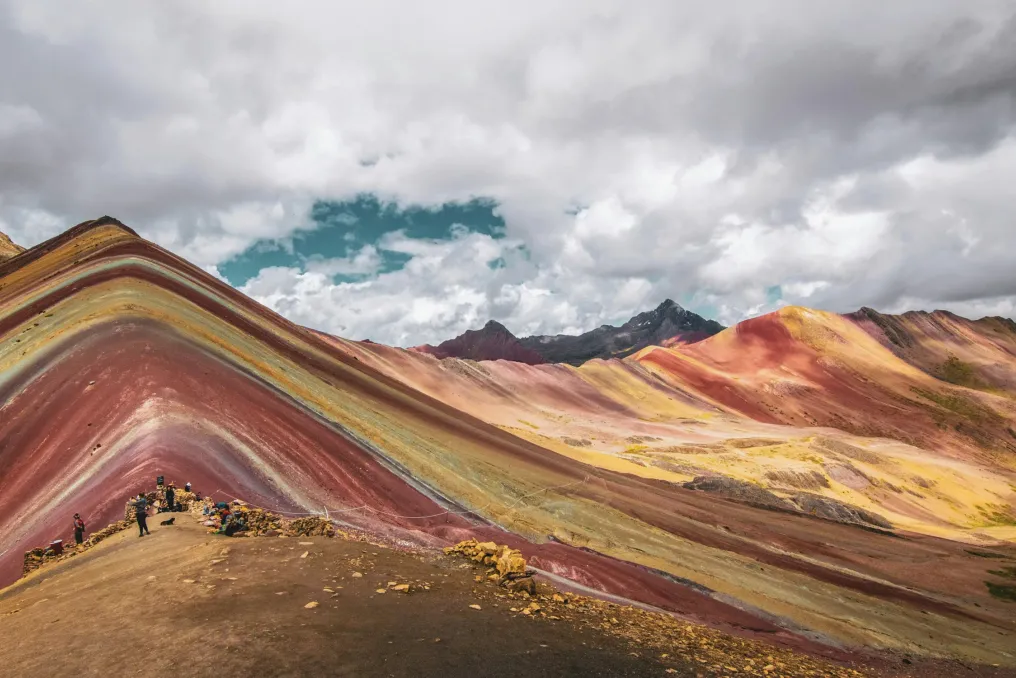
Rainbow Mountain in Peru, known locally as Vinicunca, amazes with its vibrant, seemingly unreal palette. Stripes of dusty pink, rusty red, mustard yellow, and green stretch across the Andean slopes, resembling a painting by an artist. However, these colors are the result of millions of years of geological change.

Located in the Cusco region, within the Vilcanota mountain range, Vinicunca has become one of the country's most recognizable natural attractions. Beneath these colorful slopes lies the history of ancient deposits, rich mineral rocks, and tectonic forces that uplifted the Andes.

Millions of years ago, under changing conditions—including ancient marine, lake, and river environments—sedimentary rocks accumulated. Layers of clay, sand, and other mineral-rich material gradually formed strata, preserving traces of their formation conditions.

When the Nazca area moved beneath the South American Plate, tectonic forces lifted and deformed these mountain formations, contributing to the creation of the Andes. Eventually, erosion exposed the layers, revealing the colorful stripes on Vinicunca's slopes.

What appears to be a rainbow painted on the slope is actually a glimpse into Earth's geological past. Vinicunca's unique color scheme is due to differences in rock composition and mineral content. These seven known colors represent variations in the layers of sedimentary and altered rocks, not separate bands of paint.

The exact mineral composition differs between layers, so color alone does not allow for confident rock identification. Nevertheless, these mineral differences create the mountain's exceptional appearance. Iron plays a crucial role in Rainbow Mountain's palette. When iron-containing minerals react with oxygen and water, chemical changes can form iron oxides and hydroxides in shades of red, yellow, and brown.

For instance, hematite is associated with red tones, while goethite often imparts yellowish or brownish hues. These transformations can occur through weathering, when rocks come into contact with air and water, as well as during earlier stages of geological formation.

Over millions of years, these processes contributed to the contrasting bands visible today on the slope. Sunlight, cloud cover, humidity, and snow affect Rainbow Mountain's brightness. Strong sunlight can emphasize the contrast between layers, while wet rocks may appear darker, and snow can conceal parts of the landscape.

The mountain's international popularity rapidly increased around 2016 when travelers began posting photos of its impressive slopes online. The retreat of snow and ice helped draw attention to the colorful landscape. Although climate change did not create the colors, changing conditions helped reveal the landscape that existed millions of years ago.

Located southeast of Cusco, Vinicunca rises to approximately 5,200 meters above sea level. This altitude makes the ascent physically challenging even for relatively athletic travelers. Time must be allocated for acclimatization before climbing. One should move slowly, maintain hydration, and take seriously symptoms such as headaches, nausea, and dizziness. Climbing should not continue if altitude sickness is suspected.

The months from May to October are usually the drier season, although weather in the Andes can change rapidly. Rain and snow are more common from November to April, which can complicate trail conditions. Besides photographs, time should be spent observing the changing textures and shades on the slopes. Each layer represents a different combination of materials and processes preserved in the rock and exposed by the forces that formed the Andes.

The beauty of Rainbow Mountain lies not only in its impossible colors. Its slopes hold a geological history shaped by ancient deposits, mineral transformations, and the movement of tectonic plates. What seems like a painted landscape is actually Earth revealing its past. Vinicunca may attract travelers with its unusual palette, but understanding how these colors formed makes the mountain even more remarkable.

Popular