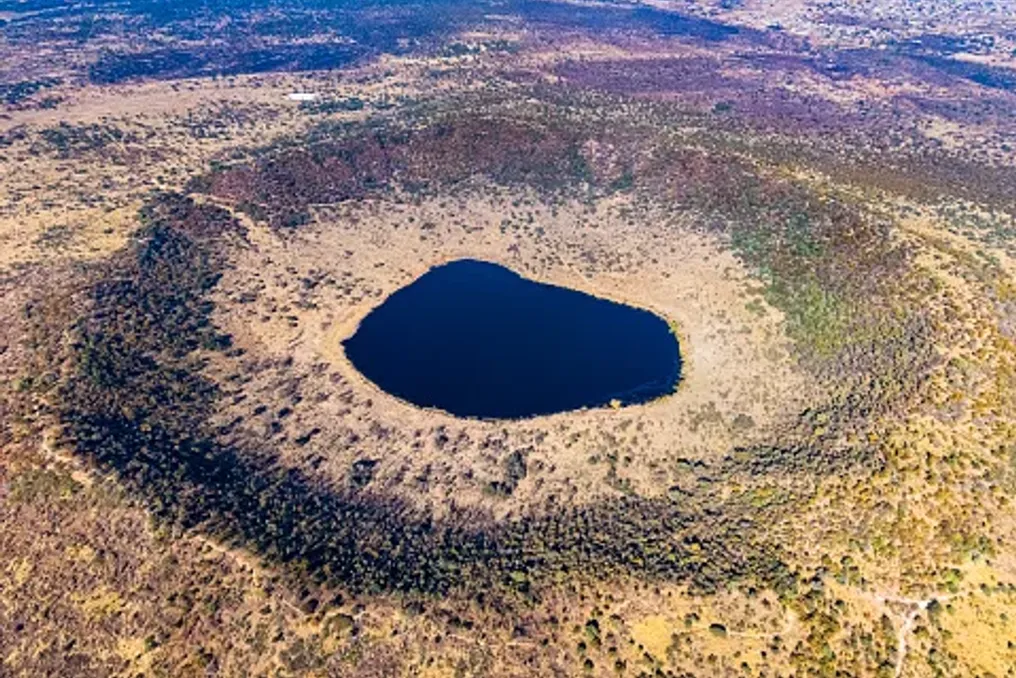
An ancient cosmic impact has left a noticeable mark on the Gauteng landscape. Today, visitors can visit the crater, explore its salt lake, and learn about a place where geological history, wildlife, and South African heritage converge.
Located approximately 40 km northwest of Pretoria, outside the administrative center of South Africa, the bushveld offers a view of a remarkable geological attraction. At first glance, Tswang might appear to be just a large depression in the terrain. However, this vast, bowl-shaped basin was formed by a meteorite impact about 220,000 years ago, making it one of the best-preserved impact craters in the world.
The crater has an approximate diameter of 1.1 km and provides a rare opportunity to study the physical evidence of Earth's collision with a celestial object. Nevertheless, the story of Tswang extends far beyond the impact itself. The salt body, rich natural environment, and remnants of an early industrial enterprise make Tswang a destination where visitors can discover several layers of South African history in one trip.
The collision that created Tswang occurred long before the modern landscape of roads, settlements, and cultivated lands was formed. According to geological studies, the stony meteorite struck the granite foundation at the site, excavating a vast depression and altering the surrounding relief.
Researchers estimate the crater's age to be around 220,000 years, although scientific dating allows for a margin of error. Analysis of materials extracted from beneath the crater, including rocks showing signs of intense impact pressure, helped establish its extraterrestrial origin.
According to scientific measurements, the resulting crater has a diameter of about 1.13 km, while DITSONG Museums of South Africa, which manages the site, describes it as approximately 1.4 km. The difference is due to the use of different measurement sources, but either figure underscores the astonishing scale of this formation.
Unlike many ancient impact structures that are heavily eroded or obscured by subsequent geological processes, Tswang retains a clearly recognizable bowl shape. Its preservation makes it valuable not only as a tourist attraction but also as a site for studying how extraterrestrial impacts shape planetary surfaces.
The most impressive way to see Tswang is to move beyond the viewpoint and follow the trail down into the crater. From above, the circular feature is easier to grasp as a whole, but walking makes its scale more tangible as the surrounding slopes and vegetation gradually frame the route.
The trail leads to the bottom of the crater and the salt lake, following an old ox-wagon road. This landscape should be explored at a leisurely pace to notice changes in vegetation, land contours, and the various views along the way.
For hiking enthusiasts, the established Tswang Crater Trail is about 7.2 km long. This walk differs from a typical bushveld stroll: the endpoint is not just a viewpoint or a waterfall, but the interior of a geological formation created by a cosmic collision.
Visitors should allocate sufficient time for the walk, wear comfortable closed-toe shoes, and bring drinking water. The heat in Gauteng can be tiring, especially in warmer months, so it is wise to start early. Before going out, check the current accessibility and condition of the trail on the website.
At the base of the crater is a feature that gave the place its name. The word Tswang means 'place of salt' in the Setswana language, referring to the salt lake occupying the crater floor.
The lake is more than just a notable landscape feature. It is part of a hydrological system formed by the depth of the crater, groundwater, and evaporation. Studies of the Pretoria Salt Lake, as Tswang is also called, have examined how water enters and leaves the basin, as well as how its chemistry reflects the lake's interaction with the environment.
The lake and its sedimentary rocks also contain information about environmental changes over a long period. Scientific analysis of sediment cores has helped researchers study past vegetation and climatic conditions in the region, giving the crater significance that goes far beyond its dramatic origin.
For visitors, the contrast is striking: a landscape created in a violent moment has, over time, transformed into a place where water, sediments, and vegetation record much slower processes unfolding over millennia.
Tswang's Appeal Extends Beyond the Crater
Tswang's appeal stretches beyond the crater itself. The surrounding protected area includes bushveld vegetation, wetlands, and habitats supporting diverse wildlife. DITSONG identifies the extensive wetland system, Sourish-Mixed Bushveld vegetation, and birds among its main attractions. Over 200 bird species have been recorded here, with some official sources citing this number as close to 240.
This provides another reason for birdwatching enthusiasts to visit. The diverse habitats offer opportunities to spot various species when exploring the wider landscape. Plant enthusiasts and nature lovers can also appreciate the ecological diversity surrounding the crater.
This experience serves as a reminder that geological events do not determine the entire future fate of a landscape. Over time, erosion, water, vegetation, and wildlife have transformed the environment around Tswang into an ecosystem quite different from the barren picture one might imagine after a meteorite impact.
The history of Tswang includes a chapter of industrial activity. Between 1912 and 1950, a commercial enterprise in the crater mined salt and produced soda ash, leaving ruins that remain part of the site's heritage. This industry utilized the salt resources concentrated in the crater. Today, the remains of this enterprise serve as a tangible link to a period when the landscape was valued for its mineral resources, rather than primarily for its geological and ecological significance.
Tswang's heritage runs even deeper. The surrounding area contains archaeological evidence of human activity, adding another dimension to a place whose history spans both geological time and human experience. The Department of Sport, Arts and Culture identifies archaeological materials related to earlier communities among the site's heritage resources.
Now managed as a nature and heritage site, Tswang integrates these elements through its trails, museum exhibits, and educational activities. The result is a place where visitors can examine the relationship between natural resources, human settlement, and changing ways of understanding and using the landscape.
The Tswang Meteor Crater is managed by DITSONG Museums of South Africa and is located near Seschannguwe, northwest of Pretoria. It is suitable for visitors interested in geology, hiking, birdwatching, and South African heritage.
Before your trip, note the following practical details:
Location: Onderstepoort Road (M35), Seschannguwe, northwest of Pretoria.
Hiking: The established crater trail is approximately 7.2 km. Confirm current access and trail conditions before visiting.
Hours: DITSONG indicates opening hours from 07:30 to 16:00 on weekdays and 06:00 to 14:00 on weekends, excluding Christmas and Good Friday. Check directly before departure, as official listings may vary.
Facilities: The site advertises picnic areas, basic camping facilities, and group accommodation. Confirm availability and book in advance.
What to bring: Drinking water, sun protection, a hat, and comfortable walking shoes. Binoculars are useful for birdwatching.
For inquiries, please visit the official Tswang Meteor Crater page or contact DITSONG using the provided details.
Tswang is a place that rewards curiosity. Its defining feature was created by an event that, geologically speaking, lasted only a moment, yet its consequences remain visible hundreds of thousands of years later.
Exploring the Crater
this focuses attention on vast timescales. The slopes, the salt lake, and the surrounding bushveld tell a story that moves from cosmic collision to the slow accumulation of sediments, the development of habitats, and the arrival of people who utilized the area's resources.
For travelers exploring Gauteng, Tswang offers something different from the province's well-known urban attractions. It is an opportunity to step into an ancient landscape, encounter a remarkable example of geological history, and leave with a renewed appreciation for the forces that shaped the earth beneath their feet.
[ ]