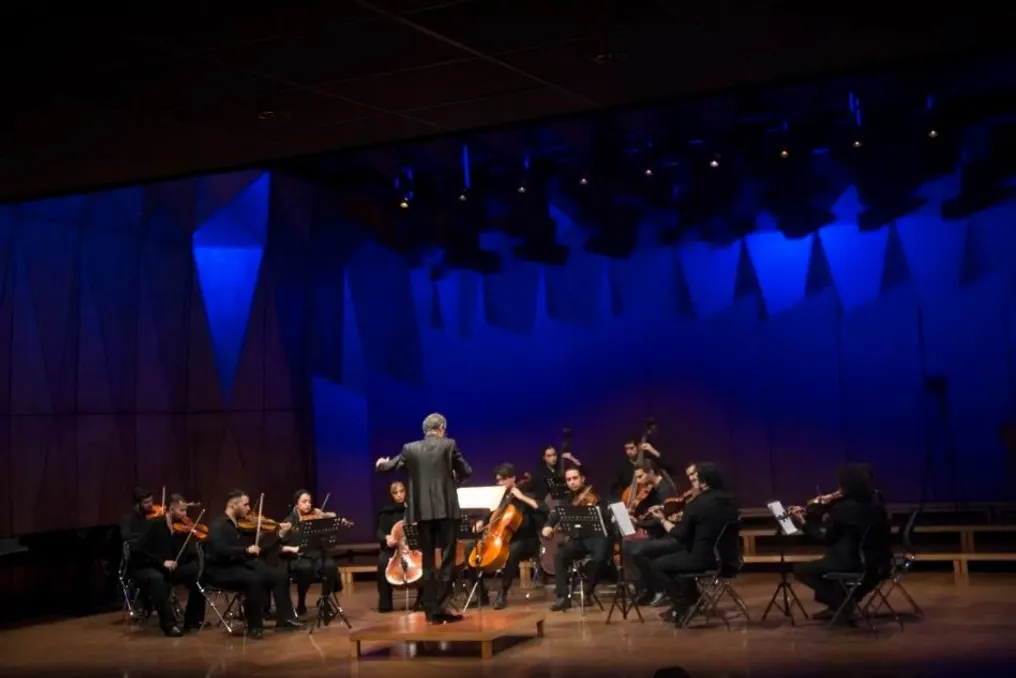
Classical music concert featuring lesser-known works held at Rouadaki Hall in Tehran
Read more
Tehran Times
www.tehrantimes.com

Classical music concert featuring lesser-known works held at Rouadaki Hall in Tehran

A concert titled 'From Sorrow to Dawn' was held on Saturday at the Rouadaki Hall in Tehran, featuring classical music compositions. According to ILNA, the program aimed to present rarely performed and little-known works and was divided into two parts accompanied by piano and string ensemble.

The repertoire included works by composers from different eras of classical music. In the first part, pianist Ahmad Razavi performed the second piece from the cycle 'Klavierstücke' (3 piano pieces), D. 946, in B-flat major by Franz Schubert. This was followed by Johann Sebastian Bach's 'Keyboard Concerto No. 7 in G minor, BWV 1058,' which consisted of three movements.

The second part of the concert was dedicated to the works of Julius von Belecki, Vasily Kalininov, Samuel Coleridge-Taylor, Anton Arensky, and Robert Fuchs. The pieces in this section included serenades for string instruments, the suite 'Four Novlettes' for string orchestra, and variations on a theme by Tchaikovsky.

Mahmoud Mirzaei, conductor of the 'From Sorrow to Dawn' concert, noted the high technical complexity of the presented works. He described the program as consisting of seven pieces by various classical composers, emphasizing that many of them were unfamiliar even to the orchestra musicians themselves.

According to Mirzaei, achieving the desired result required about ten to twelve rehearsal sessions due to the technical and performance difficulty of these works; however, the ensemble took the stage after only four rehearsals. Although he rated the musicians' efforts as acceptable given the timeframe, he felt the final performance did not reach his musical ideal.

The conductor also expressed hope that by maintaining the ensemble's lineup and allocating sufficient time for rehearsals, it would be possible to continue collaboration and ensure higher quality performances in future programs.
Similar stories

The history of public urinals in Berlin, known as Café Achtek
Read more
viagemeturismo.abril.com.br

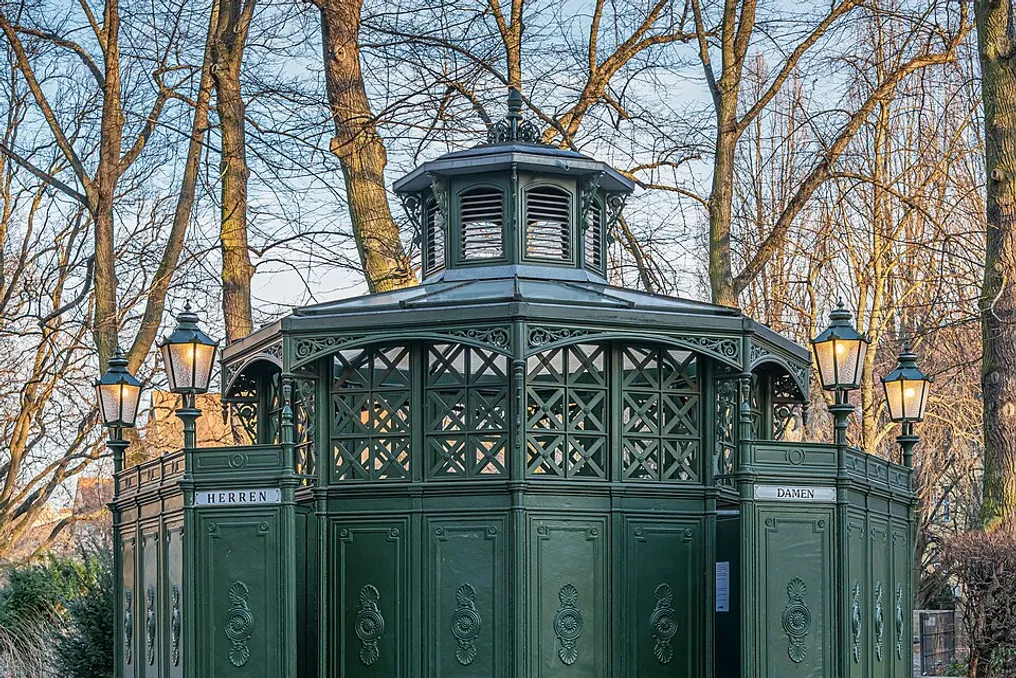
The history of public urinals in Berlin, known as Café Achtek

In the late 19th century, before easy sanitary options existed in Berlin, residents often had to resort to cafes for urgent physiological needs. This necessity gave rise to the historical nickname given to the public urinals of the German capital: Café Achtek, or 'Octagon Cafe.'

These urinals were implemented in city squares starting in 1879 with the aim of raising public hygiene standards, offering a suitable place to urinate without citizens having to use makeshift walls.

Although they are now considered relics of the past and have been largely deactivated, it is still possible to visit and use some of these fixtures at specific points in the city.

Beyond representing a significant change in urban sanitation, the public urinals of Berlin also symbolized efficient resource management. The concept envisioned a simple and replicable design throughout the city, and the octagonal shape allowed multiple men (initially, all restrooms were exclusively male) to use it simultaneously, with one individual on each side of the geometry.

The Café Achtek were constructed from cast iron and painted green, featuring skylights on top to ensure ventilation and natural light throughout the day. It is estimated that, during its peak usage period, more than 140 units were installed in the city, and in the early 20th century, models intended for women began to appear.

Over time, they became obsolete and were gradually deactivated, but about a dozen of these old urinals remain, properly restored, and accessible in the city.

The octagonal urinals are located in public areas that historically had high foot traffic, typically squares. Examples of their locations include Gendarmenmarkt and Stephankiez in the Mitte district; Rüdesheimer Platz in Wilmersdorf; near the Senefelderplatz subway station in Prenzlauer Berg; and Chamissoplatz in Kreuzberg, among other locations.

In addition to the Café Achtek, which are the most notorious from the golden age of public sanitation, the city preserves other similar urinals made of cast iron and painted green, but featuring a different shape: rectangular. Currently, the most famous of these rectangular models has undergone a complete renovation and has been transformed into a burger joint, Burgermeister, which has been operating since 2006 in the former urinal at the Schlesisches Tor subway station.

Muslim artisans from Uttar Pradesh create high-tech Ravana effigies for Dussehra celebrations
Read more
www.aajtak.in

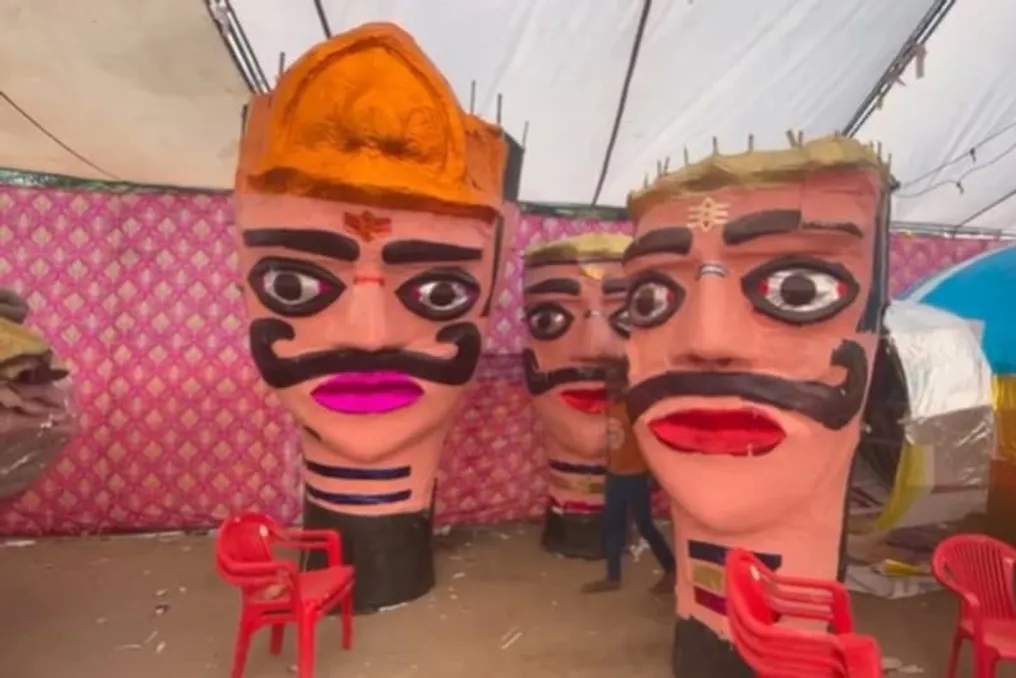
Muslim artisans from Uttar Pradesh create high-tech Ravana effigies for Dussehra celebrations

Dussehra symbolizes the victory of truth over falsehood. On this day, rituals involving the burning of effigies of Ravana, Kumbhakarna, and Meghanada are held, which represent characters playing the roles of Lord Rama and Lakshmana. However, the tradition of Ravana Dahan is gradually modernizing, and modern technology is now actively used in the making of these effigies.

Muslim families from Uttar Pradesh create these figures for regions such as Rajasthan, Madhya Pradesh, and Gujarat, thereby demonstrating an example of harmony between the Ganga-Yamuna cultures and the brotherhood of Hindus and Muslims.

To celebrate Dussehra on October 20th, a grand effigy burning will take place in Alwar (Rajasthan): Ravana at 65 feet, Kumbhakarna at 60 feet, and Meghanada at 55 feet. Muslim artisans have arrived from Agra (Uttar Pradesh) to create these figures and have been working on them for about a month. These craftsmen note that the festival of Dussehra is a significant source of livelihood for their families.

According to the artisans, in Pali, Rajasthan, Ravana effigies are made year-round and then sent to various cities across the country. Preparation for this process begins approximately four months before Dussehra. More than 150 artisans participate in this work, all belonging to the Muslim community, and for them, it is not just a profession but a long-standing tradition.

The artisans reported that modern technology is increasingly being applied to the effigies of Ravana, Kumbhakarna, and Meghanada. Whereas figures were previously made using traditional methods, they are now integrated with elements such as motors and lighting systems. Specifically, this year, Ravana's head will rotate, his limbs will move, and the sword in his hand will appear to spin.

Furthermore, features such as flames or sparks flying out of the eyes and mouth are being added to the effigies. The goal of these changes is to enhance the attractiveness and impressive appearance of the effigies. The craftsmen assert that the demand for light- and technology-equipped figures is constantly growing, leading to large-scale Ravana Dahan events even in small towns and villages.

Bamboo is mainly used to make the effigies, which is sourced from Bareli. Bright paper is then pasted onto the frame to create the figures of Ravana, Kumbhakarna, and Meghanada. Thanks to the work of the artisans, their appearance becomes very attractive so that spectators can enjoy the spectacle during the Dussehra burning.

The artisans emphasized that creating Ravana effigies is their hereditary occupation, and their ancestors also engaged in this craft. They regard Ravana as a learned pandit and prepare his effigy with great respect. According to them, Ravana up to 100 feet tall is made in Pali (Rajasthan), and figures are also produced according to the needs and demands of different cities.

These artisans, arriving from Agra and other parts of Uttar Pradesh, have worked in several states, including Rajasthan, Gujarat, Madhya Pradesh, as well as Delhi, Mumbai, Nashik, Bihar, Punjab, Haryana, and Uttarakhand. Their effigies are valued for their beauty and modern technology, which is why they are invited from different places. The income from Dussehra allows their families to cover expenses for the entire year.

Since Alwar is part of the National Capital Region (NCR), green firecrackers will be used for fireworks, for which special pyrotechnics specialists will arrive from Ghaziabad. For years, the Mursharti society has organized the Ravana Dahan in Alwar, and thus, through the combination of tradition, technology, and the participation of various communities, the celebration of Dussehra takes on a new form every year.

Popular